The 1970s File Feature
I Can See Clearly Now
I Can See Clearly Now — Johnny Nash (1972) Johnny Nash's "I Can See Clearly Now" stands as one of the most beloved and enduring recordings in the history of …
01 The Story
I Can See Clearly Now — Johnny Nash (1972)
Johnny Nash's "I Can See Clearly Now" stands as one of the most beloved and enduring recordings in the history of American popular music, a song that achieved both immediate commercial success and long-term cultural permanence with a combination of musical clarity and emotional directness that has proven almost impossible to improve upon. The story of its creation and chart run is also the story of a pivotal early moment in the mainstreaming of reggae music for international audiences, a development that would have profound consequences for popular music throughout the following decade.
"I Can See Clearly Now" was released in 1972 on Epic Records and quickly demonstrated its crossover potential across multiple formats and demographic groups. Nash had been one of the earliest American artists to spend significant time in Jamaica and engage seriously with the reggae music that was then developing in Kingston, and the track incorporated reggae rhythmic and production elements in ways that made them accessible to American pop audiences without stripping them of their distinctive character.
The song reached number one on the Billboard Hot 100 in October 1972, remaining at the top position for four consecutive weeks and establishing Nash as one of the most commercially successful artists of that year. The chart performance was remarkable not only for its height but for the broad coalition of listeners it represented: the song charted simultaneously on pop, soul, and easy listening charts, demonstrating an unusual capacity to communicate across the genre and demographic divisions that typically structured American radio listenership.
Nash's connection to Jamaican music was genuine and predated the reggae movement's global breakthrough by several years. He had lived in Kingston during the late 1960s and early 1970s, immersing himself in the local music scene and developing professional relationships with Jamaican musicians. It was during this period that Nash met and befriended a young Bob Marley, and the two artists subsequently toured together, with Marley and the Wailers serving as Nash's backing band on some engagements before Marley achieved his own international stardom. This connection gives Nash's reggae-influenced recordings a documentary dimension, capturing a specific cultural moment in the history of Jamaican music before it was known to most of the world.
The production on "I Can See Clearly Now" reflects the collaboration between Nash and his production team in synthesizing the reggae rhythmic feel with the melodic sensibility of American pop songwriting. The characteristic reggae emphasis on the offbeat, the sparse drum and bass interplay, and the light but rhythmically assertive guitar work all appear in the recording in forms that were unfamiliar to most American radio listeners in 1972 but immediately appealing rather than alienating. This accessibility was the key commercial achievement of the production.
Nash wrote the song himself, a fact that distinguishes it from much of the pop product of its era, when the division between professional songwriters and recording artists was more pronounced than it had become by the 1970s. The autobiographical dimension of the writing, which described the narrator's emergence from a period of emotional darkness into clarity and optimism, gave the song a personal quality that resonated with listeners who heard in it the expression of universal human experience.
The song has been covered hundreds of times since its original release, with significant versions by artists including Jimmy Cliff, whose 1993 recording for the film "Cool Runnings" introduced the song to a new generation of listeners and generated a fresh wave of chart activity. The Cliff version reached the top twenty in multiple countries, demonstrating the song's generational portability and reinforcing its status as a standard capable of supporting successful reinterpretations across different eras of popular music.
Nash's broader legacy has sometimes been overshadowed by his role as a bridge figure for reggae's international breakthrough, but his own musical achievements deserve recognition on their own terms. "I Can See Clearly Now" is a genuinely great pop song, built with the kind of structural simplicity that is extremely difficult to achieve and impossible to fake, and its commercial and cultural performance over fifty years of life in popular culture places it among a very small number of recordings that can reasonably be called permanent contributions to the canon of American popular song.
02 Song Meaning
Meaning and Themes in "I Can See Clearly Now"
"I Can See Clearly Now" is built on one of the oldest and most enduring metaphors in human experience: the movement from darkness into light as an image for the transition from suffering or confusion into understanding and peace. Johnny Nash deploys this metaphor with a simplicity that could easily slide into banality but instead achieves something much rarer, a song that feels genuinely new each time it is heard despite being constructed from materials that could not be more familiar.
The central narrative of the song is a before-and-after structure, describing a state of obstruction and difficulty that has now given way to clarity and optimism. The obstacles — described through images of rain and darkness — have cleared, and what was previously hidden or confusing is now visible and comprehensible. This movement from occluded to open, from confused to clear, captures something fundamental about how human beings experience recovery from difficulty, whether that difficulty is depression, grief, failed relationships, or any of the other forms of suffering that temporarily darken the emotional landscape.
What makes the song's treatment of this familiar territory distinctive is its absolute refusal of qualification or ambiguity. The clarity it describes is complete, the optimism unreserved. This unequivocal emotional positivity was unusual even in 1972, when pop music had absorbed much of the introspective uncertainty of the late 1960s singer-songwriter tradition, and it remains unusual because most adult experience knows that clarity and difficulty cycle through one another rather than arriving at permanent resolution. The song's emotional state is therefore utopian in a meaningful sense: it describes an experience of clarity so complete that it can only be understood as a peak state rather than a permanent condition.
The reggae rhythmic feel of the recording contributes to the song's meaning in ways that extend beyond sound into cultural resonance. Reggae music in the early 1970s was associated in Jamaica with Rastafarian spirituality and with messages of liberation and perseverance, and while Nash was not himself a Rastafarian, the rhythmic tradition he borrowed from carried these associations with it. The song's message of emerging from darkness into light therefore sits within, however distantly, a musical tradition that had developed its own traditions of spiritual and social hopefulness, giving the pop optimism of Nash's lyric a subtly deeper grounding than its surface simplicity might suggest.
Nash wrote the song from personal experience, describing his own emergence from a difficult personal period, and this autobiographical grounding gives the lyric its quality of genuine feeling rather than constructed sentiment. The specificity of the emotional experience behind the song communicated itself through the recording even to listeners who knew nothing about Nash's personal life, because genuine feeling in songwriting tends to register as authenticity in ways that audiences recognize intuitively even without understanding its source.
The song's subsequent life as a cover standard has added layers of meaning that Nash could not have anticipated when he wrote it. Each significant cover version has brought its own emotional context to the material, demonstrating the song's capacity to absorb different personal situations and remain fully meaningful within them. Jimmy Cliff's version, deployed in the context of a comedy film about Jamaican bobsledders finding their way, used the song's message of perseverance and eventual triumph in a context far removed from Nash's original emotional situation but no less valid for that distance.
The song's longevity suggests that it has touched something genuinely universal in human experience, the relief of emerging from a period of difficulty into something more open and manageable. This universality is the ultimate measure of a popular song's significance, and "I Can See Clearly Now" has demonstrated it consistently across more than five decades of continued use and continued meaning-making by the audiences that have made it their own.
→ More from Johnny Nash
View all Johnny Nash hits →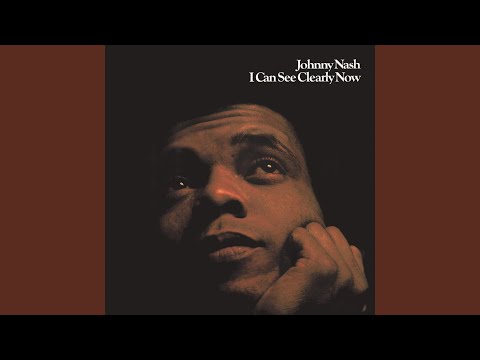

→ More from the 1970s File
View all 1970s hits →




Keep digging