The 1970s File Feature
Wildwood Weed
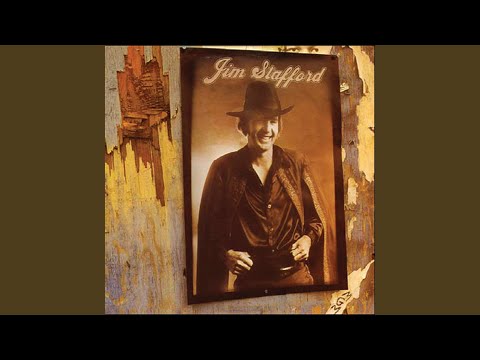
Wildwood Weed — Jim Stafford Comedy Country in the Summer of 1974 The summer of 1974 was an unusual moment for American popular music. Watergate was consumin…
01 The Story
Wildwood Weed — Jim Stafford
Comedy Country in the Summer of 1974
The summer of 1974 was an unusual moment for American popular music. Watergate was consuming the nation's political attention, disco was beginning its slow ascent in urban nightclubs, and the country-pop crossover that had been gaining momentum through artists like Glen Campbell and John Denver was reaching a kind of commercial peak. Into this landscape arrived Jim Stafford with a story song about two country boys who discover mysterious plants growing in their woodpile, decide to smoke them, and spend the rest of the summer in a state of accidental botanical enlightenment. The fact that "Wildwood Weed" reached number 7 on the Billboard Hot 100 in August 1974 says something interesting about the American appetite for novelty, narrative comedy, and cheerful subversion.
The track debuted on July 6, 1974, at position 84. Its subsequent climb was rapid and decisive, jumping to 62, then 35, then 18 within three weeks. By its peak week of August 24, 1974, the song had completed a fourteen-week chart run that made Stafford one of the more unusual stars of the summer.
Jim Stafford's Comedic Credentials
Jim Stafford was not a newcomer to novelty territory when "Wildwood Weed" arrived. He had scored earlier in 1974 with "Spiders and Snakes," a comedy-country duet that reached number 3 on the Hot 100 and established him as a performer with genuine commercial instincts for the humor song format. Born in Winter Haven, Florida, Stafford had developed his act through years of club performance and television appearances, and he understood the specific craft demands of the comedy record: the setup had to be clean, the pacing had to be exact, and the payoff had to land without telegraphing itself too early.
"Wildwood Weed" was written by Don Bowman, a country humorist whose career in comedy recordings stretched back to the 1960s. Stafford's performance gave the material its particular texture, deploying a deadpan rural narrator voice that never winks at the audience but lets the absurdity accumulate through pure storytelling logic.
The Storytelling Architecture of a Hit Comedy Record
What separates an effective novelty record from a mere joke is structural patience. "Wildwood Weed" earns its laughs through slow accumulation rather than fast punchlines. The narrator sets up the discovery with genuine folksy detail, describes the plant's properties through the innocent vocabulary of rural life, and allows the audience to grasp what is happening slightly before the characters in the story do. That dramatic irony, the listener knowing something the narrator pretends not to know, is a classic comedy technique deployed here with considerable skill.
The musical setting is straightforward country-pop, with a relaxed rhythm and simple melodic contours that keep the focus on the lyric rather than the arrangement. The production makes no attempt to upstage the story, which is exactly correct. A comedy song that draws attention to its musical ambitions loses the thread.
The Summer of Stafford
Having two Top 10 singles in a single calendar year was a remarkable commercial achievement, and Stafford's ability to repeat the trick confirmed that "Spiders and Snakes" had not been a fluke. The novelty genre had a history of one-hit wonders, artists who found a formula once and could not replicate it. Stafford demonstrated that genuine comedic craftsmanship could sustain a chart presence across multiple releases.
His television work during this period, including appearances on variety programs and his own specials, extended his reach beyond radio. Visual comedy and verbal comedy overlap but are not identical, and Stafford's ability to move between formats without losing his identity as a performer showed professional versatility that pure novelty acts rarely possessed. By the end of 1974, Jim Stafford had established himself as one of the most commercially successful comedy performers of the decade.
Legacy of the Laugh Track on the Hot 100
Comedy records have always occupied an uneasy place in pop music history. They are often dismissed as frivolous even when they demonstrate genuine craft, and their commercial success is sometimes treated as a category error rather than a legitimate artistic achievement. "Wildwood Weed" represents the comedy record at a high point of craft, a song that works as a story, as a joke, and as a piece of musical entertainment simultaneously.
Its chart position of number 7, alongside a fourteen-week Hot 100 run, places it firmly in the mainstream of 1970s American pop, not as an anomaly but as part of a tradition of narrative comedy songs that radio audiences genuinely loved. The tradition was old before Stafford arrived and continued after he moved on, but he occupied it with more skill than most. Press play and let the woodpile story do its work.
"Wildwood Weed" — Jim Stafford's singular moment on the 1970s charts.
02 Song Meaning
Wildwood Weed — Meaning, Themes, and Legacy
The American Art of the Tall Tale
Long before "Wildwood Weed" appeared on country radio, American folk tradition had a specific genre for stories about ordinary people stumbling into extraordinary or absurd situations. The tall tale, from Paul Bunyan to Mark Twain's Mississippi narrators, operates on the premise that ordinary rural life is already inherently strange enough to be funny when described with sufficient deadpan sincerity. Jim Stafford and writer Don Bowman placed "Wildwood Weed" squarely in that tradition. The song's narrator is not a sophisticated observer. He is a country boy telling a story he finds perfectly natural, and the gap between his blithe acceptance of events and the audience's understanding of what those events actually mean is where all the comedy lives.
The deadpan narrator is the song's central artistic device. The humor depends entirely on the performer never acknowledging the subversive content of what he is describing. Any wink at the audience would collapse the joke immediately.
Innocence as Rhetorical Strategy
On the surface, "Wildwood Weed" is simply a story about discovery: two rural characters find an unusual plant, experiment with it, and experience unexpected effects. The song's genius is that it narrates these events in the vocabulary of entirely innocent pastoral life. The language of farming, woodpiles, and country summers provides cover for content that was, in 1974, still culturally charged.
The song's approach to its subject was clever enough to pass the censors who might have objected to more explicit treatment of the same material. By maintaining the voice of innocent rusticity throughout, the track could be broadcast on mainstream country radio while simultaneously being understood by a segment of its audience as a more knowing commentary. That double register, operating simultaneously for different audiences, is a long-standing technique in American vernacular humor, from vaudeville to country music to stand-up comedy.
Comedy as Social Barometer
What a society finds funny is always a reliable indicator of what that society is anxious about, curious about, or in the process of normalizing. "Wildwood Weed" arrived in the summer of 1974, a moment when attitudes toward marijuana use were actively shifting in American culture. The drug remained illegal, but its cultural presence was shifting from countercultural symbol to mainstream curiosity. Comedy has historically served as a safe zone for exploring socially contested territory, and the novelty record functioned as a particularly accessible form of that exploration.
The fact that a song on this subject reached number 7 on the Hot 100 in 1974 reflects both Stafford's craft and a genuine cultural readiness for the material. A few years earlier, the song might not have found mainstream radio; a few years later, its novelty angle might have seemed dated. The timing was precise, which is often the case with comedy that breaks through.
The Craft of the Comedy Record
Novelty records are often undervalued by critics precisely because they work so transparently. The pleasure they offer is immediate and social: you hear the joke, you laugh, you share it. That immediacy can obscure the craft involved in constructing them. A comedy lyric that fails its timing, stretches its setup too long, or telegraphs its punchline stops being funny instantly. "Wildwood Weed" avoids all of those failures.
The song's enduring appeal, demonstrated by its continued presence in oldies programming and compilation albums, rests on the fact that the comedic architecture is genuinely sound. The setup is economical, the escalation is well-paced, and the conclusion lands cleanly. These are the same virtues that make any storytelling effective, comedy or otherwise, and they explain why a record from the summer of 1974 can still produce a smile fifty years later.
"Wildwood Weed" — Jim Stafford's singular moment on the 1970s charts.
→ More from Jim Stafford
View all Jim Stafford hits →
→ More from the 1970s File
View all 1970s hits →




Keep digging