The 1970s File Feature
Spiders & Snakes
Spiders Snakes: Jim Stafford's Novelty Triumph on the Hot 100 Jim Stafford arrived on the national commercial radar in late 1973 with "Spiders Snakes," a son…
01 The Story
Spiders & Snakes: Jim Stafford's Novelty Triumph on the Hot 100
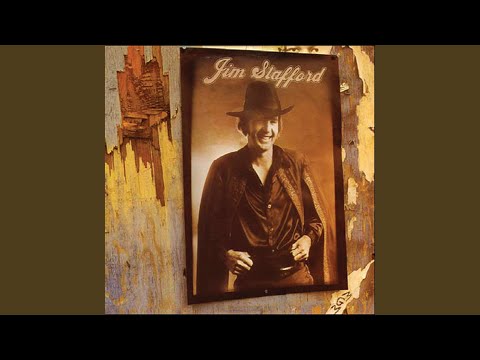
Jim Stafford arrived on the national commercial radar in late 1973 with "Spiders & Snakes," a song that would prove to be one of the most successful novelty-pop records of the mid-1970s and the launching pad for a career that made him one of the decade's most recognizable entertainment figures. Stafford was a Florida-born comedian and guitarist who had been performing on the club and comedy circuit for years before the record's breakthrough, and "Spiders & Snakes" captured precisely the personality he had developed in live performance: self-deprecating, warm, gently absurdist, and thoroughly unthreatening in a way that appealed to the broadest possible demographic range.
The song was written by Stafford alongside David Bellamy, who would later achieve his own commercial success as half of the Bellamy Brothers. The two had been friends and musical collaborators before either had made a significant mark on the charts, and the song reflected the kind of easy, humorous storytelling that both men brought to their creative work. The premise was simple: a boy tries to impress a girl and goes about it in exactly the wrong way, deploying the kind of rural-boy enthusiasm for things that frighten her, principally the creatures of the song's title, that reliably defeats his romantic intentions. The humor was grounded in recognizable human awkwardness, which gave the song accessibility well beyond the novelty market's typical ceiling.
MGM Records released "Spiders & Snakes" in late 1973, and its chart ascent into 1974 was one of the more sustained runs of that transitional period in American pop. The record benefited from a production style that kept the humor of the lyric at the forefront while surrounding Stafford's delivery with enough musical texture to make the track pleasurable as a piece of recording rather than merely as a comedic performance. The arrangement was clean and uncluttered, which served the song's storytelling structure well.
The single peaked at number three on the Billboard Hot 100 in early 1974, an exceptional performance for a novelty record in an era when the chart was dominated by more conventionally structured pop and soul recordings. It spent a substantial number of weeks in the top forty and demonstrated considerable staying power as radio programmers discovered that listeners asked for it repeatedly without the fatigue that typically afflicted novelty material. The song's crossover appeal extended across demographic boundaries that most novelty records could not bridge, reaching country audiences, pop audiences, and the family entertainment market simultaneously.
"Spiders & Snakes" became one of the best-selling singles of 1974, with sales estimates in the multi-million range that placed it among the year's commercial landmarks. This level of commercial success was unusual for a novelty record, which typically generated a burst of airplay and sales before fading as the joke wore out. Stafford's record proved more durable than the format's reputation suggested was possible, largely because the comedy was character-based rather than dependent on a single punchline.
The success of the single propelled Stafford onto national television, where his comedy and guitar skills translated naturally. He became a regular presence on variety programs and talk shows, and the momentum generated by "Spiders & Snakes" led directly to a string of follow-up singles that demonstrated both his commercial range and his limitations outside the novelty idiom. "My Girl Bill," released later in 1974, also cracked the top ten on the Hot 100, confirming that the initial success had not been a fluke and that Stafford had a real constituency among the record-buying public.
Stafford eventually parlayed his entertainment career into a long-running live attraction in Branson, Missouri, where he performed for decades after the commercial radio moment had passed. But "Spiders & Snakes" remained the foundation of his public identity, the song that listeners immediately associated with his name and the one that any serious account of 1970s pop radio needed to include. Its chart peak and its sales performance placed it in the same commercial conversation as the era's more earnestly intended hits, which was a kind of achievement in itself.
The song also occupies an interesting place in the cultural history of novelty pop, a genre that has always had a contested relationship with critical respectability. "Spiders & Snakes" was the kind of record that serious rock critics of the period tended to dismiss, but which millions of ordinary listeners embraced with genuine affection. The distance between those two responses says as much about the critical assumptions of the era as it does about the record itself, and from the vantage point of the present, the song's craft, in its pacing, its timing, and its deployment of the comic principle of recognizable human embarrassment, looks considerably more accomplished than it was given credit for at the time.
02 Song Meaning
The Comedy of Courtship: Reading "Spiders & Snakes"
"Spiders & Snakes" works as comedy because it works as character study first. The song's narrator is not a generic figure of fun but a specific type, the rural boy with genuine romantic intentions and absolutely no aptitude for reading the signals that might tell him his approach is failing. His enthusiasm for the natural world, specifically for the creatures most likely to cause distress in the girl he is pursuing, is genuine rather than malicious. He is not trying to frighten her; he is simply operating from a frame of reference in which these things are interesting, and he cannot quite understand why she does not share that frame. The comedy arises from the gap between his sincerity and his obliviousness, a gap that most listeners recognize as something they have either inhabited or witnessed.
The song's central comedic mechanism is the escalating mismatch between what the boy thinks constitutes impressive behavior and what the girl actually wants. Each verse compounds the previous miscalculation, and the narrator's cheerful incomprehension in the face of each failure is what sustains the humor across the song's full running time. This structure required careful control of pacing and tone, because the joke had to remain fresh across multiple repetitions of the basic situation while still arriving at a satisfying resolution. Stafford's delivery managed this by keeping the narrator's personality consistent: he never becomes defensive or bitter, which would have collapsed the comedy into something more uncomfortable.
The rural setting is important to the song's meaning. The specific social world the song depicts, a world where boys catch things and girls are expected to be disturbed by them, and where courtship rituals are governed by a particular understanding of gender that was already beginning to look dated by the early 1970s, is rendered with enough affection to prevent the song from becoming a satire. It is not mocking the world it describes; it is finding the comedy inherent in that world's internal logic, the way sincere intentions can produce consistently wrong outcomes when filtered through a particular set of cultural assumptions.
For Jim Stafford's artistic identity, the song established a template that he would work with throughout his career. The persona of the good-natured, slightly bewildered rural everyman, someone whose best efforts are perpetually undermined by a comic gap between self-perception and reality, became his signature. This persona was warm enough to generate affection rather than condescension from audiences, and broad enough to travel across regional and demographic lines that more specific comic material could not cross.
The song also reflects something true about the early 1970s moment in which it appeared. After years of heavy psychedelic seriousness in popular music, after the political weight of the late 1960s had pressed down hard on the cultural atmosphere, there was a genuine audience appetite for lightness, for music that made people laugh rather than think, and that offered a pleasant three minutes without demanding anything in return. "Spiders & Snakes" met that appetite perfectly. Its success was not accidental but reflected a real cultural mood, and understanding it requires understanding the specific relief that uncomplicated, good-natured humor represented in that particular historical moment.
→ More from Jim Stafford
View all Jim Stafford hits →
→ More from the 1970s File
View all 1970s hits →




Keep digging