The 1970s File Feature
Locomotive Breath
Locomotive Breath — Jethro Tull (1971 / 1976 US Chart) "Locomotive Breath" is one of the most recognizable tracks in British progressive rock, a piece that h…
01 The Story
Locomotive Breath — Jethro Tull (1971 / 1976 US Chart)
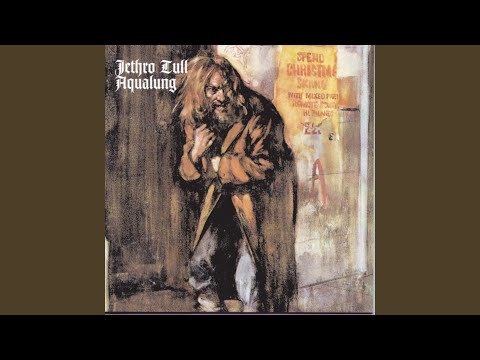
"Locomotive Breath" is one of the most recognizable tracks in British progressive rock, a piece that has outlasted most of its era's critical fashions and continued to generate commercial activity long after the genre that produced it fell out of fashion. Written by Ian Anderson and recorded by Jethro Tull, the song first appeared on the band's 1971 album "Aqualung," one of the landmark records of the early progressive rock period. Its American chart presence came later, when a re-release pushed the track onto the Billboard Hot 100 in 1976, giving it a second commercial life in the United States some five years after it had first been heard by British audiences.
Jethro Tull in 1971 was at a creative and commercial peak. The band had evolved rapidly from a blues-influenced ensemble in the late 1960s into something considerably more ambitious, incorporating classical and folk elements into a rock framework that emphasized Anderson's idiosyncratic flute work and his increasingly conceptual songwriting. "Aqualung" was not quite a concept album in the strict sense, but it had thematic coherence that distinguished it from simple collections of songs, and Chrysalis Records promoted it accordingly.
The recording of "Locomotive Breath" took place at Island Studios in London with producer Terry Ellis and engineer Robin Black. The arrangement was unusually structured for a rock track of the period. The song opens with an unaccompanied piano passage played by Anderson, a deliberate and somewhat surprising choice given that the piano was not a primary instrument for the band. The passage functions as an introduction of controlled tension before the band enters with considerable force. Guitarist Martin Barre's riff became one of the defining hard rock phrases of the early 1970s, and the rhythm section of bassist Jeffrey Hammond-Hammond and drummer Clive Bunker drove the track with momentum that matched the mechanical imagery of Anderson's lyrics.
The flute, Anderson's signature instrument, appeared in a manner quite different from the more pastoral or acoustic-folk contexts in which he often deployed it. Here it was aggressive and cutting, functioning more as a lead melodic voice within a hard rock arrangement than as a textural ornament. This juxtaposition of the flute with heavy guitar and thundering drums was central to Jethro Tull's identity and gave "Locomotive Breath" a sound that no contemporary band could credibly have replicated.
"Aqualung" was released in March 1971 and reached number four on the Billboard Pop Albums chart in the United States, making it the band's commercial breakthrough in America. "Locomotive Breath" was not released as a US single at that time, but received extensive FM album-oriented radio airplay. American listeners who encountered the album in 1971 responded strongly to the track, and it became a concert staple for the band through the decade.
The 1976 US chart appearance came as part of a repackaging effort tied to renewed label interest and the band's continued touring presence. By that point, Jethro Tull had released several more albums and had cemented their position as one of the more commercially successful progressive rock acts in the world. The song's performance on the Hot 100 in 1976, reaching the lower regions of the chart, reflected the power of album-radio saturation rather than a conventional singles campaign. FM stations had played "Locomotive Breath" for years, and the single's chart entry was more confirmation of existing popularity than the creation of new awareness.
Live performances of "Locomotive Breath" became increasingly elaborate as Jethro Tull's concerts grew in scale. Anderson's theatrical stage presence, which included distinctive physical mannerisms developed partly from his flute-playing posture, made the song a visual as well as sonic event. Bootleg recordings and official live albums documented versions of the track that sometimes ran considerably longer than the studio recording, with extended instrumental passages that the progressive rock audience of the period expected and rewarded.
The song has remained a constant presence on classic rock radio for decades. Its inclusion on film soundtracks, television programs, and commercial spots through the 1980s and 1990s broadened its audience beyond those who had been present for its original release. The "Aqualung" album has sold millions of copies worldwide and has been reissued multiple times, with anniversary editions generating renewed critical attention each time. Reviews of these reissues have consistently cited "Locomotive Breath" as one of the album's defining tracks, a piece in which the band's ambitions and their execution were unusually well aligned.
Ian Anderson's songwriting on the track demonstrated a capacity for imagery and rhythmic language that set Jethro Tull apart from many of their contemporaries. The mechanical metaphors Anderson employed gave the song an almost industrial quality that was at once abstract and viscerally felt, qualities that have proven durable across cultural shifts and generational changes in audience taste. The track remains a benchmark for what progressive and hard rock were capable of achieving in the early 1970s when ambition and craft were allowed to operate together without commercial pressure forcing either into compromise.
02 Song Meaning
The Meaning Behind "Locomotive Breath" by Jethro Tull
"Locomotive Breath" is built around a single extended metaphor: existence as an out-of-control train, gathering speed toward a destination that has not been chosen and cannot be altered. Ian Anderson wrote the song as an expression of environmental and existential anxiety, and the mechanical imagery that runs through the track functions on multiple levels simultaneously, as commentary on industrial society, on the human condition broadly, and on the specific feeling of losing agency over the direction of one's own life.
The train in the song is not a romantic symbol of travel or freedom. It is a mechanism gone wrong, accelerating without a functioning brake, carrying its passengers toward consequences they can neither predict nor prevent. Anderson's choice of the locomotive as his central image was deliberate and culturally precise. In the early 1970s, concerns about industrialization, overpopulation, and environmental degradation were entering mainstream discourse with new urgency. The Club of Rome had published its influential projections about resource limits in 1972, and the cultural mood in which "Locomotive Breath" was heard carried a particular kind of civilizational anxiety that the song's imagery directly addressed.
The figure at the center of the lyric is a man without control, watching his circumstances accumulate and worsen while remaining unable to intervene meaningfully. His personal relationships are failing, his sense of moral orientation has collapsed, and the general figure of God has, in the narrator's estimation, stepped aside from the proceedings. This theological element gives the song a dimension beyond social commentary. The abandonment the narrator feels is not only practical but spiritual, a sense that the universe itself has become indifferent to human suffering and individual choice.
The flute-and-guitar combination that characterizes the musical arrangement reinforces the lyrical tensions. The flute carries associations of pastoral tradition and folk elegance, while Martin Barre's guitar riff is insistently mechanical and heavy. The juxtaposition is not accidental. The song is arguing that the pastoral and the industrial exist in the same world and cannot be cleanly separated, that whatever organic beauty human beings have inherited is now embedded within structures of machinery and momentum that threaten to overwhelm it.
Within Jethro Tull's catalog, "Locomotive Breath" occupies a position of unusual centrality. The "Aqualung" album as a whole engaged with themes of institutional religion, social marginalization, and the gap between professed values and lived realities. "Locomotive Breath" approached these themes from a more abstract angle, using the train metaphor to capture the systemic character of the problems Anderson was describing. It is not simply that individuals make bad choices; the track suggests that the system itself is running beyond the capacity of any individual or institution to correct.
For listeners in the early 1970s, this message carried a particular resonance. The postwar optimism that had characterized the 1950s and early 1960s was visibly eroding. Environmental disasters, political scandals, and economic pressures were accumulating, and progressive rock as a genre was partly defined by its willingness to engage with large-scale cultural despair rather than retreat into romantic reassurance. "Locomotive Breath" captured that mood with unusual directness, channeling collective anxiety into a musical form energetic enough to be exciting and structured enough to be satisfying.
The song's endurance on classic rock radio and in popular memory reflects the durability of its core emotional and intellectual proposition. The feeling of being carried forward by forces one did not choose and cannot stop is not historically specific. It resonates across decades and generations, which is why "Locomotive Breath" has continued to find new listeners long after the specific cultural contexts of 1971 have receded from living memory.
→ More from Jethro Tull
View all Jethro Tull hits →


→ More from the 1970s File
View all 1970s hits →




Keep digging