The 1970s File Feature
Bungle In The Jungle
"Bungle In The Jungle" — Jethro Tull's 1974 Acoustic Safari The Strange Alchemy of Jethro Tull There was nothing quite like Jethro Tull on the American chart…
01 The Story
"Bungle In The Jungle" — Jethro Tull's 1974 Acoustic Safari
The Strange Alchemy of Jethro Tull
There was nothing quite like Jethro Tull on the American charts in the winter of 1974 to 1975. In a pop landscape dominated by smooth soft rock, disco's approaching thunder, and the big studio productions of established acts, Ian Anderson and his band occupied an almost comically singular position: a British progressive rock outfit built around folk-inflected acoustic guitar, intricate flute solos, and lyrics steeped in ecological allegory and working-class British irony. The fact that they could land a top-twenty hit in this environment with "Bungle In The Jungle" says something extraordinary about both the breadth of the American pop market in that period and the genuine accessibility that lay beneath Tull's sometimes forbidding progressive surface.
By the autumn of 1974, Jethro Tull had already established themselves as one of the most commercially successful progressive rock bands in the world. Their albums consistently sold in enormous quantities on both sides of the Atlantic, and their concert tours filled large venues. The band had developed a devoted American following that cut across the usual genre lines, embracing both the more straightforward rock crowd and the deeper progressive rock audience that wanted extended compositions and elaborate concept albums.
The Song's Origins and Construction
"Bungle In The Jungle" was taken from the 1974 album War Child, a record that had originally been conceived as the soundtrack to an animated film project that never materialized. When the film fell through, the songs were repurposed into a conventional studio album, though the music retained some of the tonal variety and narrative playfulness of its intended context. War Child was produced by Ian Anderson himself, who had taken increasing creative control over the band's recordings throughout the early seventies.
The track itself was built around a relatively sparse acoustic guitar figure, with the kind of fingerpicked folk-rock foundation that Anderson had explored throughout Tull's catalogue. Over this base, the arrangement added electric guitar, bass, drums, and Anderson's characteristic flute work, all woven together into something that sat curiously between folk song and rock production. The result was accessible enough for pop radio without sacrificing the idiosyncratic character that made Tull what they were.
Ascending the Hot 100
"Bungle In The Jungle" entered the Billboard Hot 100 on November 2, 1974, debuting at position 82. Its chart ascent was gradual and sustained, moving steadily upward through November and December as radio play built across the country. It reached its peak of number 12 on January 11, 1975, completing a journey of sixteen weeks on the chart in total. That peak represented the highest position Jethro Tull ever achieved on the Billboard Hot 100, a remarkable fact given the band's general positioning as an album-oriented act rather than a singles machine.
Sixteen weeks on the chart, climbing from the lower reaches all the way to the top fifteen, was exactly the trajectory of a record that found its audience through sustained radio play and word of mouth rather than an immediate commercial explosion. The band's existing fan base provided initial support while pop radio programmers, attracted by the song's relative accessibility, opened it to new listeners throughout the holiday season.
Anderson's Ecological Wit
Ian Anderson had by this point in his career established himself as a lyricist with a highly distinctive voice: sardonic, literary, fond of the natural world as a source of metaphor, and thoroughly willing to use ecological observation to comment on human social arrangements. "Bungle In The Jungle" fit squarely in this tradition. The jungle became a way of talking about human society through the lens of animal behavior, finding in the predatory logics of the natural world a sharp reflection of the competitive and often absurd dynamics of human civilization.
The song's central conceit mapped the social order of human life onto the jungle's food chain with a particular British irony that somehow crossed the Atlantic in full working order. American audiences in 1974 to 1975 were quite ready to receive this kind of observation about social Darwinism, given the prevailing anxieties of a post-Watergate, post-Vietnam, mid-oil-crisis era in which the official narratives of meritocracy and fairness had taken considerable damage.
The Record in Tull's Catalogue
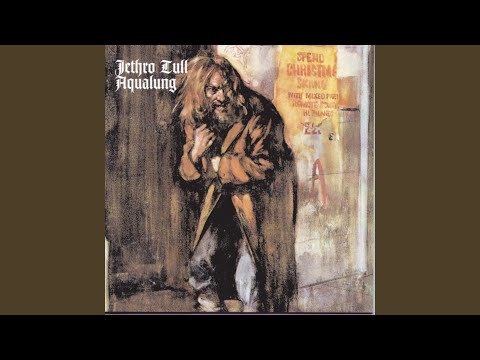
Within Jethro Tull's extensive discography, "Bungle In The Jungle" occupies the curious distinction of being their biggest American pop single while also being somewhat uncharacteristic of the band's more ambitious work. Albums like Aqualung, Thick as a Brick, and A Passion Play represented the more ambitious side of their artistic identity; "Bungle" showed what the band could produce when they compressed their sensibility into something radio-sized without losing the essential flavor.
The combination of folk acoustic texture, sardonic ecological wit, and Anderson's unmistakable flute-led production aesthetic made a record that sounded like nothing else in the top twenty that winter. For listeners who want to understand what made the mid-seventies rock landscape so fascinatingly diverse, press play and experience why a song about jungles and food chains could chart higher in America than almost anything else Tull ever recorded.
"Bungle In The Jungle" — Jethro Tull's singular moment on the 1970s charts.
02 Song Meaning
"Bungle In The Jungle" — Nature, Hierarchy, and the Satirist's Lens
The Jungle as Social Mirror
Ian Anderson has always been, at his best, a satirist who uses the natural world as a precision instrument for examining human behavior. "Bungle In The Jungle" extends this approach into what is arguably its most commercially successful expression. The song uses the predator-prey dynamics of the animal kingdom as a framework for dissecting the social and economic hierarchies that human civilization has built, asking, with pointed irony, whether the elaborate structures of modern life actually represent any improvement on the simple brutality of the food chain.
The comparison the song invites is not flattering to humanity. Animals in the jungle are at least honest about their motivations; the human social jungle operates on the same principles of domination and competition but conceals them beneath layers of convention, politeness, and institutional legitimacy. Anderson's lyrical wit consistently targets this gap between social performance and underlying reality, and "Bungle In The Jungle" is among his sharpest instruments for that purpose.
The British Tradition of Ecological Satire
Anderson's approach to natural-world satire placed him within a specifically British literary tradition, one that runs from Jonathan Swift through George Orwell and beyond, in which the behavior of animals is used to reflect the absurdities of human social organization. Animal Farm is the most famous modern example of this tradition; Anderson's contribution to it was channeled through folk-inflected rock music rather than political allegory, but the underlying satirical method is recognizably similar.
British rock and pop of the early seventies showed a consistent interest in this kind of literary self-consciousness, with artists drawing on classical allusion, folk tradition, and literary precedent in ways that their American counterparts less commonly attempted. Jethro Tull was among the most persistent practitioners of this approach, and "Bungle In The Jungle" demonstrates the form at its most accessible and commercially effective.
Post-Watergate Resonance in America
The song arrived in America at a moment when the country was processing some of the most significant institutional failures in its modern history. Watergate had demonstrated that the powerful were not bound by the rules they imposed on others. The Vietnam War had raised corrosive questions about the relationship between official narrative and actual conduct. The oil crisis had underscored the vulnerability of ordinary people to forces controlled by distant centers of power.
In this environment, a song that stripped away the pretense of human social organization and revealed the jungle underneath had immediate relevance. Anderson's irony was British, but the anxieties it addressed were entirely transferable to an American audience in late 1974. The song gave those anxieties a form that was playful enough to be entertaining while pointed enough to carry genuine critical content.
The Folk-Rock Frame and Its Effect
The decision to build "Bungle In The Jungle" on an acoustic guitar foundation rather than the heavier electric textures that much of Jethro Tull's music employed is significant for the song's meaning as well as its sound. Folk music has a long history as a vehicle for social commentary, and the choice of folk-inflected production gave the song's satirical content a grounding in that tradition. It positioned the record within a lineage of songs that used accessible musical forms to make critical observations about power and social organization.
The flute, Anderson's most personally distinctive instrument, added an element of pastoral irony to the jungle setting, suggesting a naturalist's observation post rather than a position of moral superiority. The narrator of "Bungle In The Jungle" is very much within the system being described, not outside it, and the production choices reinforced that stance.
Why the Song Endures
The durability of "Bungle In The Jungle" rests on the durability of its central observation. The social dynamics it describes have not changed; if anything, the transparency of power's operations has increased in the decades since, making the song's core argument more rather than less legible. Anderson's satirical mode, which refuses both despair and naive optimism in favor of clear-eyed irony, turns out to be a sustainable position from which to write music. The song ages well because its subject matter cannot be exhausted.
→ More from Jethro Tull
View all Jethro Tull hits →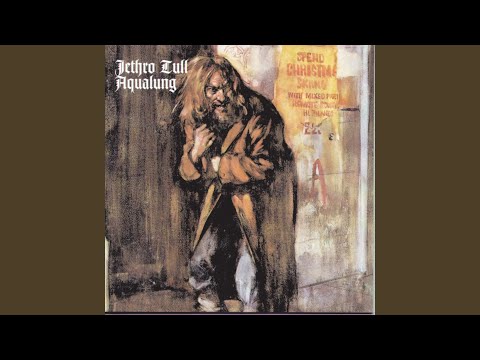


→ More from the 1970s File
View all 1970s hits →




Keep digging