The 1970s File Feature
Redneck Friend
Jackson Browne's "Redneck Friend": Recording, Release, and Chart History By the time Jackson Browne recorded "Redneck Friend" in 1973, he had already establi…
01 The Story
Jackson Browne's "Redneck Friend": Recording, Release, and Chart History
By the time Jackson Browne recorded "Redneck Friend" in 1973, he had already established himself as one of the most significant voices in the Los Angeles singer-songwriter scene that had emerged from Laurel Canyon and its surrounding cultural ecosystem. His 1972 debut album had introduced him to a devoted audience, and his second album, For Everyman, released in October 1973, was eagerly anticipated by critics and fans who had recognized in his first record a songwriter of unusual emotional and melodic gifts.
For Everyman represented a deliberate expansion of Browne's palette. Where his debut had been characterized almost entirely by introspective, emotionally serious material, the second album introduced a range of tonal registers that demonstrated his versatility as a writer and performer. "Redneck Friend" was the most dramatic example of this expansion, functioning as a good-natured, loose-limbed boogie that stood in sharp contrast to the album's more characteristic confessional ballads and folk-rock meditations.
The track was produced by Al Schmitt alongside Browne, and the recording session reflected the collaborative spirit of the Southern California music community in the early 1970s. Musicians who moved between sessions, albums, and band configurations throughout the Los Angeles scene contributed to a sound that was simultaneously polished and relaxed. "Redneck Friend" benefited from this ethos; the track has an improvisational energy that suggests musicians playing with genuine enjoyment rather than technical calculation.
Asylum Records, the label founded by David Geffen that had become the central hub of the Los Angeles singer-songwriter scene, released the track as a single from For Everyman. The song entered the Billboard Hot 100 and climbed to a peak of number eighty-five, spending ten weeks on the chart. That chart performance was modest by the standards of Browne's later commercial dominance, but it was consistent with the trajectory of an artist still building his mainstream audience in 1973.
The Hot 100 performance of "Redneck Friend" was somewhat anomalous in that it was Browne's most overtly commercial-sounding track at that point in his career and yet did not achieve his strongest chart position. This disparity reflected a common dynamic in early 1970s rock: Asylum Records had built its roster around critically admired artists whose core audiences were deeply engaged but not necessarily large enough to drive singles-chart success without radio crossover support. Browne's listeners were album buyers first, and the singles chart did not always capture their engagement accurately.
The song's boogie-rock character was sufficiently different from Browne's established sound that some observers treated it as a curiosity rather than a key work. In retrospect, however, it demonstrates an important dimension of his range. He was not only the melancholy confessionalist of "These Days" and "Song for Adam"; he was also capable of the kind of loose, joyful music-making that "Redneck Friend" embodies, and For Everyman was the first clear evidence of that capacity.
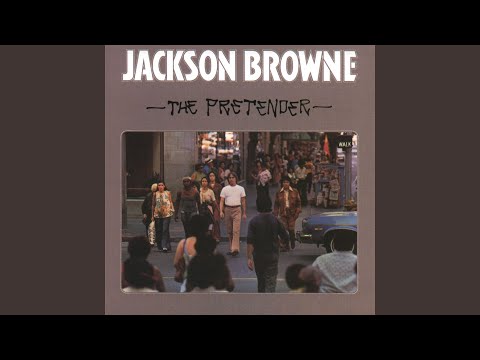
Jackson Browne's commercial profile rose dramatically in subsequent years. His 1974 album Late for the Sky and his 1976 record The Pretender produced successively larger audiences, and by the late 1970s he was among the most commercially successful artists in mainstream rock. Against that later trajectory, "Redneck Friend" reads as an early, relatively modest data point — a ten-week chart presence at eighty-five — from a period when his commercial ceiling had not yet been fully established.
The legacy of For Everyman as an album has grown considerably in the decades since its release. Critics and historians of the Los Angeles singer-songwriter tradition have increasingly recognized it as an essential document of the scene's creative richness, and "Redneck Friend" is regularly cited as evidence of the tonal variety that made the album more than a simple follow-up to Browne's celebrated debut. Its ten-week Hot 100 run documented the song's commercial moment; its reputation in the album's critical reassessment has proved more durable.
02 Song Meaning
Release, Range, and the Meaning of "Redneck Friend" by Jackson Browne
"Redneck Friend" is one of the more revealing tracks in Jackson Browne's catalog precisely because it seems to contradict what most listeners expect from him. Browne's reputation rests largely on his capacity for earnest, emotionally searching introspection — songs that take the interior life seriously and treat romantic and existential loss as worthy of extended musical attention. "Redneck Friend" does none of those things. It is a good-time boogie, loose and celebratory, inviting the listener to stop thinking and start moving. That it comes from the same songwriter who produced some of the most affecting confessional rock of the 1970s is the essential fact about its cultural significance.
The song demonstrates that Browne's artistic range extended well beyond the mode for which he became famous. This is worth emphasizing because canonical reputations in popular music tend to flatten artists into their most celebrated characteristics, obscuring the full range of their capabilities. For Everyman, the album on which "Redneck Friend" appears, is most often discussed in terms of its serious, introspective material. The boogie track in the middle of the running order is the album's most significant tonal disruption, and it is a disruption that enriches rather than undermines the record's overall effect.
There is something almost programmatic about the song's placement in Browne's discography. Coming after a debut album that had established him firmly as a singer-songwriter in the introspective, confessional tradition, "Redneck Friend" signaled that he was aware of the box that reputation created and was determined not to be confined by it. The song does not apologize for its pleasures or embed them in a framework of irony. It simply invites the listener to enjoy a moment of uncomplicated musical fun, and in doing so, it asserts that such moments are as legitimate a subject for a serious artist as grief, longing, or existential uncertainty.
The song's title and its friendly, unpretentious tone also carry a mild cultural argument. The early 1970s Los Angeles rock scene was overwhelmingly associated with a certain kind of educated, middle-class sensibility. Asylum Records and its roster represented a cultural world in which thoughtfulness and artistic seriousness were paramount values. A song called "Redneck Friend," delivered with affection rather than condescension, suggests an openness to working-class culture and pleasures that was not entirely characteristic of the scene Browne inhabited. It is not a profound cultural gesture, but it is a genuine one.
In the context of Browne's full career, the song matters as evidence of a versatility that his most devoted admirers have always acknowledged even when it has not been central to his public image. He has returned periodically throughout his career to more uptempo, rhythmically driven material, and "Redneck Friend" established that this dimension of his creativity existed from early in his recording life. It was not a concession to commercial pressure or a departure from his authentic sensibility; it was an expression of a different but equally authentic aspect of who he was as a musician.
The modest chart performance — peak at eighty-five over ten weeks — meant that the song reached only a fraction of the audience that would eventually engage with Browne's work through his late-1970s commercial peak. For many listeners, it exists as a discovery rather than a first encounter, something found while exploring an album they approached through its more celebrated tracks. That mode of discovery is perhaps fitting for a song that rewards curiosity and openness rather than seeking attention through the conventions of commercial ambition.
For historians of the Los Angeles singer-songwriter scene, the song documents the breadth of influences that flowed through that community in the early 1970s, where the boundaries between folk, rock, country, rhythm and blues, and boogie were more permeable than genre categories suggest. "Redneck Friend" sits comfortably in that permeable space, belonging to multiple traditions without being owned by any single one.
→ More from Jackson Browne
View all Jackson Browne hits →

→ More from the 1970s File
View all 1970s hits →




Keep digging