The 1970s File Feature
Somewhere In The Night
"Somewhere in the Night" — Helen Reddy (1975) The Queen of Adult Contemporary Finds a New Ballad By the time Somewhere in the Night arrived on the chart in D…
01 The Story
"Somewhere in the Night" — Helen Reddy (1975)
The Queen of Adult Contemporary Finds a New Ballad
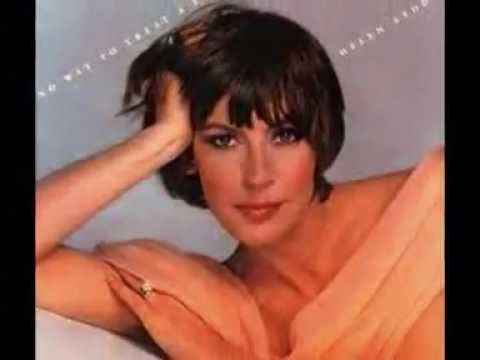
By the time Somewhere in the Night arrived on the chart in December 1975, Helen Reddy had already secured her place in American pop history. Her 1971 recording of I Am Woman had become one of the most recognized feminist anthems of the twentieth century, reaching number one and winning the Grammy Award for Best Female Pop Vocal Performance. The years that followed had seen her maintain a consistent presence in the upper reaches of the adult contemporary chart, building a catalog of big-voiced ballads that suited her expansive, authoritative delivery.
The mid-1970s were productive years for Reddy. She had established herself as a reliable chart performer across multiple styles, from uptempo pop to the kind of lush orchestral ballad that radio programmers in the adult contemporary format particularly valued. Somewhere in the Night fell squarely into that latter category, a romantic, searching piece of songwriting that gave her voice room to move through a wide emotional range.
The Song and Its Sound
The track was written by Will Jennings and Richard Kerr, a songwriting partnership that produced several successful songs during this period. Their composition was built around the kind of sweeping melodic line that suited a voice with genuine range and projection, and Reddy's performance met those demands with characteristic skill. The production, in keeping with the mid-1970s adult contemporary aesthetic, favored full orchestration, with strings providing the emotional architecture that the melody demanded.
The arrangement was lush without being cluttered, giving the vocal sufficient space to carry the emotional weight of the lyric while surrounding it with the sonic warmth that adult contemporary radio audiences expected. This was sophisticated mainstream pop production, professional in every dimension and calibrated precisely for the format it inhabited.
The Chart Journey
The Billboard Hot 100 run for Somewhere in the Night was one of the more satisfying of Reddy's career in terms of trajectory. Debuting at number 85 on December 6, 1975, the single climbed steadily through the early weeks, moving decisively upward as holiday radio scheduling gave way to the regular programming of the new year. The ascent continued through January and into February 1976. The track peaked at number 19 on February 14, 1976, a date that felt appropriate for a romantic ballad of this kind, and it spent fourteen weeks on the Hot 100 in total. That extended run reflected the staying power of a record that had found a loyal audience in the adult contemporary format.
The adult contemporary chart, where Reddy was a genuine force, returned even stronger results. The song's performance there confirmed what her commercial history had established: she had one of the most reliable connections to that specific audience of any artist of her era.
Reddy's Position in 1975
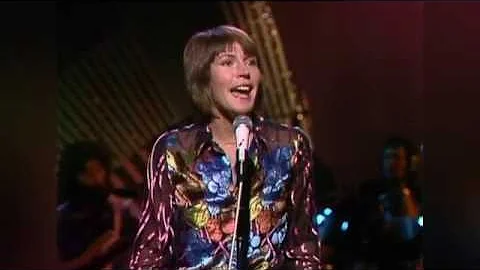
The mid-decade context for Helen Reddy was one of consolidation. She had proven her commercial power, expanded her television presence with her own variety show, and built a career that extended well beyond the feminist anthem with which she would always be most closely identified. Somewhere in the Night demonstrated her range as an interpreter, her ability to inhabit a love song with the same conviction she brought to more overtly political material.
The adult contemporary format of the mid-1970s was a genuinely significant commercial space, capable of generating substantial sales and radio play for artists who could speak to an audience older than the teenage pop market. Reddy had cultivated that audience carefully, and this track rewarded the investment.
The Song's Place in Her Catalog
Among the body of work Helen Reddy produced across her peak commercial years, Somewhere in the Night occupies a position as a particularly graceful example of her interpretive gifts. The song offered a kind of romantic longing that she rendered with genuine warmth, avoiding both saccharine excess and unearned distance. It was the kind of performance that made adult contemporary the format it was: music for people who had stopped needing their pop to be provocative and had started wanting it to be true.
Find the orchestral version, turn the volume up, and let one of the great voices of the 1970s show you exactly what a romantic ballad could do in the right hands.
"Somewhere in the Night" — Helen Reddy's singular moment on the 1970s charts.
02 Song Meaning
The Meaning Behind "Somewhere in the Night" — Helen Reddy
The Geography of Longing
The title of this song positions its emotional subject in spatial terms, locating love and the search for it not within the daylight world of practical life but in the indefinite, atmospheric space of night. That geographical metaphor was well chosen. Night in popular song carries associations of vulnerability, of letting down defenses, of openness to feeling that the pressures of daylight activity make difficult. The implicit argument of the title is that what the narrator seeks can only be found when the ordinary world recedes, when the quiet arrives and the heart has room to speak.
The lyrical content of songs built around this kind of romantic searching typically circles around the tension between solitude and connection, the awareness of what is absent set against the hope that it exists somewhere and can be found. Will Jennings and Richard Kerr, as songwriters, understood this emotional territory well and constructed material that gave it room to breathe.
Helen Reddy as Interpreter
Helen Reddy's greatest gift as a singer was her ability to make an audience believe she was singing from a place of genuine experience rather than mere professional craft. Her vocal authority was never cold; it carried warmth and a quality of emotional honesty that allowed listeners to project their own experiences onto the material without feeling that the singer was indifferent to the stakes. With a romantic ballad like Somewhere in the Night, those qualities were essential. The song asked for vulnerability as well as power, and she delivered both.
The performance also demonstrated what made her distinctive among the female pop singers of her era. Where some vocalists in this style leaned into drama to the point of self-parody, Reddy maintained a quality of restraint that made the emotional moments land more cleanly. She trusted the melody and the lyric to carry meaning without needing to push every phrase to its limit.
Mid-1970s Romanticism and Its Context
The years 1975 and 1976 occupied an interesting emotional space in American popular culture. The counter-cultural upheaval of the late 1960s and early 1970s had given way to a period of reassessment and quieter aspiration. Romantic ballads of this kind reflected a broader cultural appetite for sincerity, for music that spoke to private feeling rather than social commentary. The adult contemporary format had grown precisely to serve this appetite, and Helen Reddy was one of its most reliable suppliers.
The timing of the song's peak, around Valentine's Day 1976, gave it additional resonance with an audience already primed for romantic reflection. That alignment between subject matter and calendar moment was partly coincidental but wholly fortunate, and it contributed to the song's fourteen-week chart residence.
Why the Song Holds Up
Romantic searching is a theme that does not age because the underlying experience does not age. The feeling of reaching for connection across the quiet of night, the sense that somewhere beyond the immediate moment something better waits, belongs to no particular decade. The Will Jennings and Richard Kerr songwriting craft ensured that the song was built on genuine melodic and lyrical substance rather than mere formula, giving it the durability that separates adult contemporary classics from their more disposable contemporaries.
Helen Reddy's recording captured a mood that resonated with millions of listeners in its original moment and continues to speak to anyone who has experienced the particular quality of late-night hoping that the song describes so precisely and so warmly.
→ More from Helen Reddy
View all Helen Reddy hits →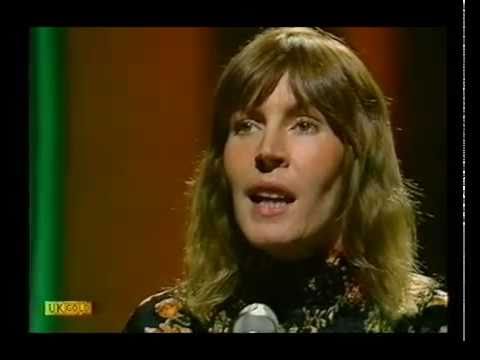


→ More from the 1970s File
View all 1970s hits →




Keep digging