The 1970s File Feature
Shinin' On
"Shinin' On" — Grand Funk's Summer Chart Assault of 1974 Heavy Rock's Commercial Colossus Takes Another Swing Few bands in the early 1970s could fill arenas …
01 The Story
"Shinin' On" — Grand Funk's Summer Chart Assault of 1974
Heavy Rock's Commercial Colossus Takes Another Swing
Few bands in the early 1970s could fill arenas the way Grand Funk Railroad did, and few attracted the particular combination of massive popular success and withering critical contempt that the Flint, Michigan hard rock trio had managed to accumulate by 1974. Critics spent years insisting that Grand Funk's appeal was a mystery, that their music was too loud, too simple, too blunt for the accolades their audience was bestowing on them by buying every record in enormous quantities. The audience, apparently unbothered by critical consensus, kept showing up. By the time "Shinin' On" arrived in the summer of 1974, Grand Funk Railroad had added keyboardist Craig Frost and shortened their name to Grand Funk, and they were operating at a commercial peak that seemed impervious to outside opinion.
The Album and Its Context
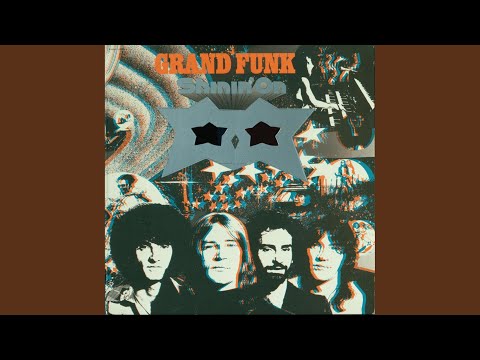
The Shinin' On album, released in March 1974 on Capitol Records, was the band's ninth studio album and showcased the musical expansion that Frost's arrival had enabled. Where earlier Grand Funk had been a power trio of almost Neanderthal directness (the critical word, deployed without much sympathy at the time), the quartet was now capable of more textured, varied arrangements. "Shinin' On" the single distilled that expanded palette into something commercially focused: built on the band's fundamental rock energy but polished with a melodic accessibility that made it radio-friendly without sacrificing the essential heaviness that their audience demanded.
The production was brighter and cleaner than the band's earlier recordings, reflecting both the evolving studio technology of the period and the influence of their work with producer Jimmy Ienner, who had been instrumental in steering the band toward more commercially shaped material. The result was a track that delivered maximum guitar energy within a format that FM radio stations could slot comfortably alongside contemporaries ranging from Aerosmith to Three Dog Night.
An Explosive Chart Debut and Fast Climb
The song debuted on the Billboard Hot 100 on July 13, 1974, entering at a commanding number 63, which reflected immediate radio programming enthusiasm rather than a slow build. From there, the ascent was rapid: 34, then 28, 22, 18, and continuing upward until the track reached its peak position of number 11 on August 24, 1974, spending eleven weeks on the chart in total. That trajectory, particularly the early leap from 63 to 34, indicated a record that radio program directors were genuinely excited about, not just scheduling out of obligation to the band's commercial track record.
The Summer of 1974 on American Radio
The Hot 100 in mid-1974 was a genuinely eclectic document of American pop taste: Paul McCartney and Wings, Gordon Lightfoot, Barry White, and the emerging sounds of what would eventually be called soft rock all competed for airtime alongside harder-edged material. Grand Funk's presence in the top fifteen during that period was a reminder that a significant portion of the American radio audience had no interest in the gentler sounds then gaining critical favor, and that the appetite for muscular guitar rock remained enormous despite the direction critical discourse was heading.
A Legacy Beyond Critical Reputation
Grand Funk's place in rock history has undergone considerable revision since their commercial peak. Subsequent generations of musicians and critics have come to recognize the band's importance as forerunners of hard rock's arena-filling potential, their influence traceable forward to stadium rock of the late 1970s and beyond. "Shinin' On" stands as a high point of their most commercially successful period, a track that combined their fundamental strengths with enough melodic refinement to reach a pop audience while retaining everything that their core fans loved about them.
Eleven weeks on the chart, a top-fifteen peak, and a sound that still carries the visceral punch of its era: if you've never given Grand Funk their due, "Shinin' On" is a compelling place to start. Crank it and understand what packed those arenas.
"Shinin' On" — Grand Funk's singular moment on the 1970s charts.
02 Song Meaning
Power, Light, and the Communal Roar — The Meaning of Grand Funk's "Shinin' On"
Rock as Affirmation
Grand Funk built their following on a form of rock music that was, at its core, affirmative rather than confrontational. Where much of the hard rock of the era derived its energy from anger, alienation, or transgression, Grand Funk's power came from a more inclusive emotional register: the music said yes rather than no, invited rather than excluded, amplified the feeling of being alive rather than dwelling on its difficulties. "Shinin' On" exemplifies this quality. Its title alone communicates brightness, warmth, and forward motion, and the music delivers on that promise with a directness that left no room for ambiguity.
Working Class Rock and Its Audience
The Flint, Michigan origin of Grand Funk was not incidental to their meaning. They came from an industrial city that embodied the American working class at a moment when that class was beginning to feel the first tremors of the deindustrialization that would reshape the country over the following decades. Their audience was largely the same demographic: young, working class or lower middle class, without much use for the increasingly sophisticated or ironic gestures that rock criticism was beginning to reward. Grand Funk's music spoke to those listeners in a language they understood and valued, without condescension or complication. "Shinin' On" offered a vision of light and possibility that was emotionally uncomplicated and all the more powerful for it.
The Critical-Popular Divide
Few bands of the era illustrated the gap between critical reception and popular success as dramatically as Grand Funk, and understanding that gap is part of understanding what their music meant to the people who loved it. Critics in 1974 largely ignored or dismissed the band, continuing a pattern of condescension that had characterized their coverage throughout the early 1970s. Their audience, however, was not reading Creem or Rolling Stone for permission to enjoy what they were hearing. The disconnect was generational and class-inflected: Grand Funk's listeners trusted their own physical and emotional response to the music more than they trusted the aesthetic judgments of critics who seemed to value things they did not.
Brightness as a Musical Argument
The title "Shinin' On" makes a visual and emotional argument: that light exists, that it reaches things, that it is worth orienting toward. In the context of 1974 America, four years into the Nixon presidency's slow unraveling, with the energy crisis and Vietnam still shaping daily consciousness, a song about shining carried real emotional weight. Rock's default mode in that period was often darker: the nihilism of glam rock, the darkness of heavy metal's emerging mythology, the political disillusionment that ran through much of the era's countercultural music. Grand Funk's insistence on brightness was its own form of counter-statement.
Why the Song Still Carries Weight
The straightforwardness that critics disparaged in Grand Funk's music is, from a longer historical perspective, a form of integrity. They made exactly the music they believed in, delivered to an audience that believed in it alongside them, without deflection or irony. "Shinin' On" contains no hidden layers, no detached cleverness, no winking acknowledgment of its own simplicity. It just plays, loud and bright and fully committed, which is ultimately what rock and roll has always done best when it is operating at its most honest. That honesty is what has kept it in the memory of those who heard it in 1974 and what gives it its particular vitality for new listeners discovering it decades later.
→ More from Grand Funk
View all Grand Funk hits →


→ More from the 1970s File
View all 1970s hits →




Keep digging