The 1970s File Feature
Bad Time
Bad Time — Grand Funk's Softer Side The Stadium Kings Try Something Quieter Grand Funk Railroad had spent the early 1970s as one of the most ferociously popu…
01 The Story
Bad Time — Grand Funk's Softer Side
The Stadium Kings Try Something Quieter
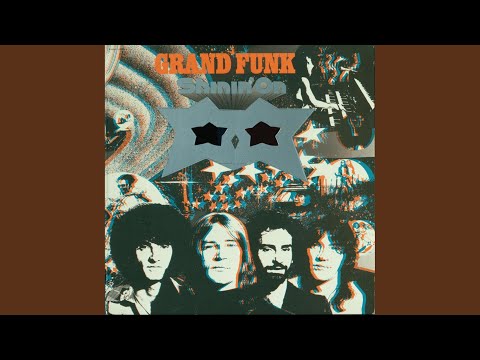
Grand Funk Railroad had spent the early 1970s as one of the most ferociously popular live bands in America. Their concerts at Shea Stadium in 1971 sold out faster than The Beatles had managed the same venue, and their brand of hard-driving Midwestern rock had earned them a devoted arena following. By 1974, the band had shortened their name to Grand Funk and made a calculated pivot, signing with Capitol Records and working with producer Jimmy Lenner on a sound that reached toward melodic pop without entirely abandoning the muscle beneath. "Bad Time" emerged from that evolution as one of the group's most commercially successful singles, a song that found them trading distortion for something softer and perhaps more revealing.
Writing From the Inside
The track was written by Mark Farner, the band's guitarist and primary creative force. Farner had always been capable of melody alongside his celebrated rhythmic intensity, and "Bad Time" showed the quieter register of his songwriting. The song dealt with romantic regret and missed opportunity, the particular ache of realizing a relationship is dissolving before you have mustered the will to prevent it. It was personal territory rendered in a musically accessible form, and the production treated it accordingly: warm, mid-tempo, with vocal harmonies that opened up the arrangement rather than compressing it into the harder textures the band had favored earlier in the decade.
A Sustained Billboard Climb
"Bad Time" entered the Billboard Hot 100 on April 5, 1975, debuting at position 69. What followed was a remarkably patient chart ascent across fifteen weeks. The single climbed steadily through spring and into early summer, eventually reaching its peak position of number 4 during the week of June 7, 1975. That peak placed it among the biggest pop hits of that season and represented Grand Funk's third top-five single on the Hot 100. The sustained upward trajectory, rather than a sharp spike and decline, suggested that radio programmers and listeners were genuinely warming to the track over repeated exposure, a sign of real staying power in the mid-1970s radio landscape.
The Crossover That Defined the Period
The mid-1970s were a complicated moment for rock acts built during the hard rock explosion of 1969-1973. Stadium sounds were softening. FM album-oriented radio was maturing but still finding its format, and the singles market rewarded melody and accessibility over pure volume. Grand Funk's move toward a more polished pop sound was typical of the era, shared by other heavy acts who recognized that sustaining commercial relevance required reaching beyond the core fan base. "Bad Time" succeeded in that crossover precisely because it did not feel like a compromise forced from outside; Farner's songwriting gave it genuine emotional content that listeners responded to regardless of what genre they normally preferred.
Legacy and the Sound of Transition
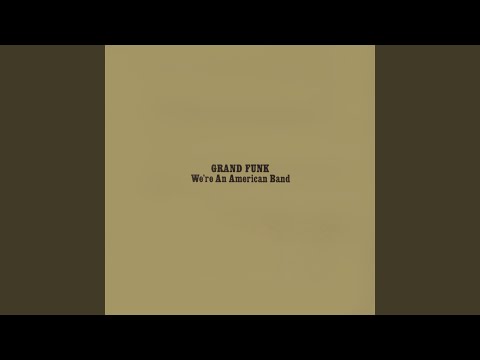
Heard now, "Bad Time" functions as a document of its moment in the Grand Funk timeline and in the broader arc of 1970s pop. It captures a band navigating the tension between the raw energy that made them famous and the melodic sophistication that the marketplace increasingly required. The fact that it reached number 4 on the Hot 100 suggests the navigation was successful, at least commercially. Grand Funk's ability to sustain fifteen weeks on the Hot 100 with a mid-tempo ballad spoke to the depth of radio support the track earned: this was not a novelty charting on curiosity, but a song that programmers and listeners kept returning to across an entire spring season. For listeners who associate Grand Funk primarily with their Shea Stadium era and the bombast of songs like "We're an American Band," "Bad Time" offers a useful and rewarding counterpoint: evidence that the band's range extended further than their rock mythology sometimes suggests. Press play and hear one of the 1970s' most unlikely pop moments delivered with complete conviction.
"Bad Time" — Grand Funk's singular moment on the 1970s charts.
02 Song Meaning
Bad Time — Meaning and Themes
The Anatomy of Romantic Regret
What "Bad Time" captures so efficiently is a specific emotional state: the moment when someone recognizes that a relationship is ending and understands, with painful clarity, that the timing of their own feelings has been off. The narrator does not appear angry or betrayed; the predominant emotion is something closer to resignation mixed with longing. This register of quiet heartache was not the emotional territory Grand Funk had typically occupied, which made the track feel like an authentic departure rather than a calculated image exercise. There is self-awareness in the sentiment, an acknowledgment that circumstance and feeling sometimes arrive out of sync with each other.
Timing as the Song's Central Metaphor
The title itself is worth examining. Calling the situation a "bad time" frames the problem as one of scheduling rather than incompatibility, suggesting the relationship might have worked under different conditions. That distinction matters emotionally. It allows the narrator (and the listener) to grieve without assigning blame, to mourn something good that simply could not survive its own moment. Mid-1970s pop was full of these quietly philosophical emotional positions, a generation processing the idealism of the 1960s through the more skeptical lens of a new decade. "Bad Time" fits that cultural mood with considerable precision.
The Context of Rock's Softening Edge
By 1975, the sonic landscape of American radio was in genuine transition. The explosive rock energy of the early part of the decade was giving way to smoother textures, more polished production, and a greater premium on vocal harmony. Grand Funk's evolution toward "Bad Time" made sense within that landscape, but it also meant that the song carried an implicit cultural argument: that hard rock artists had emotional depth worth exploring in softer formats. The track succeeded in making that case. The melody carried genuine feeling, and Farner's vocal delivery ensured that the pop surface did not feel like a costume worn over a different kind of artist.
Resonance Across Decades
Songs about romantic bad timing age well because the experience they describe is genuinely universal. Every generation has its version of the feeling, and the specific vocabulary shifts while the core emotion persists. "Bad Time" has maintained a presence in classic rock programming and oldies formats precisely because it speaks to something permanent rather than something dated. Grand Funk's willingness to be vulnerable on this track gave it a staying power that more conventionally hard-edged material from the same period sometimes lacks. The song is also, simply, very well constructed: the melody is memorable, the arrangement serves the emotion, and the performance matches the material with care.
"Bad Time" — Grand Funk's singular moment on the 1970s charts.
→ More from Grand Funk
View all Grand Funk hits →

→ More from the 1970s File
View all 1970s hits →




Keep digging