The 1970s File Feature
Talking In Your Sleep
"Talking In Your Sleep" — Gordon Lightfoot's 1971 Folk-Pop Dispatch Gordon Lightfoot in the Early Seventies There is a particular quality to the early 1970s …
01 The Story
"Talking In Your Sleep" — Gordon Lightfoot's 1971 Folk-Pop Dispatch
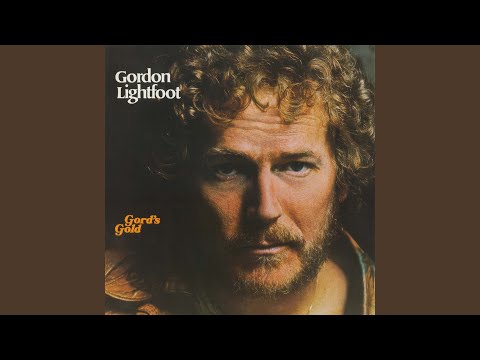
Gordon Lightfoot in the Early Seventies
There is a particular quality to the early 1970s folk-pop recordings that emerged from Canada, a kind of acoustic clarity and emotional directness that stood in deliberate contrast to the maximalist rock productions dominating album-oriented radio. Gordon Lightfoot was among the most gifted practitioners of this approach, a singer-songwriter from Orillia, Ontario, whose work had been recognized by some of the most respected names in American popular music long before he achieved his own mainstream chart success. Bob Dylan and Peter, Paul and Mary had covered his compositions in the 1960s, cementing his reputation as a writer of unusual depth and craft.
By the time "Talking in Your Sleep" arrived in 1971, Lightfoot was well established in the folk and country-folk world but had not yet broken through to the kind of pop chart prominence that would come with later recordings. He was signed to Reprise Records and releasing a consistent series of albums that built his audience steadily without the dramatic commercial spikes that characterized pop radio success. His appeal was rooted in the quality of his songwriting, and his audience tended to be listeners who valued those qualities above chart position.
The Song and Its Emotional Territory
The title "Talking in Your Sleep" locates the song in an intimate domestic space, the specific vulnerability of overhearing a sleeping partner reveal something in their unconscious speech. This is a theme that combines tenderness with the unsettling edge of discovering what someone keeps hidden from waking conversation. Lightfoot's particular gift was for songs that captured the complicated emotional landscape of adult relationships without simplifying them into easy sentiment or exaggerated drama.
The production was characteristically spare, built around acoustic instrumentation and Lightfoot's distinctive baritone, which carried a weight and authority that gave even his quietest recordings a sense of gravity. The arrangement served the lyrical content rather than competing with it, which was a consistent principle in his work through this period.
The Billboard Chart History
The single debuted on the Billboard Hot 100 on June 19, 1971, entering at position 87. Over the following seven weeks, it climbed steadily through the chart, reaching its peak position of number 64 on July 24, 1971. The track's seven-week run documented consistent radio support that reflected both Lightfoot's established reputation and the song's particular suitability for the adult-oriented format that FM radio was developing in the early 1970s.
A peak of 64 in 1971 placed the track in the competitive middle of a chart that was simultaneously hosting records by Carole King, Rod Stewart, the Rolling Stones, and Three Dog Night, among many others. Reaching number 64 in that company required genuine audience support, and the seven weeks of chart presence suggested that once listeners found the song on their radio, they kept engaging with it.
The Lightfoot Catalogue and Where This Fits
Lightfoot's commercial peak would come in the mid-1970s, with recordings like "Sundown" and "The Wreck of the Edmund Fitzgerald" achieving much higher chart positions and broader radio penetration. In the context of that later success, "Talking in Your Sleep" is one of the building blocks, a demonstration of his consistent craft during the years when he was deepening his audience rather than breaking it open to new populations.
His work from this period established the artistic standards that would sustain a career across five decades. The emotional intelligence of the songwriting, the restraint of the production, and the expressive authority of the vocal performance were all fully present in 1971, laying the groundwork for what was to come.
The Invitation to Listen
There are voices in popular music that age better than almost any other element of a recording, voices whose quality transcends production fashions and cultural shifts. Lightfoot possessed one of those voices, and "Talking in Your Sleep" gives it room to work. Settle in with this one and let the early seventies acoustic world do what it does best.
"Talking In Your Sleep" — Gordon Lightfoot's singular moment on the 1970s charts.
02 Song Meaning
"Talking In Your Sleep" — Intimacy, Revelation, and the Vulnerability of the Unconscious
What Sleep Reveals
Sleep has long served as a metaphor for the unguarded self, for the version of a person that exists before the social masks of waking life are put on. A song built around the phenomenon of talking in one's sleep is necessarily a song about what we cannot control, about the truths that surface when the rational, self-protecting mind relaxes its vigilance. Gordon Lightfoot's exploration of this theme places the listener in the position of the waking partner, alert and attentive while the other speaks from somewhere below consciousness.
This is emotionally loaded territory. What someone reveals in their sleep might be tender, might be troubling, might confirm things suspected or disclose things entirely unknown. The song's power comes from that ambiguity, from the space of uncertainty between what is heard and what it means, and from the emotional complexity of a narrator who is both privileged to hear the revelation and uncertain what to do with it.
The Folk Tradition of Domestic Observation
Lightfoot worked within a songwriting tradition that valued close observation of domestic and interpersonal experience. The best songs in this tradition take the private and specific and render them universal, finding in the details of a single relationship something that resonates with anyone who has been close enough to another person to notice what they reveal when they are not performing. This is the folk singer's essential skill, the ability to make the intimate feel shared without stripping it of its particularity.
In 1971, the singer-songwriter movement was at a moment of particular creative vitality. Joni Mitchell, James Taylor, Carole King, and their contemporaries were all working similar territory, mapping the interior landscape of adult relationships with a precision and emotional honesty that earlier pop music conventions had not permitted. Lightfoot's contribution to this movement was shaped by his Canadian perspective and his grounding in an earlier folk tradition that valued narrative craft above personal confessionalism.
Vulnerability as Theme and Technique
The central theme of vulnerability in this song operates on multiple levels. There is the vulnerability of the sleeping person, exposed without knowing it. There is the vulnerability of the narrator, who must process what has been revealed without being able to respond directly. And there is the broader vulnerability of any intimate relationship, in which two people are always partly unknown to each other, always potentially harboring feelings, memories, and desires that the daylight self keeps private.
Lightfoot's vocal delivery captured this emotional complexity without overplaying it. His baritone carried a natural gravity that suited the material's weight, and his phrasing was unhurried enough to let the images accumulate their effect on the listener rather than rushing toward an emotional payoff.
Why This Song Still Reaches Listeners
The emotional situation at the heart of "Talking in Your Sleep" has no expiration date. Questions about what our partners think and feel when they are not trying to manage our reactions, about the gulf between what people show and what they hold back, are as present in human relationships now as they were in 1971. The seven weeks the track spent on the Billboard Hot 100, peaking at number 64, measured a specific audience at a specific moment, but the feelings the song addresses are permanent features of the human landscape.
Lightfoot's restraint in handling this material, his refusal to resolve the tension or provide easy comfort, is what gives the song its lasting character. Some questions are better left open, and the best songs about them honor that openness.
"Talking In Your Sleep" — Gordon Lightfoot's singular moment on the 1970s charts.
→ More from Gordon Lightfoot
View all Gordon Lightfoot hits →


→ More from the 1970s File
View all 1970s hits →




Keep digging