The 1970s File Feature
If You Could Read My Mind
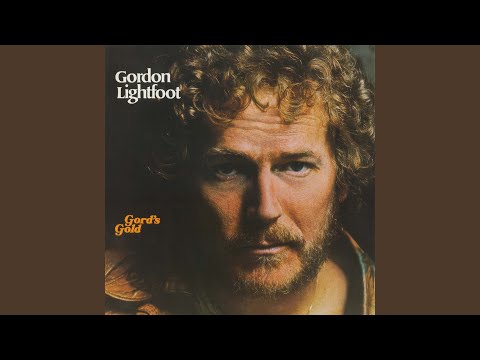
If You Could Read My Mind — Gordon Lightfoot's Masterwork Reaches the World A Folk Poet at the Height of His Powers Gordon Lightfoot had been writing songs o…
01 The Story
If You Could Read My Mind — Gordon Lightfoot's Masterwork Reaches the World
A Folk Poet at the Height of His Powers
Gordon Lightfoot had been writing songs of uncommon literary quality for years before If You Could Read My Mind made him an international name. The Ontario-born singer-songwriter had crafted an approach to folk music that drew from the same wells as Bob Dylan and Joni Mitchell but spoke in its own clearly Canadian voice, shaped by railway imagery, lake winds, and an emotional restraint that felt earned rather than fashionable. By late 1970, when this song began its climb through the Billboard charts, Lightfoot was 32 years old, at the precise intersection of craft and experience that produces a recording capable of outlasting its era by decades.
Lightfoot recorded for Reprise Records in the early 1970s, and the album from which this single was drawn, Sit Down Young Stranger (later retitled If You Could Read My Mind after the single's success), had been released earlier in 1970. The record captured Lightfoot in a period of personal difficulty, following the end of his first marriage, and that biographical context infused the album's emotional landscape with a particular quality of honest reckoning.
The Song That Changed His Career
If You Could Read My Mind is built around one of the most striking extended metaphors in popular songwriting: a ghost story used to describe the wreckage of a relationship, with the narrator comparing his emotional situation to a paperback novel whose hero gets out of jail free. The imagery draws from old movies, from the conventions of popular fiction, from the sense that real life sometimes feels less resolved than the stories people tell about it. The writing is precise and literary in ways that were unusual for pop radio in 1970.
The production, arranged by Lenny Waronker and Nick DeCaro, supported the lyric without overwhelming it. Lightfoot's acoustic guitar work formed the foundation, and the orchestral elements were restrained enough that they served the song rather than decorating it. The resulting sound was intimate at scale, a quality that translated remarkably well to radio.
A Slow-Burning Chart Ascent
The single debuted on the Billboard Hot 100 on December 26, 1970, entering at position 76. The holiday timing might have seemed like a disadvantage, but the song was patient: it climbed steadily through January 1971, moving from 71 to 50 to 42 to 36 as the new year settled in. The climb continued through February, with the song gaining momentum week by week. The track peaked at number 5 on February 20, 1971, spending 15 weeks on the chart in total. A top-five showing on the Hot 100 for a folk-influenced singer-songwriter who had previously been considered a niche taste was a genuinely significant development.
In Canada the song performed even more strongly, reaching the top position on the national charts and establishing Lightfoot not merely as a successful export but as a cultural institution at home. The American success provided the international confirmation that Canadian audiences already felt was long overdue.
Folk Music's Moment in the Mainstream
To understand what this achievement represented, consider the landscape of early 1971 radio. Rock music was fragmenting into heavy metal, prog rock, and harder-edged forms; the soft rock movement had not yet fully crystallized; and the singer-songwriter wave that would define much of the decade was still gathering force. Lightfoot's success with this song helped open the door for that singer-songwriter wave, demonstrating that acoustic music driven by literary lyrics could compete on mainstream pop radio. The commercial path carved by this song contributed to the conditions that would later support James Taylor, Carole King, and Carly Simon's crossover successes.
Radio programmers discovered that certain adult listeners who had drifted away from Top 40 formats would return for music with this level of craft and emotional seriousness, a discovery that would reshape programming strategies for years.
An Enduring Standard
Relatively few pop singles from 1971 remain active parts of the cultural conversation more than five decades later. If You Could Read My Mind has achieved that rare status through cover versions, film and television placements, and the continued loyalty of listeners who encountered it at various points in their own lives. The song has been covered by artists including Johnny Cash, Barbra Streisand, and Diana Ross, evidence of how broadly its emotional premise and lyrical craftsmanship translate across genres and generations.
Lightfoot himself continued recording until the end of his long life, but this song was always the touchstone, the recording that first made the wider world understand what Canadian folk music could achieve. Sit with it for five minutes and you will hear exactly why.
"If You Could Read My Mind" — Gordon Lightfoot's singular moment on the 1970s charts.
02 Song Meaning
If You Could Read My Mind — Ghost Stories and the Literature of Loss
The Extended Metaphor as Emotional Truth
Gordon Lightfoot built If You Could Read My Mind around an extended metaphor drawn from popular fiction and old Hollywood films: the ghost who walks through familiar spaces, the hero of a paperback thriller trying to understand his own situation, the romantic conventions that real life refuses to honor. These images are so specific and so carefully chosen that they resist the vagueness that sinks lesser heartbreak songs. The narrator is not describing a generic loss; he is describing the particular bewilderment of a person who understood the rules of love stories and now finds himself living in one that does not follow them.
The lyrical conceit transforms a personal breakup into a meditation on storytelling itself. The gap between how life is supposed to resolve, as it does in the paperback novels and movie fantasies the song references, and how it actually ends is the emotional space the song inhabits. That gap is universal, which is why the song reached so far beyond its folk origins.
Restraint as a Form of Honesty
Many songs about failed relationships either drown in self-pity or stiffen into accusation. Lightfoot chose a different register: measured, precise, almost analytical, as though examining the ruins of something from a careful distance. The narrator does not declare anger, does not perform weeping, does not pretend wisdom he has not yet earned. He simply tries to explain a situation that resists explanation, using the images available to him from popular culture. That emotional restraint is a form of integrity that listeners responded to immediately and have continued to respond to across decades.
The restraint in the performance mirrors the restraint in the writing. Lightfoot does not oversing; his vocal delivery is conversational, almost understated, which throws the imagery into sharper relief. The listener fills in the emotional spaces left by what the narrator does not say.
The Social Context of Early 1970s Disillusionment
The song arrived at a cultural moment when idealized narratives of various kinds were under pressure. The utopian ambitions of the 1960s counterculture had not produced the transformation they promised. Political institutions had failed in documented and visible ways. The narrative of marriage and domestic happiness that postwar culture had packaged and sold was being examined critically by a generation that had inherited it without asking for it. Into that climate of narrative skepticism Lightfoot released a song that was explicitly about the failure of narratives to match lived experience.
The paperback novel imagery was particularly resonant: in fiction, the hero escapes and the story resolves. In the narrator's life, there is no clean escape, no satisfying resolution. The story he is living does not follow the script he was given. That disconnect felt true to millions of listeners navigating their own versions of the same gap.
A Standard That Earns Its Name
The number of significant artists who have recorded their own versions of this song testifies to its structural solidity. A great cover choice is usually a great song, one whose essential qualities survive transplantation into different musical contexts. If You Could Read My Mind has survived transplantation repeatedly, into jazz arrangements, orchestral settings, country readings, and contemporary pop contexts, because its core, the imagery and the emotional logic, does not depend on any particular production style for its effect.
Lightfoot wrote it as a very particular kind of song, one in which the words do more work than the music, and the music's role is primarily to hold the space the words require. That approach to songwriting has a long literary tradition, and this recording earns its place in it. The roughly 1.9 million YouTube views the recording has accumulated represent listeners across many generations still finding their way to the same truth it told in 1970.
→ More from Gordon Lightfoot
View all Gordon Lightfoot hits →

→ More from the 1970s File
View all 1970s hits →




Keep digging