The 1970s File Feature
Summer Side Of Life
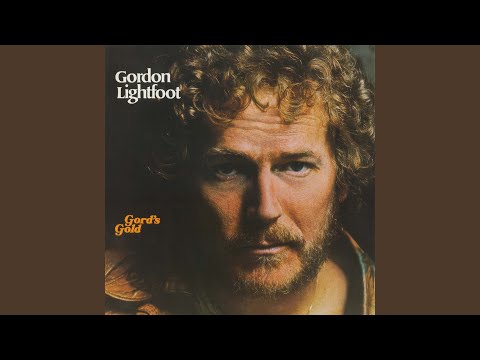
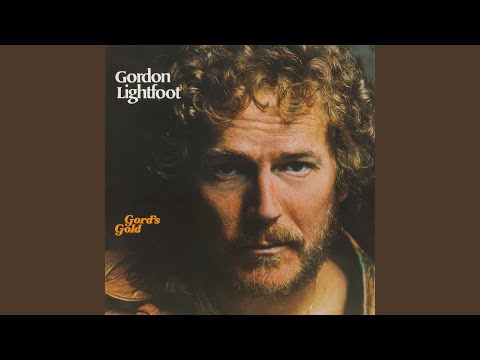
"Summer Side Of Life" — Gordon Lightfoot The Troubadour in His Prime There is something about Gordon Lightfoot's voice that sounds like the Canadian Shield l…
01 The Story
"Summer Side Of Life" — Gordon Lightfoot
The Troubadour in His Prime
There is something about Gordon Lightfoot's voice that sounds like the Canadian Shield looks: rugged, spacious, slightly melancholy even in its most open moments. By 1971, Lightfoot had spent the better part of a decade establishing himself as one of North America's finest singer-songwriters, a reputation built on precise acoustic guitar work, meticulous songwriting, and a baritone delivery that gave even his lightest material a sense of considered depth. The early 1970s were his commercial peak, a period when the folk-country-pop synthesis he had developed through the late 1960s was finding its widest audience.
"Summer Side of Life" arrived as the first single from his 1971 album of the same name, released on Reprise Records. The album marked a significant moment in his career: his first release on the label following his long association with United Artists, and the beginning of a partnership that would produce his biggest commercial successes through the mid-1970s.
From Ontario to International Recognition
Gordon Lightfoot was born in Orillia, Ontario, in 1938, and his journey from church choirs and local talent shows to international folk prominence traced a path through the Toronto coffeehouse scene of the early 1960s. He had written songs that became hits for other artists before establishing his own recording career, and that background as a professional songwriter gave his work a structural precision that separated it from the more spontaneous approaches of some of his contemporaries in the folk revival.
His reputation in the United States had been substantially boosted by covers of his compositions by artists including Peter, Paul and Mary and Bob Dylan, who recorded his own version of "Early Morning Rain." By the time "Summer Side of Life" appeared, American audiences had been primed for Lightfoot's own recordings by years of hearing his songs in other artists' voices. The transition to genuine commercial success in his own right felt, in retrospect, entirely logical.
The Sound of Open Space
The production aesthetic that defined Lightfoot's early 1970s work balanced his guitar-centered acoustic approach with tasteful orchestral and bass arrangements. His longtime producer Lenny Waronker at Reprise understood that overproduction would undermine the intimate quality that made Lightfoot distinctive, and the resulting recordings preserved the sense of space and light that characterized his best work. On "Summer Side of Life," the arrangement reinforced the seasonal content: there is an airiness to the sound, a quality of open windows and long afternoons, that matches the lyrical perspective.
The song's subject matter was characteristically Lightfoot: an evocation of summer as a state of mind as much as a season, a meditation on warmth and ease set against the implied knowledge that seasons change. This kind of measured optimism, never naive, always aware of what lies on the other side, was one of his most consistent artistic signatures. It kept his lighter material from feeling frivolous and his more serious work from becoming oppressive.
Chart History and Commercial Reception
The single debuted on the Billboard Hot 100 on September 11, 1971, entering at number 99 before climbing to its peak position of number 98 the following week. The two-week chart run was modest by pop standards, reflecting the perennial challenge that folk-oriented artists faced in penetrating the Hot 100's top tiers, which by 1971 were dominated by harder rock sounds and the emerging soul styles that were reshaping popular music.
The album fared somewhat better in Canada, where Lightfoot enjoyed a sustained national prominence that transcended genre boundaries, and in the United States his profile continued to build through the early 1970s toward the commercial breakthrough that would come with Sundown in 1974. In that trajectory, "Summer Side of Life" represents an important transitional moment: the beginning of the Reprise era, the solidification of his sound, and the gradual expansion of his American audience.
A Legacy Built on Craftsmanship
Gordon Lightfoot's catalog has worn remarkably well. His work from the late 1960s through the mid-1970s in particular holds up as a masterclass in songwriting economy: no wasted words, no gratuitous production choices, just well-constructed songs delivered with absolute conviction. Younger generations of singer-songwriters across folk, country, and Americana have consistently cited him as an influence, drawn to both his technical facility with language and his ability to find emotional depth in domestic and seasonal subjects without forcing the weight.
"Summer Side of Life" endures as a small gem within that larger catalog, a reminder that Lightfoot could find genuine warmth without sacrificing the thoughtfulness that made his work lasting. Press play on a warm afternoon and let it remind you what summer felt like before it became something to schedule.
"Summer Side Of Life" — Gordon Lightfoot's singular moment on the 1970s charts.
02 Song Meaning
"Summer Side Of Life" — Themes and Legacy
Season as Philosophy
Gordon Lightfoot built a substantial portion of his songwriting career around the Canadian landscape and its seasons, and "Summer Side of Life" belongs to that tradition. Summer in the Canadian context carries a particular urgency: it arrives late, departs early, and is precious in a way that it may not be for listeners in more temperate climates. The song channels that urgency into something more broadly applicable, treating summer as a metaphor for the better possibilities that exist alongside the harder ones, the side of any experience that is warm and open and free of the constrictions that other seasons impose.
The concept of the "summer side" as a deliberate choice of perspective rather than simply a description of weather is central to the song's emotional logic. Lightfoot was not simply writing a pleasant warm-weather song: he was articulating a posture toward experience, a preference for the generative and the open over the cold and the closed.
The Folk Tradition of Seasonal Songwriting
Seasonal imagery has deep roots in folk music, running from English and Irish ballad traditions through the American folk revival of the 1950s and 1960s. The seasons provided a universally understood framework for exploring cycles of life, love, and change, and folk songwriters across the decades have returned repeatedly to that framework as a way of anchoring personal and emotional content in shared experience.
Lightfoot's use of the seasonal frame was never merely decorative. His best seasonal writing encoded emotional states within landscape descriptions in a way that allowed listeners to receive the emotional content without feeling directly addressed. This indirection was a signature of his craft, a preference for the observed world as a vehicle for interior states rather than purely confessional self-examination. It was a gentler, more outward-looking mode than the confessional singer-songwriter tradition that was emerging simultaneously in the early 1970s through artists like James Taylor and Joni Mitchell.
The Optimism of the Early 1970s Folk Scene
By 1971, the idealism of the late 1960s had weathered some significant shocks: the violence at Altamont, the dissolution of the Beatles, the Kent State shootings in 1970. The mood in popular music was recalibrating, seeking a more sustainable emotional register than the ecstatic optimism of the previous decade's peak. Folk-pop artists like Lightfoot found an audience precisely because they offered something gentler and more honest: not utopian promises, but the smaller satisfactions of careful attention to the world and honest expression of what attention revealed.
A song about choosing to live on the summer side of life, in this context, carried a particular kind of weight. The choice of warmth and openness in the face of the world's complications was presented not as naivety but as a conscious practice, a decision to orient oneself toward what was good rather than what was difficult. That orientation had considerable appeal in a moment when the cultural mood was processing several years of difficulty.
A Songwriter's Songwriter
Lightfoot's influence on subsequent generations of North American songwriters has been documented repeatedly in interviews and in the covers that artists across folk, country, and Americana have made of his catalog. His approach to the craft of songwriting, in which economy of language and precision of image take precedence over emotional excess, provided a model that remained influential long after his commercial peak in the mid-1970s.
Within his catalog, "Summer Side of Life" represents the lighter register of his work at its most appealing: a song that finds genuine feeling in simple seasonal observation, that trusts its audience to recognize the emotional stakes without having them stated explicitly. That trust in the listener, that confidence that the music and the imagery will do the necessary work, is one of the marks of a mature songwriter, and it is present here in full measure.
→ More from Gordon Lightfoot
View all Gordon Lightfoot hits →


→ More from the 1970s File
View all 1970s hits →




Keep digging