The 1970s File Feature
Love Is Alive
Love Is Alive: Gary Wright and the Synthesizer Revolution Gary Wright's "Love Is Alive" arrived at a moment when the synthesizer was completing its transitio…
01 The Story
Love Is Alive: Gary Wright and the Synthesizer Revolution
Gary Wright's "Love Is Alive" arrived at a moment when the synthesizer was completing its transition from experimental novelty to mainstream pop instrument, and the recording stands as one of the clearest early demonstrations of what an all-synthesizer pop record could achieve on commercial radio. Wright, a British-born musician who had spent the early 1970s recording for A&M Records as a solo artist after his years with the British rock group Spooky Tooth, had spent considerable time in meditation circles connected to George Harrison's circle of musicians and spiritual practitioners. This background shaped both his musical approach and the philosophical content of his lyrics, and "Love Is Alive" emerged from a creative context saturated in the optimistic spirituality of mid-1970s rock culture.
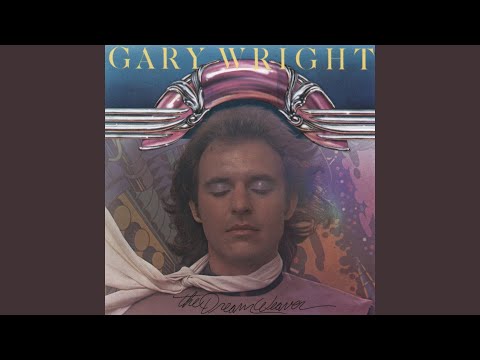
The song was recorded for Warner Bros. Records and appeared on the album The Dream Weaver, released in late 1975. The album's title track had already broken through commercially before "Love Is Alive" was released as a follow-up single in early 1976. The album's defining characteristic was its near-total reliance on synthesizers in place of conventional rock instrumentation, with Wright playing the Moog, ARP, and other keyboards that had become available to studio musicians in the mid-1970s as the technology became more accessible and musically versatile. The drum tracks were provided by Ringo Starr, a connection that reflected Wright's long association with the former Beatles circle and gave the sessions a distinctive rhythmic character.
"Love Is Alive" reached number two on the Billboard Hot 100 in the spring of 1976, held from the top position during one of the most competitive chart periods of the decade. It spent multiple weeks in the top five and became one of the defining singles of 1976, the year that soft rock, AOR, and the proto-disco synthesis were competing for dominance of commercial radio. The song's performance was a landmark for synthesizer-based pop music, demonstrating that audiences would accept and enthusiastically embrace a major hit built on electronic keyboards rather than guitars.
The production of the track, handled by Wright himself, demonstrated an intuitive understanding of how to give synthesizer textures the warmth and accessibility that pop audiences expected from acoustic instruments. The synthesizer lines were voiced and arranged in ways that mimicked some of the harmonic functions of conventional instruments while clearly sounding like something new, and this balance between familiarity and novelty was crucial to the record's commercial success. Wright's vocal performance, warm and direct without affectation, anchored the electronic textures in human feeling and prevented the recording from sounding clinical or detached.
The Dream Weaver album was certified platinum, an achievement that reflected not only the singles' chart success but also the album's consistent quality across its tracks. It was an unusually cohesive record for the era, sustained by a synthesizer palette that gave it a unified sonic identity and by Wright's songwriting, which pursued spiritual and romantic themes with genuine conviction. The album's success helped open the door for subsequent artists who would build careers on synthesizer-based pop, though few matched Wright's commercial peak in this period.
The song's success also coincided with a broader cultural moment in which the synthesizer was moving from the domain of progressive rock, where artists like Keith Emerson and Rick Wakeman had developed its possibilities in technically impressive but often commercially inaccessible ways, toward a pop vocabulary that average radio listeners could immediately respond to. Wright's approach was deliberately melodic and emotionally direct, prioritizing the song over the instrument, and this choice proved commercially astute. He was demonstrating that the synthesizer could be used to write and produce mainstream pop music without abandoning the warmth and emotional directness that audiences expected.
Radio acceptance of "Love Is Alive" was rapid and widespread. Both AM pop stations and the FM album-oriented rock stations that were becoming increasingly influential in the mid-1970s programmed the track heavily, and the crossover exposure amplified its chart performance. The combination of Wright's melodic gift, the novelty of the electronic production, and the spiritual warmth of the lyrical content gave the song an unusual breadth of appeal that helped it sustain its chart position over an extended period.
Looking back at the synthesizer pop that followed in the late 1970s and 1980s, "Love Is Alive" can be seen as a significant precursor, a demonstration that the instrument could carry a commercial pop hit on its own terms. Gary Wright's place in this technological and aesthetic transition has sometimes been underacknowledged in histories of pop music, but the commercial evidence of 1976 is unambiguous. The song was a number-two hit on the most competitive chart in the world, and it got there by being genuinely, undeniably good.
02 Song Meaning
Elevation and Connection: The Meaning of Love Is Alive
"Love Is Alive" is a song about the transformative power of romantic feeling, treated not as a purely personal experience but as a force with something approaching cosmic significance. The narrator describes love as a living presence, something that exists in the world independently of any particular relationship, something that can be discovered rather than merely felt. This philosophical framing, love as an ontological reality rather than a subjective state, reflects the spiritual interests that Gary Wright brought to his songwriting throughout the mid-1970s, interests shaped by his involvement with meditation and by his connections to the George Harrison circle of musicians exploring Eastern philosophy.
The lyric moves between the personal and the universal with considerable ease, shifting from intimate declarations of romantic feeling to broader assertions about love's presence in the world. This movement gives the song a quality of expansiveness that distinguishes it from more purely personal love songs, and it aligns it with a strain of 1970s spiritual pop that sought to ground individual experience in larger metaphysical frameworks. The song argues, implicitly but consistently, that romantic love is one manifestation of a force that organizes the universe, and this argument is made persuasively through melody and production as much as through lyrical content.
The all-synthesizer production is not merely a technical choice but an interpretive one. The synthesizer sounds that Wright created for this recording have a quality of shimmer and elevation that acoustic instruments could not have produced in the same way, and this sonic quality reinforces the lyrical argument about love's elevated status. The electronic textures create a kind of sonic halo around the vocal performance, suggesting that the narrator is describing something that transcends ordinary experience. The production and the lyrics work together to produce a unified emotional argument.
The rhythm section, with Ringo Starr's drumming providing a grounded, human element amid the electronic textures, creates an interesting tension that enriches the song's meaning. The drums anchor the song in physicality while the synthesizers push toward abstraction, and this tension between the earthly and the transcendent mirrors the lyrical content's movement between personal romantic feeling and cosmic principle. It is an unusually sophisticated piece of production for a mainstream pop single, though its sophistication operates at the level of felt experience rather than intellectual analysis.
The song also participates in the broader early-1970s discourse about consciousness and transformation that gave so much of the era's music its characteristic aspirational quality. The mid-1970s was a period when millions of people in the United States and Britain were actively exploring meditative practices, alternative philosophies, and spiritual frameworks outside mainstream religion, and music that addressed this exploration in emotionally accessible terms found a vast and receptive audience. "Love Is Alive" spoke to this audience without requiring prior knowledge of any specific tradition, making its spiritual argument through melody and feeling rather than doctrine.
Within the context of Wright's career, the song stands as the fullest realization of a creative vision he had been developing across several albums. The combination of synthesizer-based production, spiritual lyrical content, and melodically direct songwriting produced a record that was simultaneously artistically coherent and commercially effective, a combination that is rarer than either quality alone. The song remains one of the most compelling demonstrations that the spiritual aspirations of 1970s rock culture could find genuine and moving expression within the commercial pop format.
→ More from Gary Wright
View all Gary Wright hits →
→ More from the 1970s File
View all 1970s hits →




Keep digging