The 1970s File Feature
Hello Old Friend
Eric Clapton's "Hello Old Friend": A Measured Homecoming In 1976, Eric Clapton released "Hello Old Friend" as a single from his album No Reason to Cry, and t…
01 The Story
Eric Clapton's "Hello Old Friend": A Measured Homecoming
In 1976, Eric Clapton released "Hello Old Friend" as a single from his album No Reason to Cry, and the song found its way to number 24 on the Billboard Hot 100, spending 14 weeks on the chart. The placement was consistent with where Clapton sat commercially at this point in his career: reliably present in the upper reaches of the pop chart without generating the kind of explosive commercial event that his early work with Cream or his 1970 Derek and the Dominos recordings had represented. By 1976, Clapton had settled into a productive middle period in which his craft was fully assured and his commercial instincts were well-calibrated, even as some critics felt he had stepped back from the more adventurous edge of his earlier output.
No Reason to Cry was an unusual album in Clapton's catalog, recorded at The Band's Shangri-La Studio in Malibu, California, with significant participation from members of The Band itself. Robbie Robertson, Rick Danko, Richard Manuel, and Levon Helm all contributed to the sessions, giving the record a textured, communal feel that distinguished it from Clapton's more conventionally structured solo albums. The Band's particular aesthetic sensibility, rooted in Americana, roots rock, and the kind of ensemble interplay that they had pioneered throughout their career, permeated the record's sound without overwhelming Clapton's own identity.
"Hello Old Friend" was one of the few tracks on the album written solely by Clapton himself, without collaboration from The Band members or the other musicians who contributed to the sessions. This gave the song a different quality from the collaborative material, a more direct and personal character that was evident in both the writing and the delivery. Clapton had never been primarily a lyricist; his gifts were overwhelmingly sonic and instrumental. But "Hello Old Friend" worked precisely because its lyrical simplicity suited the emotional directness of its sentiment.
The song is structured as a greeting, an address to someone or something familiar being reencountered after a period of absence. The guitar work, which remained Clapton's primary expressive instrument regardless of the stylistic territory he was traversing at any given moment, carries the emotional weight that the lyrics gesture at. His playing on "Hello Old Friend" is warm and unhurried, displaying the kind of relaxed authority that distinguished the best of his mid-1970s output. He was not playing to impress; he was playing to communicate, and that distinction was audible.
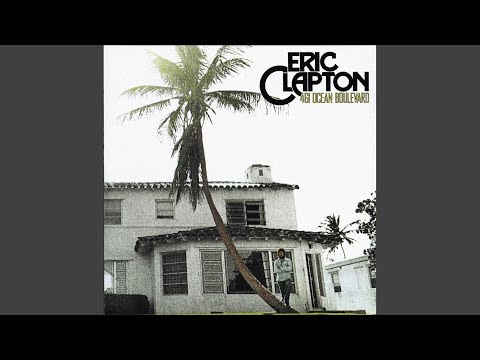
By 1976, Clapton had been through an extraordinarily difficult period in his personal life, including a severe heroin addiction in the early 1970s that had caused him to withdraw from public performance for an extended period. His return to active recording and touring in 1974, following a rehabilitation process that was publicly acknowledged, had been watched carefully by an audience that had invested enormously in Clapton as both a musician and a cultural figure. The records he made in the mid-1970s, including 461 Ocean Boulevard in 1974 and There's One in Every Crowd in 1975, were understood partly through the lens of that return, as evidence of an artist who had survived his own worst tendencies and emerged intact.
"Hello Old Friend" fit naturally into that narrative. The song's emotional register of reconnection, of recognizing something familiar after a passage of difficulty, resonated with listeners who had followed Clapton's story and who heard in his music the record of a life being reconstituted. Whether Clapton intended the song in those autobiographical terms or not, its reception was inevitably colored by the biographical context that audiences brought to it.
The album's commercial performance was solid rather than spectacular. No Reason to Cry reached number 15 on the Billboard 200, and "Hello Old Friend" as its lead single demonstrated that Clapton maintained a loyal and substantial audience even when the material was not reaching for the kind of blockbuster territory that "Lay Down Sally" or "Wonderful Tonight," which would follow on 1977's Slowhand, would occupy. The mid-1970s Clapton was an artist content to operate at a high level of consistent quality without necessarily pushing toward his commercial ceiling.
The 14-week chart run that "Hello Old Friend" achieved was a testament to Clapton's broad appeal across multiple radio formats. The song worked on rock stations and on adult contemporary playlists, a dual-format compatibility that had been one of the hallmarks of his commercial positioning since his breakthrough in America. That flexibility was itself a form of skill: not every artist of Clapton's stature maintained their ability to speak to diverse audiences simultaneously, and the fact that he could do so with a song as understated as "Hello Old Friend" was a tribute to the quality of the underlying music.
02 Song Meaning
Familiarity, Return, and Continuity in "Hello Old Friend"
"Hello Old Friend" occupies a specific emotional register that is less common in pop and rock music than its apparent simplicity might suggest. Most popular songs organize themselves around desire, around the seeking of something not yet possessed or the mourning of something already lost. Eric Clapton's song is about neither of these. It is about recognition, about the experience of encountering something familiar after a passage of time and finding that it remains intact, perhaps even more vivid for the interval of absence. That is a more adult emotional territory than much of the rock canon explores.
The "old friend" of the title has been interpreted variously by listeners and critics over the decades. Some hear it as an address to a person; others hear it as a greeting extended to music itself, or to the guitar, or to the capacity for feeling that drugs and difficulty had temporarily suppressed. Clapton has not been definitive on this question, and the song's openness on the subject is one of its strengths. The emotional experience it describes is recognizable regardless of the specific object of the greeting, because the feeling of reencountering something valuable after a period of separation is nearly universal.
The musical setting reinforces the lyrical theme in ways that feel entirely natural rather than calculated. The tempo is unhurried, the arrangement warm without being lush, the guitar playing relaxed and assured. There is no drama in the production, no moment of heightened tension or sudden release. The song proceeds at the pace of a comfortable conversation, which is exactly the pace appropriate to its subject. One does not greet an old friend with fanfare; one simply arrives, recognizes, and resumes.
Within Clapton's biography, the song carries particular resonance as a product of his mid-1970s recovery period. Having spent years in the grip of a heroin addiction that effectively removed him from active musical life, his return to performance and recording in 1974 was itself an act of reencountering the familiar. The guitar, the studio, the audience, all of these were old friends to whom he was returning after an absence that had seemed, at its worst, potentially permanent. Whether or not "Hello Old Friend" was consciously autobiographical, it is impossible to hear it entirely outside that context.
The collaborative setting of No Reason to Cry, surrounded by The Band and the warm, roots-inflected atmosphere of Shangri-La Studio, also informed the song's meaning. Clapton had chosen to record this album in an environment defined by musical community, by the kind of long-established trust between musicians that produces a particular quality of relaxed collective attention. "Hello Old Friend" was born out of that atmosphere and carries it within its sound. The familiarity the song describes is, in part, the familiarity of making music with people who understand what you are trying to do.
The song endures because the experience it describes does not age. The encounter with the familiar after a passage of time or difficulty is one of the organizing experiences of a human life, and Clapton's distillation of that experience into three minutes of warm, unhurried guitar music captures something that more technically ambitious music often misses. The most lasting popular songs frequently share this quality: they find the simplest possible form for an experience that most people recognize but rarely see named so cleanly.
→ More from Eric Clapton
View all Eric Clapton hits →
→ More from the 1970s File
View all 1970s hits →




Keep digging