The 1970s File Feature
I Shot The Sheriff
"I Shot The Sheriff" — Eric Clapton's Blues-Rock Crossover Triumph A Man Searching for Reinvention The summer of 1974 found Eric Clapton at one of the most p…
01 The Story
"I Shot The Sheriff" — Eric Clapton's Blues-Rock Crossover Triumph
A Man Searching for Reinvention
The summer of 1974 found Eric Clapton at one of the most precarious crossroads of his career. The man once called "God" by London graffiti artists had spent years battling personal demons, including a heroin addiction that had kept him largely off the road and out of the studio for much of the early 1970s. His comeback album, 461 Ocean Boulevard, represented a deliberate repositioning: slower, rootsier, built on American blues and soul rather than the blinding guitar pyrotechnics that had made his reputation with Cream and Derek and the Dominos. The decision to cover a reggae song by a relatively unknown Jamaican artist felt, on paper, like a left turn even within that already surprising pivot.
The song in question had been written and recorded by Bob Marley, appearing on the Burnin' album released by The Wailers in 1973. Marley's original carried the unmistakable rhythmic pulse of reggae, a sound that was still largely foreign to mainstream American radio. Clapton encountered it, fell in love with the melody and the narrative tension baked into its lyrics, and brought it into the 461 Ocean Boulevard sessions with the intention of giving it a rock-inflected treatment that would translate to his own audience.
The Sound and the Sessions
Recorded in Miami at Criteria Studios, 461 Ocean Boulevard had a warm, unhurried atmosphere that stood in direct contrast to the pyrotechnic blues-rock of Clapton's earlier work. Producer Tom Dowd, who had previously worked with Clapton on Layla and Other Assorted Love Songs, shaped the album with a relaxed, sun-drenched quality. Tom Dowd's production on "I Shot The Sheriff" softened the reggae groove into something that sat comfortably between rock and soul, with a loping beat that radio programmers could work with.
Clapton's guitar work on the track was notably restrained by his standards. He leaned into the groove rather than fighting it, letting the song's inherent drama do the heavy lifting. The arrangement gave the track a measured momentum, building from a gentle, almost hypnotic opening into a full-band statement by the chorus. It was a master class in serving the song rather than showcasing the performer, a philosophy that defined the entire 461 Ocean Boulevard project.
A Rocket Ride to Number One
The single entered the Billboard Hot 100 on July 13, 1974, debuting at position 76. What followed was one of the more satisfying slow burns in the chart history of that year. Week by week the track climbed: 62, 42, 34, 23, continuing its ascent through the summer months. On September 14, 1974, "I Shot The Sheriff" reached number one on the Billboard Hot 100, giving Clapton his first and only solo chart-topper in the United States. The track spent 14 weeks on the chart in total, a run that validated both the commercial instincts behind the cover choice and Clapton's willingness to venture outside his comfort zone.
The success was a genuine surprise to some corners of the music industry. Reggae as a genre had not yet broken through to mainstream American audiences in any significant way, and Clapton's version served as an introduction to Bob Marley's writing for millions of listeners who had never heard the original. It is a well-documented piece of music history that Clapton's hit significantly boosted interest in Marley's catalog, helping to accelerate the global recognition that would follow in the years ahead.
The Cultural Ripple Effect
The success of Clapton's recording had consequences that extended well beyond the pop charts. Bob Marley later credited the cover's success with helping to bring his own music to wider audiences, a gift that cut across the transatlantic musical exchange in both directions. Clapton had borrowed something from Jamaica and, in doing so, sent listeners back toward the source. Radio stations that might never have programmed a Bob Marley record began receiving inquiries from listeners who had become curious about the original.
Within Clapton's own catalog, the track stands as a pivot point. It demonstrated that the guitar hero could subordinate his instrument to a song's overall feel, a maturity that would define much of his work through the 1970s and beyond. The album 461 Ocean Boulevard reached number one on the Billboard 200, and the single's success at radio confirmed that Clapton's audience was willing to follow him into new territory. His instincts about the song's crossover potential had been correct.
Legacy of a Borrowed Classic
Fifty years on, "I Shot The Sheriff" occupies an interesting dual position in the history of popular music. It is simultaneously one of Clapton's signature recordings and a testament to Bob Marley's songwriting genius. The track appears on dozens of classic rock compilations, continues to receive substantial radio airplay, and has accumulated more than nine million YouTube views on various uploads. The recording is widely regarded as a key document in the story of reggae's crossover into mainstream rock, a moment when two musical worlds collided with genuinely productive results.
The song's narrative about injustice, self-defense, and the complicated relationship between individuals and authority has given it a durability that purely commercial pop confections rarely achieve. Every few years, a new generation discovers either Clapton's version or Marley's original and works its way toward the other, the conversation between the two recordings still alive and instructive. Press play and you'll understand immediately why a bleached-blonde English guitar legend was so captivated by a Jamaican songwriter's vision that he built his commercial comeback around it.
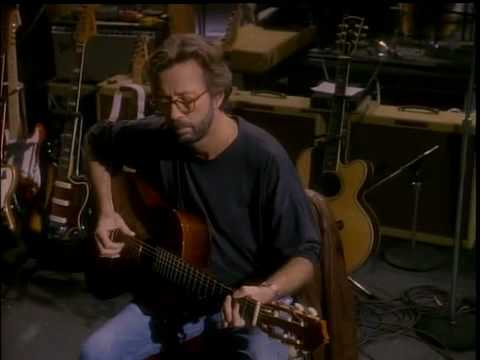
"I Shot The Sheriff" — Eric Clapton's singular moment on the 1970s charts.
02 Song Meaning
"I Shot The Sheriff" — Themes of Justice, Persecution, and Self-Defense
A Tale of the Wrongly Accused
At its core, "I Shot The Sheriff" is a song about the tension between individual conscience and institutional authority. The narrator confesses to killing the sheriff but insists, with pointed urgency, that he did not kill the deputy. The distinction matters enormously within the song's internal logic. The narrator presents himself as a man who has been systematically persecuted, driven to a final act of desperation not by malice but by a pattern of harassment that left him no good options. Bob Marley wrote the song as a kind of folk tale, compressed and imagistic, giving the listener just enough context to understand that whatever violence occurred happened within a larger framework of oppression.
The song never quite argues that its protagonist is entirely innocent. It argues something more complicated: that the circumstances which produced the confrontation were unjust long before any gun was drawn. The repeated insistence on his innocence regarding the deputy reads as both a legal defense and a moral one, a man drawing a careful line between what he did and what he is being accused of, between guilt and culpability in a system stacked against him.
Rastafari, Resistance, and Marley's Vision
Bob Marley imbued the song with themes drawn from his Rastafarian worldview, in which Babylon represents the oppressive forces of colonial and post-colonial authority. The sheriff in the lyric functions as a stand-in for that authority, a local face of a larger, suffocating power structure. Marley's symbolic framework transforms what might otherwise be a simple outlaw narrative into something closer to a liberation parable. The protagonist is not a criminal by temperament; he is a man shaped by circumstances and systems that consistently denied him recourse.
This reading gives the song a political dimension that American rock audiences of 1974 may not have fully registered when dancing to Clapton's version, but which added considerable depth for listeners already attuned to Marley's larger body of work. The song sits comfortably alongside tracks from Burnin' and Catch a Fire in its preoccupation with structural injustice and the costs borne by those at the bottom of a hierarchy they did not create.
The Emotional Register
What makes the song resonant across cultural contexts is its emotional directness. The narrator is neither triumphant nor entirely contrite. He carries the weight of what happened, but he also carries the memory of what led to it. The chorus functions as a refrain of insistence, a man repeating his version of events to anyone who will listen, aware that the official narrative will likely bury his. That combination of guilt and grievance gives the song a human complexity that outlasts the specific historical moment of its composition.
In Clapton's recording, the emotional temperature is somewhat cooled by the production style, which transforms the reggae pulse into something warmer and more rock-adjacent. Some of the raw urgency of Marley's original is softened. What remains, though, is the song's central paradox: a man confessing to violence while pleading his fundamental innocence. That paradox travels across versions and arrangements without losing its power.
Why It Endured
Songs that engage seriously with questions of justice and authority have a long shelf life in popular music, partly because those questions never fully resolve themselves. The tension between individuals and the institutions meant to serve them remains a live concern in every decade. The song's enduring presence on classic rock and reggae playlists alike reflects its ability to speak across genre lines and generational divides, a quality that relatively few pop songs of any era manage to achieve.
The fact that the song exists now in two equally famous versions, Marley's original and Clapton's cover, also gives it an unusual richness. Listeners can move between them, hearing how the same words and melody carry different emotional textures depending on the cultural context in which they are rendered. That conversation between versions keeps the song alive in a way that a single definitive recording might not.
→ More from Eric Clapton
View all Eric Clapton hits →
→ More from the 1970s File
View all 1970s hits →




Keep digging