The 1970s File Feature
T-R-O-U-B-L-E
T-R-O-U-B-L-E: Elvis Presley's Hard-Charging 1975 Rocker The King in the Mid-Seventies Picture the spring of 1975: bell-bottoms ruled the sidewalks, FM radio…
01 The Story
T-R-O-U-B-L-E: Elvis Presley's Hard-Charging 1975 Rocker
The King in the Mid-Seventies
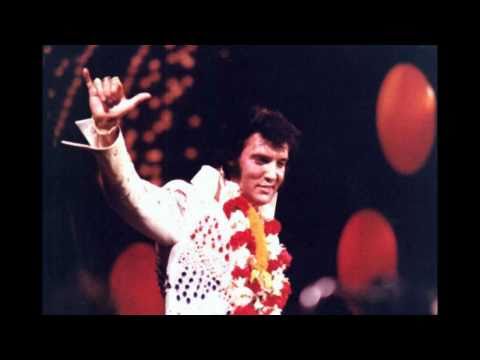
Picture the spring of 1975: bell-bottoms ruled the sidewalks, FM radio was splintering rock into a dozen sub-genres, and Elvis Presley was staging one of the more unlikely comebacks in popular music. The artist who had defined American rock and roll in the 1950s and conquered Hollywood through the 1960s was now working harder than ever to stay relevant in a decade that belonged to glam, funk, and the early stirrings of disco. His 1973 television special Aloha from Hawaii had reached an estimated global audience of one billion viewers via satellite, reminding the world that the spectacle of Elvis remained unmatched. Yet keeping pace with the album-oriented rock acts and soul powerhouses of the mid-seventies demanded fresh material with some genuine swagger.
A Song Built for Swagger
That swagger arrived in the form of T-R-O-U-B-L-E, written by Jerry Chesnut, a Nashville craftsman whose pen had already served many of country music's biggest names. The track has a driving, roadhouse quality, powered by sharp guitar work and a rhythm that leans as much toward Southern rock as it does toward the rockabilly that first made Presley famous. Recorded at RCA's facilities and released by RCA Records in April 1975, the song gave Elvis something he had been searching for across several studio albums: a number with genuine grit that felt unforced. The spelling-out-the-title hook is theatrical in the best possible sense, offering a natural rallying point for live audiences and radio programmers alike.
The Chart Run
When T-R-O-U-B-L-E entered the Billboard Hot 100 on May 10, 1975, it debuted at position 87. Over the following weeks it climbed steadily, reaching its peak of number 35 on June 14, 1975, and spending a total of nine weeks on the chart. In a year when the Hot 100 was dominated by artists like Earth, Wind and Fire, the Eagles, and Elton John, cracking the top 40 was no small achievement for a performer whose chart fortunes had grown less predictable as the decade wore on. On the country charts, the song performed considerably stronger, confirming that Elvis's core audience remained loyal and that the track's Southern rock energy translated powerfully to that format.
The Album and the Era
The single appeared on the album Today, released in May 1975, which marked a conscious effort by Presley's production team to capture a raw, less orchestrated sound. The album was recorded at RCA's Studio C in Hollywood and represented one of the more energetic collections of his mid-seventies period. Elvis was performing grueling touring schedules throughout 1974 and 1975, filling arenas across the United States with audiences who came not simply out of nostalgia but out of genuine enthusiasm for the live spectacle he delivered. T-R-O-U-B-L-E became a staple of those live sets, and concert recordings from the period capture the electricity the song generated when Presley threw himself into it fully. The spelled-out title gave crowds an easy call-and-response moment, and Elvis played it to the hilt.
Legacy and Place in the Presley Canon
In the broader arc of Elvis Presley's discography, T-R-O-U-B-L-E occupies an interesting position. It arrived roughly two years before his death in August 1977, and it stands as one of the more convincing arguments that he retained real creative vitality well into the decade that would claim him. The track's survival in compilation albums, greatest-hits packages, and film documentaries speaks to its effectiveness as pure rock and roll. When music historians assess the Elvis of the seventies, they often gravitate toward the ballads and the rhinestone spectacle. This song is a useful corrective to that picture, a reminder that the man who once made Sun Records crackle with barely contained energy never entirely put that side of himself to rest. It rocks without apology, which is precisely why it has endured long after many of its chart contemporaries faded from memory.
Press play and let the King spell it out for you one more time.
"T-R-O-U-B-L-E" — Elvis Presley's singular moment on the 1970s charts.
02 Song Meaning
T-R-O-U-B-L-E: Swagger, Temptation, and Southern Grit
The Central Idea: Irresistible Danger
At its core, T-R-O-U-B-L-E is a song about recognizing a dangerous situation and walking straight into it anyway, fully aware of the consequences. The narrator spots a woman across the room and reads every signal she sends as a warning sign. She is, in the vocabulary of classic American songwriting, pure trouble. Rather than retreating, though, he leans in with an almost theatrical relish. The song does not moralize. It does not wring its hands about temptation. It simply admits, with considerable charm, that some kinds of trouble are too appealing to resist. Jerry Chesnut's lyric captures this tension with economy and wit, using the spelled-out title as both a punchline and a confession.
Temptation as a Southern Tradition
This theme of delicious, knowingly embraced danger runs deep in American roots music. From country blues to rockabilly to honky-tonk, the figure of the irresistible woman who signals only heartbreak has provided songwriters with material for generations. Chesnut plants T-R-O-U-B-L-E squarely in that tradition. What the song adds is a physical energy, a rhythmic momentum that makes the narrator's surrender feel not like weakness but like vitality. By 1975, with rock and roll more than two decades old and Southern rock acts like Lynyrd Skynyrd pushing hard-edged guitar music back toward its roots, the territory the song staked out felt contemporary rather than nostalgic.
Elvis and the Persona
No discussion of this song's meaning can ignore the fact that Elvis Presley himself embodied the very archetype the lyric describes. From his earliest recordings, Presley was marketed as something dangerous, a young man whose hips and voice sent parents into moral panic. By 1975 that persona had accumulated twenty years of mythology. When Elvis sang about recognizing trouble and diving in headfirst, the audience heard the song through that accumulated legend. The self-awareness implicit in the performance added a layer of knowing humor that a different singer might not have achieved. He was, in a very real sense, singing about himself as much as about any woman in any room.
Cultural Resonance and Emotional Appeal
The mid-seventies pop landscape was thick with sophisticated studio production, elaborate concept albums, and art-rock ambition. T-R-O-U-B-L-E cut against all of that with deliberate bluntness. Its appeal was immediate and physical rather than cerebral, which made it stand apart from much of what surrounded it on radio playlists. For audiences who had grown up with rock and roll as a visceral, body-first experience, the song offered a direct line back to those origins. It resonated because it asked nothing complicated of the listener. It simply invited participation, from the toe-tapping rhythm to the shoutable spelled-out chorus. That accessibility, rooted in genuine craft, explains why the song translated so powerfully from the recording studio to the arena stage.
Enduring Themes
Decades after its release, the song's central theme retains its pull because it describes something genuinely universal: the human capacity to see risk clearly and choose it anyway for the sheer aliveness of the moment. That combination of self-knowledge and willful abandon is more psychologically complex than the song's breezy surface suggests. Chesnut wrapped a fairly sophisticated emotional truth in the most accessible musical clothing possible, and Presley delivered it with the kind of committed performance that could make even familiar territory feel fresh. The track stands as a small but instructive example of how effective popular songwriting operates: direct language, clear imagery, and a hook that gets out of the way of the feeling it is meant to convey.
"T-R-O-U-B-L-E" — Elvis Presley's singular moment on the 1970s charts.
→ More from Elvis Presley
View all Elvis Presley hits →

→ More from the 1970s File
View all 1970s hits →




Keep digging