The 1960s File Feature
(Marie's The Name) His Latest Flame
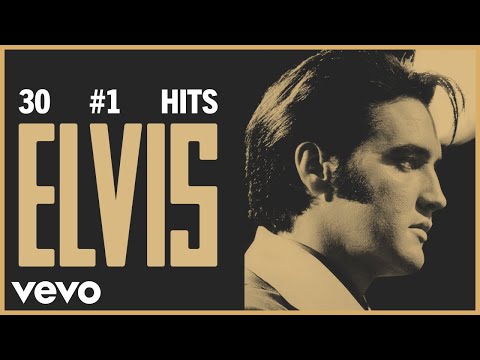
(Marie's The Name) His Latest Flame — Elvis Presley A King at the Height of His Commercial Reign The summer of 1961 found Elvis Presley in a position that mo…
01 The Story
(Marie's The Name) His Latest Flame — Elvis Presley
A King at the Height of His Commercial Reign
The summer of 1961 found Elvis Presley in a position that most entertainers could only dream of occupying. His television appearances on the Ed Sullivan Show were years behind him, yet the phenomenon he had ignited had not cooled one degree. By mid-1961, Elvis was simultaneously a recording juggernaut, a Hollywood box-office draw, and a cultural touchstone whose name required no context in any household across the United States. His label, RCA Victor, released records with the confidence of a publishing house printing currency. The question was never whether an Elvis single would chart, but how high and for how long.
Against this backdrop arrived a double A-side single that paired two instantly memorable songs. On one side sat "Little Sister"; on the other, "(Marie's The Name) His Latest Flame," a track that showcased a more playful, almost conversational side of Elvis's vocal personality. Together, the two tracks formed one of the sharpest single releases of his entire career.
Doc Pomus and Mort Shuman Shape the Song
The creative minds behind the track were Doc Pomus and Mort Shuman, the prolific songwriting duo who supplied Brill Building craftsmanship to some of the most polished pop productions of the early 1960s. Pomus and Shuman had a gift for narrative economy: a complete story, emotionally resonant and rhythmically tight, delivered in under three minutes. The song they constructed for Elvis tells the tale of a man who encounters an old friend bragging about his new girlfriend, only to discover that the girl in question is someone the narrator himself once knew or loved. The dramatic irony lands cleanly, without any need for melodrama.
The recording session produced a sound that leaned into a crisp, almost rockabilly-adjacent drive, with the Jordanaires providing the vocal cushioning that had become synonymous with Elvis's RCA recordings. The production, overseen as part of the broader RCA Nashville operation, was economical and precise. Nothing cluttered the vocal, which Elvis delivered with a knowing wink rather than a sob.
The Chart Climb of August and September 1961
The single entered the Billboard Hot 100 on August 28, 1961, debuting at number 65. Over the following weeks it climbed steadily: to 32, then 22, then to its peak of number 4 on September 18, 1961. The chart run lasted 11 weeks total, a solid performance for any act and a routine one for Elvis, who treated the top ten as a regular address during this period of his career. "Little Sister," its flip side, performed comparably well, which underscored the genuine quality of both tracks rather than suggesting that one was merely riding the coattails of the other.
Internationally, the single performed even more strongly, reaching number 1 in the United Kingdom. British audiences, who were still several years away from the Beatlemania that would redefine their popular music landscape, embraced Elvis's upbeat pop-rock with particular enthusiasm. The song's success in the UK added a transatlantic dimension to what was already a considerable commercial achievement.
Its Place in the Elvis Catalog
What distinguishes "(Marie's The Name) His Latest Flame" within the enormous Elvis catalog is the quality of its writing and the sharpness of its execution. Elvis recorded hundreds of songs across his career, and a significant portion of them were filler chosen for film soundtracks or rushed to capitalize on commercial momentum. This track was neither. The Pomus-Shuman composition gave Elvis something with real narrative shape, and the performance reflected that: he sounds engaged, alert to the story's comic undertow.
The song also arrived at a transitional moment. Within a few years, the British Invasion would fundamentally reshape the American pop landscape, and Elvis himself would spend much of the mid-1960s marooned in Hollywood churning out soundtrack albums of declining quality. The 1961 peak represented, in retrospect, one of the final chapters of his first great commercial run before that interruption set in.
A Snapshot Preserved in Vinyl
Decades of reissues, compilation appearances, and streaming have kept "(Marie's The Name) His Latest Flame" alive for listeners who discovered Elvis long after 1961. The track turns up on greatest-hits packages reliably, sandwiched between the more famous monuments of his early career, and it holds its own there without difficulty. Its compact brilliance, three minutes of perfectly weighted pop storytelling, is exactly the kind of thing that ages well. The production hasn't dated the way some of its contemporaries have; the song's skeleton is sturdy enough to carry whatever sonic clothing surrounds it.
There is a temptation, when surveying Elvis's enormous body of work, to skip the B-tier hits and focus only on the watershed moments. Resist that temptation with this one. Press play, and you'll hear a master vocalist working with excellent material at the precise moment when he still cared deeply about getting it right.
"(Marie's The Name) His Latest Flame" — Elvis Presley's singular moment on the 1960s charts.
02 Song Meaning
(Marie's The Name) His Latest Flame — Themes and Legacy
The Art of the Romantic Ambush
At its narrative core, "(Marie's The Name) His Latest Flame" is a song about a particular kind of social collision: two men talking about a woman, with the listener privy to information that one of the speakers is not. The encounter is framed as casual conversation, one old friend telling another about his exciting new romance. The dramatic irony arrives quietly, without flourish, when the narrator recognizes the girl being described. The emotional blow lands exactly because the song refuses to melodramatize it.
This is a very specific emotional register, closer to rueful recognition than to heartbreak. The narrator isn't destroyed; he is simply confronted with an uncomfortable fact about his own past. That restraint gave the song an unusual texture for its era, when many pop hits preferred to wallow in grief or erupt in joy. The measured quality of the lyric made it feel, paradoxically, more emotionally true.
Brill Building Precision and the Pop Love Triangle
Doc Pomus and Mort Shuman built the song with the architectural precision that defined the best Brill Building writing of the early 1960s. The three-character structure, the narrator, the friend, and the absent Marie, creates a geometry of longing and irony that a simpler song would have collapsed into sentimentality. Pomus and Shuman's genius was to trust that listeners could fill in the emotional gaps without being told exactly what to feel.
The love triangle as a lyrical device was hardly new in 1961. But the specific angle taken here, the triangle rendered through secondhand description rather than direct confrontation, gave the composition a sense of emotional distance that suited Elvis's vocal persona at that particular moment. He was not playing a wounded man; he was playing a composed one, which made the wound underneath all the more affecting.
What the Song Meant in 1961
In the early 1960s, pop music was in an interesting transitional phase. Rock and roll's first raw explosion had been smoothed by the music industry into something more manageable, more radio-friendly. The rough edges of early Elvis had been buffed down somewhat; the productions had grown more polished, the arrangements more careful. Against that context, a song like this one represented the best of what that era could produce: sophisticated writing given to a performer whose charisma could carry even slight material, and this was far from slight material.
For listeners in 1961, the song captured a feeling that genuine social life generates constantly: the small, stinging discoveries that come from casual encounters. It didn't require the listener to have experienced exactly that situation to understand it. The emotional logic was universal enough to translate across demographics.
Resonance and Rediscovery
The song has found new audiences repeatedly across the decades, partly through its inclusion on Elvis compilations and partly through its straightforward listenability. Its compact structure makes it easy to encounter on shuffle or on the radio without needing context. The story resolves itself within the runtime; nothing is left dangling that requires outside knowledge to understand.
That self-contained quality is a mark of excellent pop songwriting, and it's one reason the track has outlasted plenty of its contemporaries. The songs that require you to know the artist's biography to appreciate them tend to date; the ones that work as pure storytelling tend to last. This one lasts.
"(Marie's The Name) His Latest Flame" — Elvis Presley's singular moment on the 1960s charts.
→ More from Elvis Presley
View all Elvis Presley hits →

→ More from the 1960s File
View all 1960s hits →




Keep digging