The 1970s File Feature
Steamroller Blues/Fool
Elvis Presley's "Steamroller Blues/Fool": A Double A-Side from the King's Television Triumph In the spring of 1973, Elvis Presley released one of the more un…
01 The Story
Elvis Presley's "Steamroller Blues/Fool": A Double A-Side from the King's Television Triumph
In the spring of 1973, Elvis Presley released one of the more unusual singles of his later career: a double A-side pairing two dramatically different performances under the shared title "Steamroller Blues/Fool." The release arrived on the heels of one of the most-watched entertainment broadcasts in television history, and it demonstrated that even in an era of shifting musical tastes, Presley retained a commercial and artistic vitality that few of his contemporaries could match.
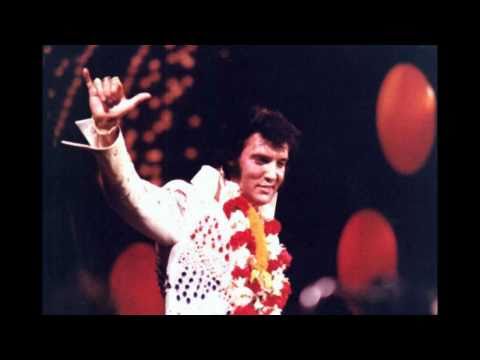
The context for both recordings was the landmark television special Aloha from Hawaii via Satellite, broadcast on January 14, 1973, on NBC. The concert, staged at the Honolulu International Center Arena, was transmitted live via the Intelsat IV communications satellite to Australia, Japan, South Korea, and several other Asian and Pacific nations. A taped version aired in the United States on April 4, 1973, drawing an estimated 51 percent share of the American viewing audience that evening. It was a moment of genuine global spectacle, and RCA Records moved quickly to capitalize on the momentum by pressing the double A-side single from the special's soundtrack album.
"Steamroller Blues" itself was not an original Presley composition. The song had been written and recorded by James Taylor, the Massachusetts-born singer-songwriter who had emerged in the early 1970s as one of the defining voices of the confessional folk-pop movement. Taylor recorded "Steamroller Blues" for his 1970 debut album on Warner Bros., presenting it as a self-deprecating joke about a white New Englander attempting to inhabit the persona of a rough-and-tumble Chicago blues shouter. Taylor performed the track as an exercise in musical parody rather than earnest blues homage.
When Presley encountered the song, however, he treated it with a kind of swaggering conviction that transformed its ironic underpinnings into something harder and more immediate. The Aloha from Hawaii recording captured Presley in vigorous live form, supported by his regular touring band and the large ensemble that had become his standard complement in the early 1970s. Presley attacked the song with a physicality that matched its boisterous lyrical posturing. The performance drew strong reactions from the international audience watching the satellite broadcast, and it translated well to radio.
The B-side of the pairing, "Fool," offered a sharp tonal contrast. A ballad written by James Last and Carl Sigman, it showcased Presley's ability to shift from rough-edged performance energy into the kind of emotionally resonant crooning that had defined much of his late-1950s and early-1960s catalog. The Aloha performance of "Fool" was measured and controlled, Presley demonstrating genuine command of the material rather than simply overwhelming it with personality.
RCA designated both tracks as A-sides, a commercial decision reflecting uncertainty about which would find better traction at radio. The single debuted on the Billboard Hot 100 on April 14, 1973, entering at number 80. Over the following weeks it climbed steadily, reaching a peak position of number 17 during the chart week of June 2, 1973, after twelve weeks on the survey. The performance was solid by the standards of Presley's 1970s chart activity, though it fell short of the blockbuster success he had achieved during his late-1960s comeback period.
The broader commercial landscape of early 1973 placed Presley in competition with the first wave of singer-songwriters, the emergent glam rock movement, and the continuing dominance of Motown-affiliated artists. That "Steamroller Blues/Fool" reached the top twenty in this environment spoke to the resilience of his audience base and to the promotional power of the Aloha from Hawaii satellite event itself.
The accompanying Aloha from Hawaii via Satellite album reached number one on the Billboard 200, making it one of Presley's most commercially successful long-players of the decade. The single's performance was amplified by the television audience's desire to own some piece of the broadcast event, a dynamic that would become increasingly familiar as the relationship between television spectacle and record sales deepened through the 1970s.
Critically, the double A-side received mixed assessments. Some reviewers found Presley's handling of the James Taylor composition unconvincing precisely because Taylor's original had been ironic in a way that Presley's straight-ahead attack seemed to miss. Others argued that Presley's version revealed something in the song that Taylor's playful rendering had obscured: a genuine blues energy that the material could sustain when treated as performance rather than parody.
For Presley, the single represented a characteristic of his 1970s output that distinguished it from both his earlier rockabilly work and his late-1960s American Sound Studio recordings. He was by 1973 primarily a live entertainer whose recordings were often documentation of concert performances rather than studio craft exercises. The "Steamroller Blues/Fool" single belonged firmly to that mode, its value rooted in the theatrical electricity of the Hawaii event rather than in studio construction. Both sides of the release have remained available through RCA and its successor labels, finding new audiences with each generation of Presley retrospectives.
02 Song Meaning
The Meaning of "Steamroller Blues/Fool" by Elvis Presley
"Steamroller Blues" originated as a piece of self-aware musical comedy in the hands of James Taylor, who wrote and first recorded the song in 1970. Taylor cast himself in the song as a bragging, overbearing blues archetype, a kind of caricature of the domineering blues shouter whose aggressive posturing is played for irony. The song's central metaphor is one of overwhelming force: a steamroller, a pile driver, a napalm bomb, a churning urn of burning funk. These are cartoonish images of unstoppable masculine energy, piled on top of each other to comic effect.
When Elvis Presley covered the song for the Aloha from Hawaii concert in 1973, he stripped away much of the ironic distance and delivered the performance with genuine theatrical bravado. In Presley's interpretation, the steamroller metaphor becomes a declaration of entertainer identity rather than a parody. The boasting has a different register when delivered by someone who actually occupied the cultural position the song's narrator claims to hold. Presley was, by any measure, an overwhelming force in American popular music, and his straightforward attack on the material gave the exaggerated imagery a kind of unintentional autobiography.
The metaphor of the steamroller as a vehicle for romantic dominance was a convention with deep roots in blues tradition. Numerous blues artists had used heavy machinery as a symbol for sexual and emotional power, and the genre had a long history of comic exaggeration in its boasting songs. Taylor drew on that tradition while holding it at arm's length. Presley collapsed that distance entirely, delivering the boasts as if they were perfectly reasonable self-descriptions, which in the context of his career they arguably were.
"Fool," the pairing on the double A-side, operates in an entirely different emotional register. Written by James Last and Carl Sigman, it is a ballad of romantic vulnerability in which the narrator acknowledges his own weakness in the face of love. The contrast between the two sides of the single is striking and presumably deliberate. "Steamroller Blues" presents an invulnerable masculine persona, all bluster and bravado. "Fool" undercuts that persona immediately, presenting someone who admits to being undone by feeling.
Together, the two tracks function as a kind of compressed diptych of the Presley performance persona in his mature years: the showman who could dominate a room of thousands and the romantic who communicated genuine emotion through ballads. His concert audiences in the early 1970s expected both modes, and the double A-side acknowledged that expectation by refusing to choose between them.
The emotional honesty of "Fool" was perhaps the more revealing of the two performances. Presley's ability to communicate sincerity within highly theatrical contexts had always been one of his defining qualities, and the Hawaii performance of the ballad demonstrated that capacity at full strength. The setting, a globally televised concert watched by millions, might have encouraged performers toward surface spectacle. Presley managed instead to deliver a reading of "Fool" that felt intimate despite the scale of the occasion.
In the broader arc of Presley's artistic legacy, the pairing of these two very different tracks on a single release captures a tension that ran through much of his post-army career: the conflict between the raucous, physically present performer and the emotionally expressive vocalist. Neither side of that identity ever fully conquered the other, and the double A-side format made that productive tension explicit in a way that individual singles rarely did. The 1973 release remains a compact and instructive document of who Elvis Presley was as a live entertainer at the midpoint of his final decade.
→ More from Elvis Presley
View all Elvis Presley hits →
→ More from the 1970s File
View all 1970s hits →




Keep digging