The 1970s File Feature
Only Sixteen
Only Sixteen — Dr. Hook's Tender Cover of a Sam Cooke Classic Dr. Hook's recording of "Only Sixteen" appeared in 1976 on Capitol Records and reached number s…
01 The Story
Only Sixteen — Dr. Hook's Tender Cover of a Sam Cooke Classic
Dr. Hook's recording of "Only Sixteen" appeared in 1976 on Capitol Records and reached number six on the Billboard Hot 100, making it one of the group's most successful singles and one of the more commercially effective cover versions of a Sam Cooke composition in the post-Cooke era. The original "Only Sixteen" had been written and recorded by Cooke for Keen Records in 1959, reaching the top fifteen on the Hot 100 and establishing itself as one of the more endearing songs in Cooke's catalog, a gentle, nostalgic account of youthful romance that suited both his natural warmth and his crossover ambitions.
Dr. Hook had come to prominence through a somewhat different route than most rock acts of the early 1970s. The group, which formed in New Jersey and was led by vocalists Ray Sawyer and Dennis Locorriere, had achieved initial attention through their work on Shel Silverstein's material, scoring a top-five hit with "Sylvia's Mother" in 1972 and then reaching number one with "Cover of Rolling Stone" later that year, the latter a comic self-referential record about the rock and roll dream of magazine celebrity. These early successes established the group as capable of wit and warmth in equal measure, and their subsequent work at Capitol refined a soft-rock approach that proved durably popular throughout the mid-to-late 1970s.
The decision to cover "Only Sixteen" reflected a calculated move toward the nostalgic pop register that was commercially viable for a group with Dr. Hook's audience profile. By 1976 the soft rock market was substantial, and Capitol had been working with the group to develop recordings that would appeal to adult contemporary radio. Cooke's song, with its straightforward nostalgic premise and its uncomplicated melodic appeal, was ideal material for this purpose. The song required warmth and sincerity in the vocal performance rather than technical complexity, and Dennis Locorriere's voice was well suited to both qualities.
Sam Cooke's 1959 original had itself been a departure from his gospel-influenced soul recordings, leaning toward the kind of sweet pop crooning that had made him a crossover success across racial lines in a period when such crossover was relatively unusual and commercially significant. Cooke had worked with the song in a way that emphasized his lighter, more charming vocal qualities rather than the full force of his gospel-trained power. Dr. Hook's version drew on that same aspect of the material, finding in it a kind of gentle nostalgia that suited the 1970s soft rock aesthetic without losing the song's emotional directness.
The production on Dr. Hook's "Only Sixteen" was characteristic of Capitol's mid-1970s approach to the group: clean, warm, and uncluttered, with enough musical substance to feel crafted rather than merely commercial. The arrangement gave Locorriere's voice room to breathe and made the lyrical content easily legible, which was important for a song that depended on its narrative simplicity for its emotional effect. The record sounded effortless, which was itself a form of achievement; making something sound this natural required considerable craft from both the performers and the production team.
Reaching number six on the Hot 100 in 1976 placed "Only Sixteen" among Dr. Hook's best-performing singles and demonstrated their continuing commercial viability at a point when many of their contemporaries from the early 1970s rock scene were experiencing declining commercial fortunes. The group's willingness to adapt their sound toward adult contemporary radio, rather than trying to maintain the edge of their early Shel Silverstein recordings, proved strategically correct for the audience they had accumulated.
The broader context of Sam Cooke's songwriting legacy is relevant to understanding what Dr. Hook's cover accomplished. Cooke was, by the mid-1970s, recognized as one of the foundational figures of soul music and as a songwriter of considerable craft, and his catalog had been covered extensively by both Black and white artists across multiple genres. "Only Sixteen" was among his more accessible songs, and its charm translated across interpretive approaches with notable resilience. Dr. Hook's version added to a long list of recordings that found in Cooke's material a combination of emotional directness and melodic elegance that required only honest performance to communicate effectively.
The single's success helped position Dr. Hook for what would become an even larger commercial period in the late 1970s, culminating in their number one "When You're in Love with a Beautiful Woman" in 1979. "Only Sixteen" was part of the commercial arc that made that later success possible, demonstrating to Capitol and to radio programmers that the group could deliver consistent results in the adult contemporary format that was one of the most commercially important radio formats of the decade.
02 Song Meaning
The Sweetness of What Was: Reading "Only Sixteen"
"Only Sixteen" is a song about the discovery of love at an age young enough that the discovery itself is the point. The narrator looks back at a specific romantic memory from early adolescence and finds in it not primarily pain or innocence lost but a kind of sweetness that the passage of time has clarified rather than diminished. The song's emotional register is nostalgic without being sentimental in a maudlin sense; the narrator is not mourning the loss of youth but celebrating a memory with the warmth of genuine affection.
Sam Cooke's original construction of the song focused on the purity of the initial romantic experience, the sense that the feelings involved were real and significant even in the context of extreme youth. The narrator acknowledges that both parties were very young, but the song does not use that youth as a reason to diminish what was felt. If anything, the youth amplifies the memory's emotional resonance, because the feelings were so genuine and uncomplicated by the defensive strategies that adult romantic experience tends to accumulate.
When Dr. Hook covered the song in 1976, the nostalgic dimension was itself inflected by an additional layer of temporal distance. A 1976 recording of a 1959 song about a youthful memory was dealing in a kind of doubled nostalgia, the narrator's memory of being sixteen filtered through the recording act's own historical remove. Dennis Locorriere's vocal performance navigated this carefully, finding a tone that was warm and specific enough to feel personal rather than merely generically nostalgic.
The thematic content of the song occupies a kind of emotional middle ground between innocence and experience. The narrator is clearly not sixteen at the time of the narration; he is looking back. This retrospective stance gives the song its characteristic bittersweet quality, the knowledge that the feelings described were genuine and the recognition that they belonged to a moment that cannot be recovered. The song does not pretend that those feelings were preparation for adult love rather than something complete in themselves.
In the context of soft rock's predominant emotional vocabulary in the mid-1970s, "Only Sixteen" offered something distinctive: a romantic song that was not about present circumstances but about the emotional archaeology of memory. Much of the period's soft rock dealt with current romantic situations, whether the happiness of secure attachment, the pain of loss, or the complications of ongoing relationships. A song about remembering an early romantic experience offered a different emotional register, one more contemplative and less immediately dramatic.
The song's appeal across different performance eras, from Cooke's original to Dr. Hook's cover and beyond, suggests that its emotional core touches something genuinely universal about how early romantic experience is remembered. The specific age of sixteen functions almost symbolically as the threshold moment when romantic feelings first become central rather than peripheral to one's emotional life, and songs positioned at that threshold consistently find audiences across generational lines. Parents and children can share the emotional territory of the song even if the specific circumstances of their first romantic experiences differ entirely.
For Dr. Hook as a group, the song's success with adult contemporary audiences confirmed their ability to deliver material that connected with listeners in their thirties and forties who were themselves looking back at youthful experiences with the kind of affectionate distance the song described. The timing of the cover, seventeen years after Cooke's original, meant that the song itself had become a nostalgic object for the audience that had first heard it, adding another layer of emotional resonance to what was already a nostalgic narrative.
→ More from Dr. Hook
View all Dr. Hook hits →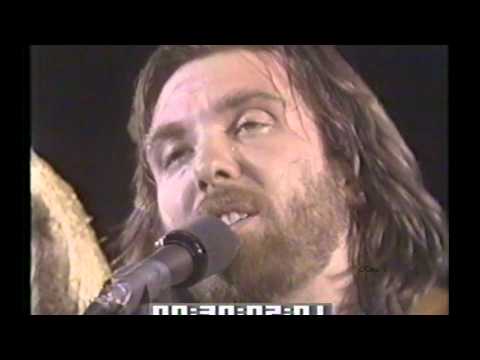



→ More from the 1970s File
View all 1970s hits →




Keep digging