The 1970s File Feature
The Happiest Girl In The Whole U.S.A.
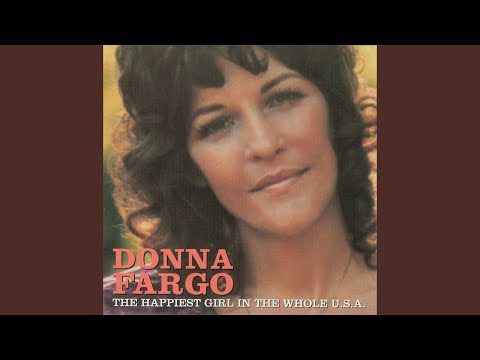
The Happiest Girl In The Whole U.S.A. — Donna Fargo A Schoolteacher's Sunshine There is something almost startling about the sheer warmth radiating from Donn…
01 The Story
The Happiest Girl In The Whole U.S.A. — Donna Fargo
A Schoolteacher's Sunshine
There is something almost startling about the sheer warmth radiating from Donna Fargo's 1972 breakthrough. The song arrived at a moment when American culture was marinating in cynicism and disillusionment, when protest music, hard rock, and the fractured politics of the early 1970s dominated the cultural conversation. Against that backdrop, here was a country teacher from North Carolina, born Yvonne Vaughn, arriving on the charts with the most unabashedly joyful song in recent memory, a first-person account of waking up beside someone you love and feeling, against all odds and despite all the world's complications, genuinely happy.
Donna Fargo had been performing and writing in California through the late 1960s, working in relative obscurity while developing her songwriting craft. She wrote "The Happiest Girl in the Whole U.S.A." from personal experience, drawing on her own relationship with her manager and eventual husband Don Wills. The autobiographical dimension gave the song an authenticity that performed happiness tends to lack; listeners could sense that the feeling being described was real.
The Recording and Release
The Happiest Girl in the Whole U.S.A. was released on Dot Records in 1972. The production was characteristically Nashville in its clean country sound, built around acoustic and electric guitar, bass, and light orchestration that complemented rather than overwhelmed Fargo's bright, direct vocal style. The arrangement moved efficiently, carrying the lyric's catalogue of small morning pleasures with an energy that matched the song's emotional content. Nothing about the production overstayed its welcome. It was the work of people who understood that a song this emotionally transparent needed uncluttered surroundings.
Fargo's voice had a quality unusual in country music of the period: naturally warm without being saccharine, technically capable without being showy. Her delivery made the happiness feel earned rather than performed, and that distinction was everything in a song whose entire claim rested on emotional sincerity. Radio programmers recognized the record immediately as something special and began adding it with unusual speed.
The Chart Climb
The Happiest Girl in the Whole U.S.A. made its debut on the Billboard Hot 100 on May 27, 1972, entering at number 82. Its rise through the summer was steady and persistent: 78, then 67, then 62, then 52, moving through the chart with the confidence of a record that radio was genuinely supporting. The song reached its peak position of number 11 on August 19, 1972, spending 16 weeks on the chart in total. A top-11 finish on the Hot 100 represented genuine crossover success for a country artist in this period, putting the song in company well beyond the country charts where its natural home was.
On the country charts, the record was even more dominant. It spent time at the top position there, making Fargo a country music star of the first order with her debut single. The song also earned her two Grammy nominations for 1972, in the Best Female Country Vocal Performance and Best New Artist categories, the latter recognition acknowledging her as one of the year's most significant new arrivals across all genres rather than just within country music.
The Songwriter's Triumph
A significant part of The Happiest Girl's legacy rests on the fact that Fargo wrote it herself. In 1972, the proportion of female artists who performed their own compositions was still relatively small, particularly in country music, where the writing and performing functions were often separated by gender and by the conventions of Nashville's professional songwriting community. Fargo's authorship of her own breakthrough material established her as an artist with genuine creative agency, not simply an interpreter of other people's material.
This dimension of her achievement mattered for the artists who came after her. The success of a self-written, autobiographically grounded song by a female country artist expanded the sense of what was commercially possible in the genre. The personal and the popular were demonstrably compatible, whatever the conventional wisdom of the time had assumed.
Joy as a Radical Act
Looking back across five decades, The Happiest Girl in the Whole U.S.A. carries an additional layer of meaning that was perhaps not fully visible in 1972. The act of publicly, unapologetically declaring oneself happy, of cataloguing the small morning rituals that make a life feel worth living, required a kind of emotional bravery that cynical reading habits can obscure. Fargo was not naive. She was choosing joy as an aesthetic and emotional commitment, and she was doing it at a cultural moment when such a choice required genuine conviction.
The song invites you to spend three minutes inside the morning that starts right, beside the person you love, with nowhere urgent to be. That invitation has not aged a day.
"The Happiest Girl In The Whole U.S.A." — Donna Fargo's singular moment on the 1970s charts.
02 Song Meaning
The Happiest Girl In The Whole U.S.A. — Themes and Legacy
Joy Without Apology
The emotional core of The Happiest Girl in the Whole U.S.A. is deceptively simple: a woman wakes up beside someone she loves and feels, in this particular morning, a happiness so complete that she wants to announce it to the world. The song details the small rituals of a morning, the ordinary textures of a life shared with another person, and treats these ordinary things as sources of genuine wonder. This orientation toward ordinary happiness as worthy of celebration placed the song in a philosophical tradition that runs through American folk and country music, in which the domestic, the personal, and the quotidian are treated as proper subjects for serious emotional attention.
What makes the song more than a simple expression of contentment is the self-awareness threading through the lyric. The narrator knows that happiness is not permanent, that mornings like this one are precious partly because they will not always feel this way. The celebration is heightened by implicit acknowledgment of its own fragility.
Domestic Life and Female Subjectivity
Country music in 1972 was in the middle of a significant generational and aesthetic transition, with a new generation of artists beginning to push against the genre's conventional expectations around gender and subject matter. The Happiest Girl sits interestingly within this shift. On one hand, it celebrates domestic happiness and romantic partnership in terms that were thoroughly conventional for the genre. On the other hand, the song's narrator is entirely centered as the subject of her own experience, not a supporting figure in someone else's emotional story, but the protagonist of her own happiness.
Donna Fargo wrote this song from her own life, and that authorship gave the female experience she described genuine specificity and weight. The happiness belongs to her, comes from choices she has made, and reflects her own emotional geography. The "U.S.A." in the title has an interesting resonance, placing individual happiness within a national frame at a moment when the relationship between American identity and personal well-being was under considerable cultural stress.
The Early 1970s and the Pursuit of Normalcy
The cultural context of 1972 is inseparable from the song's meaning. The Vietnam War was still claiming lives. The Watergate break-in occurred the same summer the song was charting. American confidence in public institutions was eroding. The enormous audience that embraced "The Happiest Girl" was not, in aggregate, a naive audience. It was an audience that understood clearly how difficult genuine happiness was to achieve and maintain, and that responded with real enthusiasm to a song that treated its achievement as worthy of full-throated celebration.
This is the function that pop music has always served alongside its entertainment role: the articulation of emotional states that large numbers of people share but rarely find given precise expression. The song named something its audience recognized and valued.
Legacy in Country Music
The success of Donna Fargo's debut broadened the emotional vocabulary of early-1970s country music. A song of pure, uncomplicated joy reaching the top of the country charts and crossing over substantially to pop audiences demonstrated that the genre's emotional range was wide enough to contain happiness alongside the heartbreak and loss that dominated much of its output. The Grammy recognition in 1972 confirmed the broader industry's acknowledgment of the recording's quality.
Fargo's subsequent career, including her personal battle with multiple sclerosis diagnosed later in the 1970s, adds a retrospective poignancy to this record's celebration of well-being. The happiness captured here was real when it was captured. The song remains a testimony to one of pop music's quietest truths: that joy, when rendered with genuine conviction, is as powerful and as lasting as any other emotion that music can carry.
→ More from Donna Fargo
View all Donna Fargo hits →
→ More from the 1970s File
View all 1970s hits →




Keep digging