The 1970s File Feature
Baby I'm Burnin'
Dolly Parton's "Baby I'm Burnin'": Country's Queen Embraces the Disco Era In the late 1970s, as disco dominated the American pop charts and transformed the l…
01 The Story
Dolly Parton's "Baby I'm Burnin'": Country's Queen Embraces the Disco Era
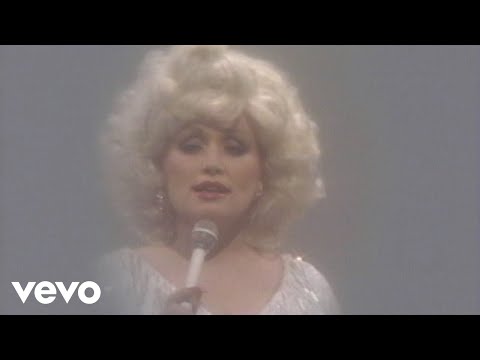
In the late 1970s, as disco dominated the American pop charts and transformed the landscape of mainstream popular music, a number of country artists made deliberate efforts to incorporate elements of the dance music sound into their recordings. Most of these experiments were artistically and commercially unsuccessful, producing records that felt forced and inauthentic. When Dolly Parton released "Baby I'm Burnin'" in late 1978, however, she accomplished something genuinely distinctive: a record that absorbed the energy and rhythmic sensibility of disco while remaining identifiably her own, rooted in the personality and vocal style that had made her one of country music's most beloved figures.
"Baby I'm Burnin'" entered the Billboard Hot 100 on December 9, 1978, debuting at number eighty-eight. It climbed steadily through the winter months, reaching its peak position of number twenty-five during the week of February 17, 1979, and spending fourteen weeks on the chart in total. The record's crossover success, reaching deep into the pop top thirty while simultaneously performing strongly on the country charts, demonstrated that Parton's commercial appeal was not confined to any single genre or demographic.
The recording came during a period of extraordinary expansion in Parton's career. The Here You Come Again album, released in 1977 and produced by Gary Klein, had been a watershed moment, deliberately repositioning Parton for mainstream pop crossover success and generating a title single that reached number three on the Billboard Hot 100. That album's commercial triumph had validated the crossover strategy and given Parton the commercial momentum and artistic confidence to push further in the same direction. "Baby I'm Burnin'" emerged from the follow-up period to that breakthrough, representing a further evolution of the crossover approach into more explicitly dance-oriented teThe song was written by Parton herself, which gave the crossover experiment an authenticity that purely commercially motivated productions often lack. Parton had always been a gifted songwriter, recognized from early in her career as an artist with genuine compositional gifts, and her authorship of "Baby I'm Burnin'" ensured that the disco influences were filtered through her own creative sensibility rather than simply imposed from outside. The result is a record that sounds like Dolly Parton trying something new rather than like a record producer trying to make Dolly Parton sound like something she is not.thing she is not.
The production enlisted to realize the material reflected the crossover ambitions of the project. The arrangement incorporated the characteristic elements of late-1970s disco production: driving four-on-the-floor rhythm, prominent bass, polished string and horn writing, and a high-energy mix designed for the dance floor. Parton's voice sits above this arrangement with her characteristic clarity and twang, and the combination of her distinctively Southern sound with the cosmopolitan dance music production creates a productive tension that is one of the record's most appealing qualities.
Parton's vocal performance throughout "Baby I'm Burnin'" is a demonstration of her fundamental artistic confidence. Where a less assured performer might have tried to sand down the more recognizably country elements of her voice to better fit the disco context, Parton retained her natural vocal identity completely. The result is a record that does not ask its audience to choose between country and pop but rather suggests that these designations are less important than the quality of the song and the singer performing it. This approach would become central to Parton's sustained crossover career through the 1980s and beyond.
The song's disco-influenced energy was not entirely without precedent in Parton's recorded output, but it represented a significant step in the direction of dance music that demonstrated her willingness to engage with the dominant sounds of the moment. The late 1970s were a period in which genre boundaries in American popular music were being renegotiated across the board, and Parton's embrace of disco rhythms placed her at the forefront of that renegotiation within the country sphere.
The commercial success of "Baby I'm Burnin'" confirmed that Parton's crossover approach was not a fluke or a one-record experiment but a sustainable artistic and commercial strategy. It reached pop radio audiences who might not have considered themselves country music fans, and it reached country audiences who were perfectly happy to encounter their favorite artist in a new context. This dual appeal, the ability to satisfy multiple audiences simultaneously without fully alienating either, is one of the most distinctive qualities of Parton's art, and "Baby I'm Burnin'" is among the more vivid demonstrations of that quality in her extended catalog.
02 Song Meaning
Heat, Desire, and Crossover Identity: The Meaning Behind "Baby I'm Burnin'"
"Baby I'm Burnin'" operates as both a straightforward expression of romantic desire and a more complex statement about artistic identity and the possibilities of genre crossing. The song's surface content, an account of overwhelming romantic feeling rendered through the metaphor of burning heat, is entirely conventional within the tradition of up-tempo love songs. But the way in which Parton deploys that conventional content within a disco-inflected musical framework gives the recording a significance that extends beyond its lyrical subject matter into the territory of artistic self-definition.
The burning metaphor at the heart of the song is one of the oldest and most robust in the vocabulary of popular romantic expression. Heat as a figure for passionate feeling carries with it associations of urgency, intensity, and a kind of pleasurable loss of control that the song celebrates rather than fears. Dolly Parton's vocal approach to this material is characteristically direct and unironic: she inhabits the narrator's position of intense romantic feeling with a conviction that makes the metaphor feel fresh rather than worn, and her natural expressiveness gives even familiar emotional territory a quality of genuine experience.
The choice to deliver this content through a disco-influenced arrangement adds a layer of meaning that is not merely stylistic. Disco in the late 1970s was associated with liberation, with the celebration of the body and its pleasures, and with a spirit of hedonistic enjoyment that contrasted with the more restrained emotional conventions of mainstream country music. By bringing her voice and her songwriting into this context, Parton was implicitly endorsing those associations, suggesting that the celebration of romantic heat she was describing was entirely compatible with an uninhibited, body-oriented musical approach.
This alignment of content and form is one of the reasons the record succeeds where many similar crossover attempts of the period failed. Songs that simply grafted disco production onto country material without addressing the fundamental mismatch of emotional registers tended to feel inauthentic and commercially calculated. "Baby I'm Burnin'" avoids this problem because its lyrical content, a frank celebration of intense physical and romantic desire, is genuinely aligned with the expressive world of dance music rather than merely dressed in its sonic clothing.
Parton's authorship of the song is important to its meaning. A songwriter who understands her own voice well enough to write material that pushes her into new territory without requiring her to abandon her identity is operating at a high level of artistic self-awareness. The fact that "Baby I'm Burnin'" sounds simultaneously like a Dolly Parton song and like a late-1970s dance record reflects this awareness: Parton was not being repositioned by external forces but was actively exploring where her artistic identity could go.
The record's chart success, reaching number twenty-five on the Billboard Hot 100 and performing strongly in country markets simultaneously, demonstrated something important about genre fluidity in American popular music. The audiences for country music and pop dance music were not as mutually exclusive as format distinctions might suggest, and a recording that offered both a distinctive country vocal personality and an energetic, danceable production could find listeners in both camps. Parton understood this instinctively, and "Baby I'm Burnin'" is one of the clearest demonstrations of that understanding in her catalog. The song's meaning, at its deepest level, is an argument about the capaciousness of genuine artistic identity, its ability to absorb new influences and contexts without losing its essential character.
→ More from Dolly Parton
View all Dolly Parton hits →
→ More from the 1970s File
View all 1970s hits →




Keep digging