The 1980s File Feature
I Will Always Love You
The Story Behind I Will Always Love You by Dolly Parton Long before Whitney Houston turned it into a stratospheric, key-changing anthem of the early nineties…
01 The Story
The Story Behind "I Will Always Love You" by Dolly Parton
Long before Whitney Houston turned it into a stratospheric, key-changing anthem of the early nineties, this song belonged to a woman from the Tennessee hills who wrote it through tears at a piano. By 1982, Dolly Parton had already lived two full lives with this melody, and she was about to send it up the charts a second time. The version that drifted onto the Hot 100 that summer was gentler than the blockbuster the world would later memorize, and in many ways more devastating, because it came straight from the pen of the person who meant every word.
A Songwriter at the Peak of Her Powers
By 1982, Dolly Parton was no longer just a country star. She was a full-blown cultural phenomenon, fresh off the massive success of the film 9 to 5 and its Oscar-nominated title song, beloved across pop, country, and mainstream America alike. She had spent the seventies building a catalog of self-written classics that proved her one of the finest songwriters in any genre. "I Will Always Love You" was already a piece of her legend, having topped the country chart back in 1974. Now, at the height of her crossover fame, she was bringing it back.
A Song Born From Goodbye
The story behind the writing is one of the most famous in country music. Dolly Parton wrote "I Will Always Love You" in 1973 as a farewell to her mentor and longtime partner Porter Wagoner, with whom she was professionally parting ways after years on his television show. The song is not romantic in origin but a graceful, loving goodbye, a way of saying that leaving did not mean she cared any less. That genuine emotion is why it has always cut so deep. The 1982 re-recording appeared in connection with the film The Best Little Whorehouse in Texas, in which Parton starred, giving the classic a fresh life on the soundtrack.
A Second Trip Up the Hot 100
This 1982 version found its own modest pop audience. The single debuted on the Billboard Hot 100 on July 31, 1982, entering at number 87 and climbing through the late summer. It reached its peak of number 53 on September 25, 1982, and spent a total of 14 weeks on the chart. On the country side the re-recording was a far bigger story, returning Parton to the top of that chart and making her the first artist to take the same self-penned song to number one on the country chart twice. The pop peak was secondary; this was, first and last, a country triumph.
The Gift That Kept Giving
The full magnitude of what Parton created would only become clear a decade later. Whitney Houston's 1992 recording for The Bodyguard became one of the best-selling singles of all time, and every spin of it sent royalties back to the woman who wrote it. Parton has often spoken with warmth about the moment, and the song stands as perhaps the ultimate testament to her artistry: a melody so strong it conquered the charts in multiple decades, multiple genres, and multiple voices. The 1982 version is the quiet middle chapter of that astonishing story.
One Melody, Many Lives
What makes the song's history so remarkable is its sheer durability across formats and decades. A piece written in 1973 as a personal goodbye returned to dominate the country chart in 1974, came back for a pop and country run in 1982, and then conquered the world entirely in 1992 in a different voice. Few songs in American popular music have lived so many lives, each version revealing a new facet of the same sturdy melody. The 1982 recording is the bridge between the original and the blockbuster, a reminder that the song was already a treasured classic long before it became a global standard.
Press Play and Hear the Original Heart
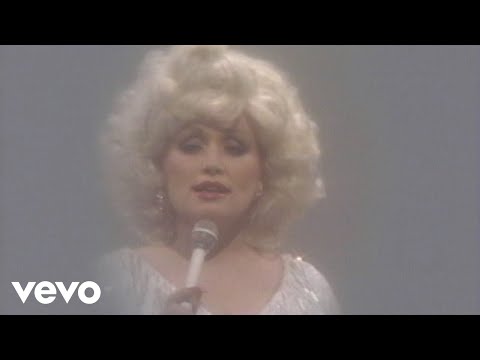
Cue up Dolly's own reading and listen for the restraint. There are no fireworks here, only a clear voice and a perfect melody saying farewell. It is the sound of the song before the world made it enormous, and it remains heartbreakingly lovely.
"I Will Always Love You" — Dolly Parton's singular moment on the 1980s charts.
02 Song Meaning
The Meaning of "I Will Always Love You" by Dolly Parton
For all the grandeur later versions piled onto it, this song was always about something quiet and difficult: leaving someone while still loving them. It is a goodbye that refuses to turn bitter, a farewell offered with open hands. That generosity is what makes it ache.
A Loving Departure
The lyric is a parting message from someone who has decided to go but wants the other person to know the affection remains intact. The central theme is graceful separation, the idea that ending a chapter does not erase what it meant. The narrator wishes the other person well, hopes for their happiness, and promises that the love will not vanish simply because the road forks. There is no anger here, only tenderness.
The Strength in Letting Go
Beneath the gentleness sits real courage. Choosing to leave, and doing so without cruelty, requires more strength than staying. The song honors the dignity of moving on, the maturity of recognizing when a relationship or partnership has run its course. Knowing the song began as a farewell to a professional mentor adds a layer of meaning, reframing romantic interpretation into something broader about loyalty, growth, and the bittersweet cost of ambition.
Vulnerability Without Spectacle
Parton's original delivery keeps the emotion intimate rather than theatrical. The restraint is the message, the sense of a person holding herself together while saying the hardest words. The lack of vocal pyrotechnics in her version makes the feeling feel private, like overhearing a real goodbye rather than watching a performance of one.
Love Without Possession
One of the song's quietest insights is that real love does not always mean holding on. The narrator releases the other person freely, asking for nothing in return except the chance to wish them well. The lyric separates love from ownership, suggesting that caring for someone can include the act of stepping aside. That distinction lifts the song above ordinary romantic ballads, because it reframes devotion as generosity rather than need. In a culture that often equates love with keeping, Parton offers the harder and rarer idea that love can mean letting someone walk their own road.
A Universal Farewell
The song endures because everyone eventually has to say goodbye to someone they would rather keep. Its emotional honesty crosses every boundary of genre and generation, which is precisely why it has been embraced by such wildly different audiences. Whether sung as a whisper or belted to the rafters, the underlying sentiment never changes.
Why It Still Resonates
Few songs capture the contradiction of loving someone enough to leave them. Parton wrote a farewell so pure that it transcended its origin and became a universal anthem of devotion at a distance. The 1982 recording lets you hear that truth in the voice of the woman who lived it.
→ More from Dolly Parton
View all Dolly Parton hits →



→ More from the 1980s File
View all 1980s hits →


Keep digging