The 1970s File Feature
Also Sprach Zarathustra (2001)
"Also Sprach Zarathustra (2001)" — Deodato's Jazz-Funk Revolution A Philosophical Score Enters the Discotheque There is something almost audacious about what…
01 The Story
"Also Sprach Zarathustra (2001)" — Deodato's Jazz-Funk Revolution
A Philosophical Score Enters the Discotheque
There is something almost audacious about what Eumir Deodato pulled off in 1972. Richard Strauss had composed his symphonic poem Also Sprach Zarathustra in 1896, inspired by Friedrich Nietzsche's philosophical text. Stanley Kubrick had borrowed its thunderous opening fanfare for the dawn-of-man sequence in 2001: A Space Odyssey, cementing it in the popular imagination as music that meant something enormous, something cosmic. Deodato took all of that cultural weight and placed it directly on top of a funk groove, complete with electric piano, wah-wah guitar, and one of the most propulsive rhythm sections that jazz fusion had yet produced.
The Brazilian-born arranger and musician had been working in New York through the late 1960s and early 1970s as a session player and arranger, developing a sound that blended jazz harmony, bossa nova rhythmic sensibility, and the emerging vocabulary of electric funk. His Prelude album for CTI Records arrived at the end of 1972, and the title track was his jazz-funk reimagining of the Strauss opening fanfare, bracketed by improvised jazz passages and locked into a groove that no classical music fan would have predicted and no funk listener could ignore.
CTI Records and the Sound of the Early 1970s
CTI Records, under the direction of producer and label founder Creed Taylor, had been one of the most important forces in jazz through the early 1970s, recording albums that pushed jazz toward greater accessibility without abandoning musical sophistication. The label's roster included Wes Montgomery, Freddie Hubbard, George Benson, and Ron Carter. Its production aesthetic favored lush arrangements, high fidelity recordings, and a willingness to borrow from soul and pop in ways that made the music commercially viable without seeming compromised.
Deodato's "Also Sprach Zarathustra (2001)" fit perfectly within that aesthetic. The production was polished and immersive, the arrangement balanced the recognizable Strauss fanfare with extended jazz improvisation, and the rhythmic foundation was deep enough to work on a dance floor. Creed Taylor co-produced the album with Deodato, and the resulting sound occupied a genuinely unique space: too jazzy for straightforward pop radio, too funky for classical stations, too accessible for jazz purists, yet compelling to all of them.
An Extraordinary Chart Run
The commercial result was remarkable. "Also Sprach Zarathustra (2001)" debuted on the Billboard Hot 100 on February 3, 1973, at number 74. The climb was steep and rapid. By February 17, the record had reached number 25. By March 3, it was at number 8. The single ultimately peaked at number 2 on the Billboard Hot 100 on March 31, 1973, spending 12 weeks on the chart in total. That a jazz-fusion instrumental arrangement of a nineteenth-century symphonic poem could reach number 2 on the American pop singles chart speaks to both the quality of the recording and the particular cultural openness of that moment in popular music.
The record also earned Deodato a Grammy Award for Best Pop Instrumental Performance in 1974, a recognition that placed him alongside some of the most commercially visible instrumentalists of the era. The Grammy win reinforced the record's status as a crossover phenomenon rather than a curiosity, and it helped establish Deodato's name with audiences who might not have followed jazz releases closely.
Jazz Fusion at Its Commercial Peak
The success of "Also Sprach Zarathustra (2001)" arrived at a moment when jazz fusion was making its most sustained push toward mainstream acceptance. Herbie Hancock, Miles Davis, Return to Forever, and Weather Report were all operating in adjacent territory, and the early 1970s represented a genuine experiment in whether jazz could hold onto the rhythmic urgency of rock and funk while retaining its improvisational depth. Deodato's record was among the most commercially successful documents of that experiment.
What distinguished the track was its hook. Most jazz-fusion recordings required patience and familiarity to appreciate their pleasures. Deodato had a head start: Kubrick's film had already lodged the Strauss fanfare in millions of minds, so the record arrived pre-equipped with one of the most recognizable musical gestures of the era. Listeners who might have been indifferent to jazz improvisation found themselves engaged before the funk sections even began.
A Lasting Presence in American Sound
Decades later, the recording continues to circulate. It has been sampled, referenced, and licensed across many genres, and the association between that particular fanfare and the Kubrick film remains one of the most powerful pieces of cinematic musical conditioning in popular culture. Deodato's version added another layer to that conditioning, connecting the cosmic grandeur of Strauss and Kubrick to the earthier pleasures of the rhythm section and the wah-wah pedal. The combination proved irresistible. Press play and hear exactly how a jazz musician from Brazil managed to bring a nineteenth-century philosophical statement into American living rooms in 1973.
"Also Sprach Zarathustra (2001)" — Deodato's singular moment on the 1970s charts.
02 Song Meaning
"Also Sprach Zarathustra (2001)" — Meaning, Themes, and Cultural Impact
Borrowed Grandeur and New Contexts
The meaning of Deodato's "Also Sprach Zarathustra (2001)" cannot be separated from the multiple layers of cultural baggage the music carries. Richard Strauss wrote the original work as a tone poem inspired by Nietzsche, attempting to capture in orchestral sound the philosopher's vision of human transcendence and the emergence of something beyond conventional morality. That philosophical ambition, enormous and somewhat abstract, translated in the opening fanfare into a piece of music that simply sounds like the beginning of everything.
Stanley Kubrick recognized that quality and used the fanfare in 2001: A Space Odyssey to accompany scenes of evolution, awakening, and cosmic encounter. By the time Deodato recorded his version in 1972, the fanfare had already accumulated enormous cultural meaning, and placing it in a jazz-funk context created an immediate and productive tension: the music of transcendence, superimposed on the music of the body.
The Democratic Impulse in Deodato's Arrangement
There is something genuinely democratic about what Deodato accomplished. Classical music, particularly music associated with philosophical seriousness, has traditionally occupied a cultural space that maintains distance from popular forms. The instruments, the venues, the critical vocabulary, and the social associations all work together to signal exclusivity. Deodato collapsed that distance by putting the most recognizable passage from serious classical music on top of a groove that anyone could feel, in a recording available at any record store.
The result suggested that the grandeur Strauss was reaching for need not require a tuxedo to appreciate. Rhythm and improvisation could carry similar weight; the dance floor and the concert hall were not as separate as the institutions of classical music preferred to believe. This was not an entirely new argument, jazz had been making it since the 1920s, but rarely had it been made so dramatically and so successfully on the commercial singles charts.
Fusion as Cultural Translation
Jazz fusion in the early 1970s was engaged in a deliberate project of cultural translation, borrowing from rock, funk, and international music to expand what jazz could be and who it could reach. Deodato's Brazilian background was significant here; his musical formation included bossa nova, which had already demonstrated that jazz harmony and rhythm could be made lighter and more accessible without being made less sophisticated. That training gave him an instinct for how to balance complexity and accessibility that informed every decision on the recording.
The electric piano voicings, the guitar textures, the rhythm section approach all reflect a sensibility rooted in both jazz and Brazilian popular music, filtered through the funky pragmatism of early 1970s New York. The Strauss material provided the hook and the cultural reference point; Deodato's fusion instincts provided everything that made the record move.
Why It Still Resonates
The durability of this recording comes from its successful resolution of the tension it creates. Many novelty records, because that is how some critics initially classified this, exhaust their interest quickly once the joke is understood. Deodato's record keeps playing because the music underneath the concept is genuinely good. The improvised jazz passages are inventive, the groove is deep, and the production has aged far better than many of its contemporaries.
The recording also captures something true about the early 1970s, a moment when American culture was willing to be eclectic in ways that the more fragmented media landscape of subsequent decades made harder. A record that crossed classical, jazz, and funk audiences could reach number 2 on the pop chart because the pop chart still functioned as a genuine commons, a place where many kinds of music could meet. "Also Sprach Zarathustra (2001)" stands as evidence of how wide that commons once was.
→ More from Deodato
View all Deodato hits →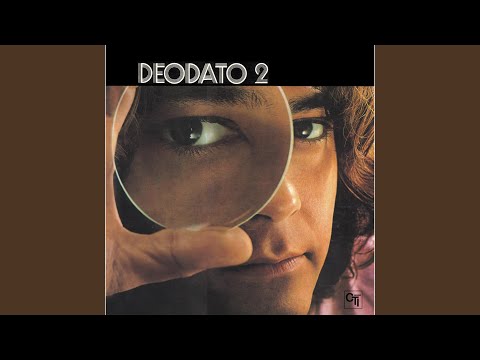

→ More from the 1970s File
View all 1970s hits →




Keep digging