The 1970s File Feature
Walk Away From Love
Walk Away from Love — David Ruffin (1975) David Ruffin's position in American soul music history rests primarily on his years as the lead voice of the Tempta…
01 The Story
Walk Away from Love — David Ruffin (1975)
David Ruffin's position in American soul music history rests primarily on his years as the lead voice of the Temptations, the Motown group whose run of classic singles in the mid-to-late 1960s produced some of the most enduring recordings in the soul canon. Ruffin's distinctive raspy tenor, capable of moving between vulnerability and power with remarkable facility, was the sonic signature of recordings including "My Girl," "Ain't Too Proud to Beg," and "I Wish It Would Rain." His departure from the Temptations in 1968 set him on a solo path that proved commercially uneven through the early 1970s, making his 1975 Hot 100 top 10 hit "Walk Away from Love" all the more significant as a demonstration of his continued relevance as a recording artist.
The song was written and produced by Charles Kipps and Van McCoy, with McCoy serving as a particularly important creative force. Van McCoy was a prolific and sophisticated arranger and producer whose work spanned multiple genres and whose own recording career was producing results simultaneously: "The Hustle," his disco-inflected instrumental, would reach number one on the Hot 100 in 1975, making him one of the most commercially successful producers and artists of that year. His involvement in "Walk Away from Love" brought a level of production sophistication that matched Ruffin's vocal gifts.
"Walk Away from Love" was released on Motown Records, where Ruffin had a solo deal separate from his Temptations affiliation. Motown by 1975 had relocated its headquarters from Detroit to Los Angeles and was navigating the shift from the classic soul sound of its golden era to the smoother, more orchestrated production styles that dominated mid-decade R&B and soul. Van McCoy's arrangement for "Walk Away from Love" placed Ruffin's voice within a lush orchestral setting that suited the sophisticated adult audience that Motown was increasingly courting.
The single reached the top ten on the Billboard Hot 100, performing well across both the pop and R&B charts and confirming that Ruffin could generate commercial momentum outside the Temptations framework. The chart performance was particularly meaningful given that the early years of his solo career had failed to produce comparable results. Several solo singles through the early 1970s had underperformed relative to the commercial expectations that his Temptations pedigree had set, making "Walk Away from Love" a genuine commercial vindication.
Ruffin's vocal performance on the recording was widely praised by critics and radio programmers alike. His ability to convey emotional distress with the specific quality that had made his Temptations recordings so affecting was fully present in "Walk Away from Love," and the Van McCoy production gave him a showcase that was worthy of the performance. The combination of an outstanding vocal instrument, a well-constructed song, and professional production created the conditions for the commercial breakthrough the single represented.
The mid-1970s context for the song included a soul music landscape that was in active transition. Classic Motown and Stax-style soul were giving way to the smoother sounds that would be grouped under the labels of "Philadelphia soul," "quiet storm," and eventually "contemporary R&B." Van McCoy's work on "Walk Away from Love" reflected an awareness of these shifts: the orchestration and the production polish placed the record squarely in the sophisticated, adult-oriented soul category that was commercially dominant in 1975.
The cultural significance of "Walk Away from Love" in Ruffin's career also carries a melancholy dimension in retrospect. The singer's personal struggles with substance abuse, which had contributed to his departure from the Temptations and which would continue to affect his career through subsequent decades, meant that even a genuine commercial breakthrough could not fully stabilize his professional life. The song stands as evidence of what Ruffin could accomplish when the conditions were right, which makes it both a celebration of his talent and a reminder of the difficulties that surrounded him throughout much of his career. He remained an active performer through the following years, and a Temptations reunion in the 1980s offered further commercial chapters in his story before his death in 1991.
02 Song Meaning
What "Walk Away from Love" Means — David Ruffin
"Walk Away from Love" is a soul song about the experience of trying and failing to leave a relationship that continues to exert emotional power even after the rational decision to end it has been made. The narrator has reached the conclusion that the relationship should be over, and yet the emotional reality refuses to align with the rational position. Each attempt to walk away proves incomplete, because the emotional bond is stronger than the resolve to break it. This tension between knowing and feeling is one of the central themes of the soul tradition, and it suited David Ruffin's vocal style perfectly.
What makes the song particularly effective is the specificity of the emotional experience it describes. The incapacity for decisive action in romantic matters is not presented as weakness but as an honest account of how emotional attachment actually operates. The narrator is not confused about what should happen; the confusion is about the gap between intention and ability. This is a mature emotional observation, and Van McCoy's sophisticated production gave Ruffin the musical environment to convey it with appropriate weight.
Within the context of Ruffin's career and vocal legacy, the song also functions as a showcase for the qualities that had made him exceptional in the Temptations. His voice carried an inherent quality of yearning, a tonal characteristic that made songs about emotional pain and ambivalence sound entirely natural in his delivery. The rasp that distinguished his tenor from smoother soul voices added a quality of raw feeling that made declarations of romantic indecision more convincing, because the voice itself seemed to carry emotional wear.
The orchestral arrangement by Van McCoy provided a counterpart to Ruffin's raw emotionality. Where the voice communicated struggle and conflict, the strings and horns communicated aspiration and longing, creating a musical representation of the song's central tension between what is felt and what is wanted. This relationship between vocal performance and instrumental accompaniment was a hallmark of sophisticated mid-decade soul production, and the combination on "Walk Away from Love" represents the approach at a high level of execution.
The broader meaning of the song within the soul tradition is also worth noting. Soul music has consistently treated emotional vulnerability as a legitimate and dignified subject for artistic expression, in contrast to cultural frameworks that equated masculinity with emotional control. Ruffin's willingness to articulate romantic helplessness with full conviction, without irony or deflection, placed him within a lineage of soul performers who treated emotional honesty as both an artistic value and a form of connection with their audience. "Walk Away from Love" is a direct and sincere entry in that tradition, and its commercial success in 1975 confirmed that the audience for that kind of honest emotional expression remained substantial.
→ More from David Ruffin
View all David Ruffin hits →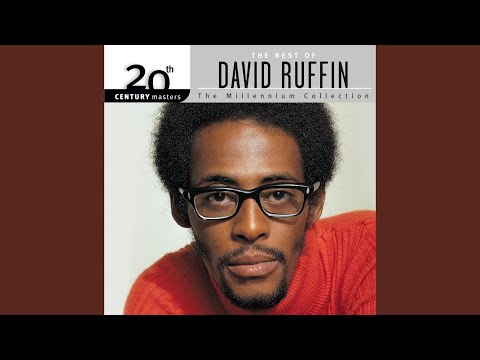
→ More from the 1970s File
View all 1970s hits →




Keep digging