The 1970s File Feature
There Won't Be No Country Music (There Won't Be No Rock 'N' Roll)
C.W. McCall's "There Won't Be No Country Music (There Won't Be No Rock 'N' Roll)" and the Politics of Genre In the spring of 1976, C.W. McCall was riding the…
01 The Story
C.W. McCall's "There Won't Be No Country Music (There Won't Be No Rock 'N' Roll)" and the Politics of Genre
In the spring of 1976, C.W. McCall was riding the crest of one of the most improbable commercial waves in American popular music history. "Convoy," his November 1975 single built around Citizens Band radio communication and truck driver culture, had reached number one on the Billboard Hot 100 in January 1976 and had become a genuine cultural phenomenon, spawning a film, a television series, and a nationwide CB radio craze that briefly made the trucking subculture one of the most discussed features of the American vernacular landscape. Against this backdrop of remarkable mainstream success, McCall released a follow-up single that took a sharp turn toward social and musical commentary: "There Won't Be No Country Music (There Won't Be No Rock 'N' Roll)."
The full title, which replicated its central sentiment in parenthetical form, was both a structural joke and a thematic statement. The repetition mimicked the self-referential character of the argument being made: a song about the potential disappearance of popular music genres performing its own commentary through its title structure. Bill Fries, the advertising executive and former mayor of Ouray, Colorado, who recorded as C.W. McCall alongside producer Chip Davis, brought to the project the same instinct for cultural observation that had made "Convoy" so resonant with its intended audience.
The single entered the Billboard Hot 100 on March 27, 1976, debuting at position 90 and climbing over the following weeks: from 90 to 79 to 75, before reaching its peak of number 73 on April 17, 1976. The four-week chart run was modest, reflecting the song's more specialized appeal relative to the broadly accessible truck driver anthem that had preceded it. Where "Convoy" had connected with a national fascination with CB radio and working-class identity, the music industry commentary of "There Won't Be No Country Music" spoke more directly to listeners already invested in the country music world and interested in its relationship to broader cultural and commercial forces.
The song's concern, broadly stated, was with the homogenization of American popular music and the potential erosion of genre distinctions that gave different musical traditions their character and their loyal audiences. Country music in 1976 was experiencing one of its periodic identity crises, as the commercial success of "countrypolitan" crossover acts had created tensions with traditionalists who felt the genre's distinctive qualities were being sacrificed for mainstream pop appeal. McCall's song engaged with this tension from a perspective sympathetic to those who valued genre identity, though the humor with which the argument was delivered prevented it from becoming a simple polemic.
The involvement of Chip Davis in the production was significant. Davis, who would later found the instrumental new age project Mannheim Steamroller, was a sophisticated arranger and producer whose work with Fries on the McCall project had consistently demonstrated an ability to blend commercial appeal with genuine craft. The production on "There Won't Be No Country Music" reflected this sophistication, using musical elements drawn from the genres being discussed to reinforce the song's argument about their distinctive qualities and their value.
The song's title also encoded a critique of the music industry's tendency to prioritize profit over artistic integrity, to make commercial decisions that diminished the variety of what was available to listeners in favor of formulas that reliably generated revenue. This critique was not unique to McCall; it had been made in various forms by artists and critics throughout the history of commercial popular music. But McCall's particular positioning as a recently crowned number-one artist gave him an unusual platform from which to make it, and the humorous framing made the critique accessible to listeners who might have been resistant to a more earnest version of the same argument.
The CB radio craze that McCall had helped generate was itself already beginning to fade by the spring of 1976, a reminder of how quickly cultural phenomena that seem dominant can recede. The Convoy follow-up was thus entering a changed market, one in which the specific cultural context that had amplified his initial success was already becoming less relevant. This context partly explains the more limited chart performance of "There Won't Be No Country Music" relative to its predecessor, though the song's more specialized thematic content was itself a limiting factor.
C.W. McCall's recording career continued through the late 1970s without replicating the phenomenon of "Convoy," a commercial reality that placed him in the company of many one-peak artists whose subsequent work, however interesting, could not recreate the specific combination of factors that had produced their initial breakthrough. "There Won't Be No Country Music (There Won't Be No Rock 'N' Roll)" stands as an interesting artifact of that post-peak period: a song with genuine ideas that found a real if limited audience, representing Fries and Davis's willingness to use their commercial platform for commentary as well as entertainment.
02 Song Meaning
Genre, Identity, and Defiance in "There Won't Be No Country Music (There Won't Be No Rock 'N' Roll)"
The central argument of "There Won't Be No Country Music (There Won't Be No Rock 'N' Roll)" is one about cultural identity, about the ways in which specific musical genres carry and preserve something that transcends mere sonic preference. C.W. McCall's song frames genre loyalty not as simple taste but as something approaching cultural allegiance, a connection between music and the communities, experiences, and values that produced it. The concern expressed in the title is not simply that certain sounds might disappear but that what those sounds represent, the lives and perspectives they embody, might be displaced from the culture's shared space.
The song's structure of repetition in the title is itself meaningful. Saying "there won't be no country music" and then immediately adding "(there won't be no rock 'n' roll)" as a parenthetical creates an equivalence between two genres that were, in 1976, more often understood as competitors than as allies. Country music and rock and roll had distinct audiences, distinct regional associations, and distinct critical narratives. By treating them as jointly threatened, the song implied that what was at stake was something more fundamental than the fate of any single genre: the principle of musical diversity itself, the idea that the culture ought to support a plurality of musical traditions rather than forcing everything into a single commercial mold.
This concern was not merely hypothetical in 1976. The rise of disco as a dominant commercial force was already generating anxiety among listeners and artists in both country and rock communities about the direction of mainstream popular music. The music industry's tendency to pursue whatever format was currently generating the most revenue at the expense of other approaches was a recurring source of tension, and McCall's song gave comic but genuine voice to those concerns from a perspective that had recently sat at the very top of the pop chart.
The humor in the song is important to its meaning because it prevents the argument from collapsing into the kind of self-righteous genre protectionism that can make such arguments easy to dismiss. McCall understood, and the production acknowledged, that overstating the case would undermine it; a song that took itself entirely seriously on this subject would risk becoming exactly the kind of earnest commercial product it was ostensibly critiquing. The comic framing allowed the genuine concern to be expressed and heard without provoking defensive reactions from listeners.
There is also something self-aware in the song's positioning: a recording made within the commercial music industry, distributed by a major label, aired on commercial radio, using the mechanisms of commercial music to comment on those very mechanisms. Bill Fries, who had worked in advertising before embarking on the McCall project, was not naively unaware of this irony; his background in commercial communication gave him a sophisticated understanding of how messages and markets interact. The song's effectiveness lay partly in its willingness to operate within the system it was observing rather than pretending to stand outside it.
The song's lasting relevance lies in the fact that the concern it expressed has never fully resolved itself. The question of whether commercial pressures tend to reduce musical diversity or whether markets ultimately sustain diverse musical traditions has been asked and answered differently in every subsequent decade, and the tension between commercial homogeneity and genre plurality that McCall identified in 1976 remains a live issue in discussions of the music industry. His comic framing of that tension captured something durable about the cultural stakes of musical genre even as it generated a modest chart performance in the immediate commercial moment.
→ More from C.W. McCall
View all C.W. McCall hits →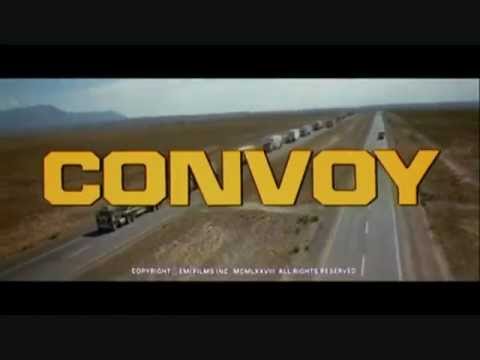
→ More from the 1970s File
View all 1970s hits →




Keep digging