The 1970s File Feature
Old Home Filler-up An' Keep On-a-truckin' Cafe
Old Home Filler-Up An' Keep On-A-Truckin' Cafe: C.W. McCall and the Birth of Trucker Country Before "Convoy" turned C.W. McCall into a genuine pop phenomenon…
01 The Story
Old Home Filler-Up An' Keep On-A-Truckin' Cafe: C.W. McCall and the Birth of Trucker Country
Before "Convoy" turned C.W. McCall into a genuine pop phenomenon, before the Citizens Band radio craze swept America, and before truck-driving culture became one of the dominant themes of mid-1970s American entertainment, there was "Old Home Filler-Up An' Keep On-A-Truckin' Cafe." Released in 1974 on MGM Records, this track introduced the C.W. McCall persona to the American public and demonstrated, with modest but meaningful commercial success, that there was an audience hungry for the kind of affectionate, detail-rich celebration of working-class road life that McCall's records delivered.
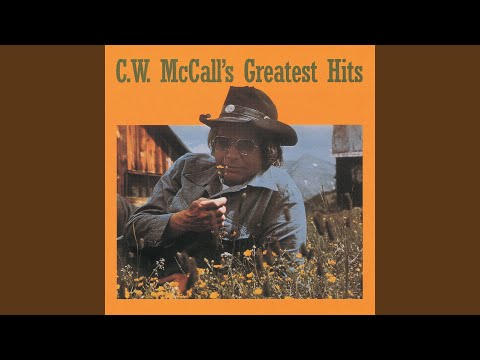
C.W. McCall was the creation of Bill Fries, an advertising executive from Iowa who had originally developed the character for a bread company campaign. Fries, working with composer Chip Davis (who would later achieve enormous success as the founder of Mannheim Steamroller), built a persona rooted in the specific vernacular, humor, and sentiment of long-haul trucking. The fictional McCall was a truck driver with a gift for storytelling, a warm relationship with the diners and truck stops of the American highway system, and a natural sympathy for the working people who populated that world.
The song tells the story of a particular roadside diner run by a woman called Mavis and her associate Sloane, detailing a trucker's experience of this establishment with the kind of specific, affectionate observation that made McCall's recordings distinctive in the crowded field of country novelty music. The humor was gentle rather than broad, relying on accumulated detail and character rather than punchlines, and the result felt more like a short story set to music than a conventional novelty record.
The commercial performance of the initial release was encouraging without being explosive. The song reached the Billboard country singles chart, demonstrating that the McCall formula had genuine appeal to country audiences and justifying continued investment in the persona and its musical approach. MGM Records recognized that they had something distinctive and supported the recording of further McCall material, a decision that would eventually pay off dramatically.
The musical setting was straightforward country-pop production of the mid-1970s, featuring acoustic guitar, pedal steel, and a conversational vocal delivery from Fries that prioritized storytelling clarity over vocal pyrotechnics. The production approach, handled by Chip Davis, was deliberately low-key, putting the focus on the narrative and the character rather than on musical elaboration. This restraint suited the material perfectly, giving the story room to breathe and creating a sense of authentic, unstudied observation rather than calculated performance.
The timing of the record's release coincided with a broader American cultural fascination with working-class identity and the open road. The early 1970s had seen a significant shift in how American popular culture represented working people, with films, television programs, and music increasingly exploring the lives of blue-collar Americans as worthy of serious attention and affection. Truckers, with their CB radios, their freedom from conventional work schedules, and their role as arteries of the American economy, were particularly appealing figures for this cultural moment.
Chip Davis's collaboration with Bill Fries extended across several McCall recordings, and their creative partnership was essential to the consistency and quality of the catalog they built. Davis brought musical craft to the enterprise while Fries provided the character and storytelling voice, and the combination produced recordings that were more carefully constructed than their casual surface suggested. The attention to specific detail in the lyrics, the particular names and places that populated McCall's world, gave the records a texture that generic trucking songs lacked.
The follow-up recordings built steadily on the foundation that "Old Home Filler-Up An' Keep On-A-Truckin' Cafe" established. By the time "Convoy" arrived in late 1975 and became a number-one hit on both the pop and country charts in 1976, the McCall persona was fully developed and the audience was primed. The earlier record's modest success had created the conditions for the later explosion, making it one of the more important foundation recordings in the trucker country microgenre.
02 Song Meaning
The Road As Home: Working-Class Belonging in Old Home Filler-Up An' Keep On-A-Truckin' Cafe
"Old Home Filler-Up An' Keep On-A-Truckin' Cafe" is a song about the specific geography of working-class American life, mapping a world that existed along the interstate highway system rather than in the cities and suburbs that dominated most popular culture. The roadside diner at the center of the narrative functions not merely as a setting but as a community, a place where strangers who share an occupation find the comfort of recognition and belonging. The song argues, through the accumulation of specific and affectionate detail, that this world had its own richness and dignity.
The figure of Mavis, who runs the diner with a personality as distinctive as the establishment itself, is the song's emotional anchor. She represents a kind of unconditional hospitality that the narrator, a long-haul trucker spending his days in transit, finds genuinely sustaining. The diner becomes a recurring destination in a life otherwise defined by constant movement, the closest thing to a regular home that the trucking life permits. This tension between mobility and rootedness runs through much of trucker country music, and McCall's track captures it through the smallest of details.
The humor in the song operates through the gap between the grandiose title and the humble reality it describes. The name "Old Home Filler-Up An' Keep On-A-Truckin' Cafe" is deliberately excessive, a kind of working-class baroque that announces its own absurdity while simultaneously embracing it. Bill Fries, writing as C.W. McCall, understood that humor rooted in affection rather than condescension could celebrate a world without mocking it. The joke is not at Mavis's expense or at the expense of the world the song describes, but rather an expression of pleasure in the colorful specificity of American vernacular culture.
The song participates in a broader American literary tradition of celebrating the road and the communities that form along it. From Walt Whitman's open-road poems through the literature of the Great Depression and into the postwar period, American culture has returned repeatedly to the highway as a site of authentic experience and democratic encounter. McCall's contribution to this tradition is modest in scale but genuine in character, translating it into the language of country music and the specific geography of the 1970s American trucking industry.
The CB radio culture that surrounded trucking in the mid-1970s was itself a communication network that created community across dispersed geography. Truckers used citizen band radios to share information about road conditions, police locations, and good diners, building a vernacular culture with its own slang, codes, and humor. McCall's recordings, including this foundational track, both reflected and amplified that culture, giving it a soundtrack and introducing it to listeners who had never sat behind the wheel of an eighteen-wheeler.
The working-class specificity of the song's imagery was part of its appeal in a period when American popular culture was increasingly interested in representing the lives of working people. The early 1970s had seen a significant shift in how films, television, and music treated blue-collar experience, and McCall's recordings arrived at the moment when that audience was most receptive. The diner, the fuel stop, the weigh station, the CB slang: these were the textures of a working life that most popular culture ignored, and their appearance in a popular song felt like a form of recognition.
Looking back from the vantage point of McCall's subsequent career, "Old Home Filler-Up An' Keep On-A-Truckin' Cafe" reads as an establishing document, the recording where the character and its thematic concerns first crystallized. The success of "Convoy" two years later brought these concerns to a mass audience, but the essential ingredients were already present in this earlier, quieter track. The celebration of community found along the road, the warmth toward working people and their particular culture, and the storytelling approach that prioritized character over statement were all fully formed in McCall's debut.
→ More from C.W. McCall
View all C.W. McCall hits →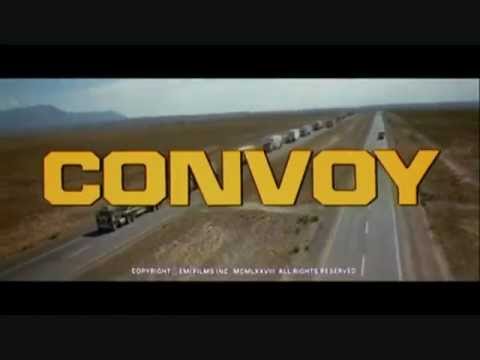
→ More from the 1970s File
View all 1970s hits →




Keep digging