The 1970s File Feature
Get Down
"Get Down" — Curtis Mayfield's Righteous Groove from 1971 Chicago Soul at Its Finest Hour Picture the fall of 1971, and Curtis Mayfield is standing at the ab…
01 The Story
"Get Down" — Curtis Mayfield's Righteous Groove from 1971
Chicago Soul at Its Finest Hour
Picture the fall of 1971, and Curtis Mayfield is standing at the absolute apex of his creative powers. Fresh from the triumph of his landmark debut solo album and its stunning follow-up Roots, the Chicago-born songwriter, guitarist, and producer had spent a decade redefining what soul music could be. As the leader of The Impressions through the 1960s, he had transformed gospel fervor into socially conscious pop, delivering anthems that rang from church houses to civil rights marches. Going solo in 1970 had only sharpened his artistic focus. By the time "Get Down" arrived in late 1971, audiences understood that a new Curtis Mayfield single carried weight, urgency, and groove in equal measure.
The Sound of the Street Made Sacred
Mayfield's musical signature in this period was unmistakable: falsetto vocals that floated like smoke over dense, rhythmically complex arrangements, guitar work that was both delicate and deep-pocketed, and horn stabs that landed with the authority of a preacher's final point. "Get Down" lived squarely in that world. The track pulsed with a raw, urban energy, grounded in the kind of rhythmic drive that kept dance floors moving but carried enough lyrical consciousness to reward careful listening. Mayfield had an extraordinary gift for writing music that functioned simultaneously as party music and protest music, celebration and indictment. On "Get Down," that double current runs from the first beat to the last.
The production carried hallmarks of the Chicago soul sound Mayfield had helped define: warm bass lines, punchy horns from the brass section, percussion that locked tight rather than sprawling, and a vocal performance that ranged from intimate to exhilarating. Mayfield's falsetto, always an instrument in its own right, threaded through the arrangement with a controlled intensity that few of his contemporaries could match.
From the Albums to the Singles Chart
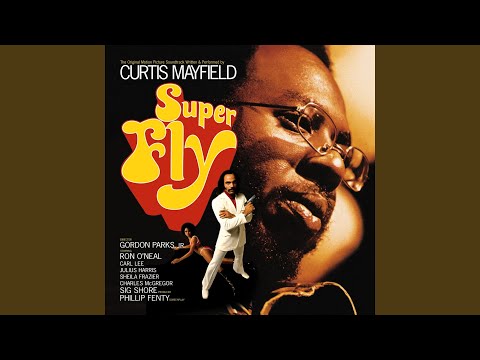
The track emerged during the same fertile period that would give the world the Superfly soundtrack the following year, a record that would define blaxploitation film music and cement Mayfield's status as one of the era's most vital creative forces. In 1971, however, the world was still processing the breadth of what he was building: a body of solo work that documented Black urban life with unflinching honesty and musical sophistication. "Get Down" debuted on the Billboard Hot 100 on November 13, 1971, entering at number 98. Over the following weeks it climbed steadily, reaching its peak position of number 69 on December 18, 1971, after seven weeks on the chart. That trajectory, modest by the numbers but steady in its momentum, reflected a track that earned its audience through word of mouth and radio rotation rather than commercial blitz.
A Voice for the Moment
The early 1970s were a charged, anxious, exhilarating time for soul music. Marvin Gaye's What's Going On had appeared earlier that same year, and the genre was in the middle of a profound expansion, reaching toward themes of social reality, spiritual longing, and political consciousness that Motown's earlier pop crossover model had largely avoided. Mayfield had been ahead of this curve; his work with The Impressions had planted seeds in the mid-1960s that the entire genre was now harvesting. "Get Down" arrived as part of that wider creative surge, a track that told its listeners something real about life while never letting the groove drop for a single bar.
Mayfield's audience was broad and loyal. He spoke to listeners who recognized their own lives in his music, who heard in his arrangements the sounds of Chicago's South Side, the beauty and the difficulty of urban Black America at a particular historical moment. Radio programmers and listeners alike responded to that authenticity, and "Get Down" found its place in rotation alongside the other heavy hitters of a remarkably competitive year.
Legacy of a Singular Artist
In the arc of Curtis Mayfield's career, "Get Down" sits within one of his most productive and celebrated stretches. The years between his departure from The Impressions in 1970 and his work on the Superfly soundtrack in 1972 represent a sustained creative peak that few artists of any era have matched. His influence on soul, funk, and hip-hop extends through countless samples of his guitar work and productions, a testament to how thoroughly he embedded himself in the DNA of American popular music.
Seven weeks on the Billboard Hot 100 and a peak of number 69 might not seem like a blockbuster, but context matters. Mayfield was releasing music at a remarkable rate during this period, and every release added another layer to a body of work that would grow in stature with each passing decade. "Get Down" gave audiences exactly what the title promised, and did so with the grace, intelligence, and moral clarity that defined everything Curtis Mayfield touched.
If you've never spent time with Mayfield's early solo output, this track is an excellent reason to start. Press play and hear what the greatest soul auteur of his generation was capable of at full creative flight.
"Get Down" — Curtis Mayfield's singular moment on the 1970s charts.
02 Song Meaning
The Message Inside "Get Down" — Curtis Mayfield's Call to Community
Dancing as an Act of Solidarity
Curtis Mayfield had a rare gift for embedding serious social commentary inside music that moved bodies as effectively as it moved minds. "Get Down" works from precisely that tradition: on the surface, it functions as an exhortation to dance, to engage, to be present in the communal joy that soul music at its best always promised. Underneath that invitation, though, runs the current of something deeper. Mayfield understood that telling Black listeners to "get down" carried cultural resonance that extended well beyond the dance floor. Getting down meant being real, staying grounded, refusing the distance that respectability politics might demand. It was an instruction rooted in community and shared experience.
The Political Undercurrent
Mayfield's entire solo career was built on a dual consciousness, the ability to celebrate life while documenting its difficulties with unflinching clarity. His 1971 output sat in a particular historical moment: the civil rights legislation of the 1960s had been won, but the daily realities of urban Black America had not transformed in step with the legal changes. Economic inequality, police violence, housing discrimination, and the drug epidemic that was beginning to devastate inner-city communities all formed the backdrop against which Mayfield's music played. A track that urged its listeners to "get down" was, in that context, also urging them to persist, to find joy as an act of resistance rather than an escape from reality.
Joy as Spiritual Practice
Mayfield came from a gospel tradition that understood joy as something more than mere pleasure. In the Black church tradition that shaped his musical foundation, joy was a theological category, a form of witness that testified to survival and dignity in the face of hardship. When he invites his audience into the groove of "Get Down," he is drawing on that tradition. The music itself, with its dense layered arrangements and his signature falsetto floating above, recreates something of the ecstatic dimension of gospel worship, transposed into a secular context without losing its spiritual charge. The dance floor becomes the congregation; the groove becomes the liturgy.
Why Listeners Responded
Soul music in 1971 was speaking directly to its audience in ways that mainstream pop rarely attempted. Marvin Gaye, Stevie Wonder, Isaac Hayes, and Mayfield himself were all in the middle of profound creative expansions that pushed the genre toward greater emotional and thematic complexity. Audiences in 1971 were hungry for music that took them seriously, that acknowledged the complexity of their lives rather than papering over it with uncomplicated romance narratives. "Get Down" fit squarely into that hunger. It offered groove and exhilaration, but without the false note of music that pretends the world is simpler than it is.
An Enduring Frequency
The reason Curtis Mayfield's music has remained in cultural circulation across more than five decades comes down to exactly what "Get Down" demonstrates: his ability to write songs that operate on multiple levels simultaneously. The track works as a simple command to enjoy yourself, as a meditation on community and belonging, and as a document of a specific historical moment in Black American urban life. Subsequent generations of hip-hop producers who sampled Mayfield's work understood instinctively that they were drawing on something that carried more than just a good beat. They were drawing on a complete worldview, one where music was inseparable from politics, spirituality, and social solidarity. That worldview, fully intact inside "Get Down," is precisely what gives the track its lasting power.
→ More from Curtis Mayfield
View all Curtis Mayfield hits →


→ More from the 1970s File
View all 1970s hits →




Keep digging