The 1970s File Feature
Future Shock
Curtis Mayfield's "Future Shock": Social Prophecy in the Post-Super Fly Era By the summer of 1973, Curtis Mayfield had established himself as one of the most…
01 The Story
Curtis Mayfield's "Future Shock": Social Prophecy in the Post-Super Fly Era
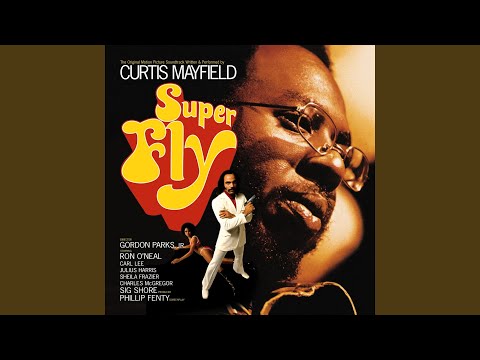
By the summer of 1973, Curtis Mayfield had established himself as one of the most socially conscious and musically sophisticated voices in American popular music. His work with the Impressions throughout the 1960s had produced some of the most eloquent soul music of the civil rights era; his solo career, launched in 1970, had taken his social commentary in darker, more complex directions. The 1972 Super Fly soundtrack had been a commercial and artistic triumph that crystallized his ability to create music that was simultaneously critically engaged and commercially irresistible. "Future Shock," released from the Back to the World album in 1973 and reaching number 39 on the Billboard Hot 100 after debuting on July 21 of that year, belonged to the next phase of that project: an attempt to look beyond the immediate concerns of Black urban life and address the systemic conditions that produced them.
The Back to the World album took its title from the phrase that Vietnam veterans used to describe the experience of returning to civilian life, a transition that many found as traumatic in its own way as the war itself. Mayfield had been addressing the crisis of Black America with unusual directness throughout his solo career, and the Vietnam connection was entirely appropriate: Black soldiers had served in disproportionate numbers, suffered disproportionate casualties, and returned to conditions of poverty and discrimination that made a mockery of the patriotic narratives that had sent them overseas. The album's title announced Mayfield's intention to address this specific constituency and their particular form of the American dilemma.
"Future Shock," however, operated at a somewhat different register from the album's most explicitly Vietnam-focused material. The song borrowed its title from Alvin Toffler's 1970 book of the same name, a bestselling work of popular sociology that argued that the pace of technological and social change had accelerated beyond the human capacity to adapt, producing widespread psychological disorientation and social dysfunction. Mayfield found in Toffler's diagnosis a framework for understanding the crisis of his own community: the rapid changes in urban America, the displacement of traditional economic and social structures by forces that no individual or community could easily comprehend or resist, had produced precisely the kind of shock that Toffler had described.
The production on "Future Shock" reflected Mayfield's characteristic approach: lush string arrangements provided emotional depth and contextual richness, while a rhythm section built for physical momentum kept the social message from becoming preachy or academic. His falsetto vocal, one of the most distinctive instruments in soul music, carried the track's complex emotional freight with an apparent effortlessness that belied the sophistication of the arrangement. Mayfield had always understood that the most effective social commentary in popular music arrived through the pleasure of listening rather than through the discomfort of confrontation, and "Future Shock" demonstrated that understanding at its most refined.
The Hot 100 chart trajectory of "Future Shock" was solid: a debut at number 85 on July 21, 1973, followed by steady climbing through late July and August, reaching the peak of 39 on September 1, 1973, before beginning a gradual decline over the final weeks of the chart run. Ten total weeks on the chart represented a respectable performance for album-oriented soul material of the period, and the crossover into the mainstream Hot 100 from the R&B chart reflected both the quality of the recording and the unusual breadth of Mayfield's audience.
The period between Super Fly and what would become Mayfield's commercial plateau in the mid-to-late 1970s was one of the most creatively productive of his career. He was working with a seriousness of purpose that had few parallels in contemporary popular music, treating the concerns of his community not as background material for entertainment but as the central subject of rigorous artistic investigation. Back to the World and the records that followed it were the work of an artist who understood that the privileges of celebrity and commercial success carried obligations to truth-telling that he took seriously.
The broader context of soul music in 1973 is relevant to understanding "Future Shock's" place in the musical landscape. The early 1970s had been extraordinarily fertile for socially engaged African-American music: Marvin Gaye's "What's Going On," Stevie Wonder's Talking Book and Innervisions albums, and Gil Scott-Heron's recordings were all navigating similar territory with comparable ambition. Mayfield's contribution to this moment was distinctive both in its musical approach and in the specificity of its social analysis, and "Future Shock" was one of the clearer expressions of both.
The song's legacy rests not on its chart position alone but on its place within a body of work that has grown in critical estimation with each passing decade. Mayfield's tragic injury in 1990, when a lighting rig fell on him at an outdoor concert and left him paralyzed from the neck down, gave his earlier work a retrospective poignancy that deepened its emotional resonance for subsequent listeners. "Future Shock" stands as a document of a musician at the height of his powers, addressing the hardest questions of his moment with the full range of his extraordinary gifts.
02 Song Meaning
Technological Change, Social Disorientation, and the Vision of Curtis Mayfield's "Future Shock"
Curtis Mayfield's "Future Shock" engages with a concept that was intellectually fashionable in the early 1970s but that Mayfield reground through the specific lens of Black urban experience: the idea that the pace of social and technological change had exceeded the human capacity to adapt, producing a condition of chronic disorientation that Alvin Toffler had named "future shock" in his 1970 book of that title. Where Toffler's analysis was broadly cultural and aimed primarily at a white middle-class readership, Mayfield's musical treatment located the experience of overwhelming change within the particular circumstances of communities that had historically been the objects of other people's decisions rather than agents of their own.
The song operates on multiple levels simultaneously. On the most immediate level, it is a documentation of what rapid urban change, economic displacement, and the aftermath of the civil rights movement had done to the communities Mayfield knew best. The optimism of the early civil rights era, the sense that progress was possible and imminent, had encountered the stubborn reality of structural racism, economic inequality, and political backlash. The future that many had hoped for had not arrived, and the present offered a different and more troubling kind of shock than anyone had anticipated.
On a broader level, the song engaged with Toffler's analysis of technological acceleration and its human costs. The early 1970s had produced dramatic changes in American economic life: deindustrialization was beginning to hollow out the urban manufacturing base that had provided employment and stability to working-class communities, both Black and white. The Vietnam War had demonstrated the capacity of technology to produce destruction on a scale that defied comprehension, and the social movements of the 1960s had left in their wake a landscape of changed expectations and uncertain prospects that fit Toffler's framework with uncomfortable precision.
Mayfield's falsetto vocal was itself a significant carrier of meaning in this context. The falsetto in soul music traditionally carried associations of vulnerability, spiritual aspiration, and a kind of yearning intensity that the chest voice could not achieve. Mayfield had always used his falsetto not as an affectation but as an emotional register, reserving it for moments when the material demanded something beyond the merely declarative. His deployment of that register in "Future Shock" suggested that the condition being described required not merely analysis but feeling, not merely understanding but empathy.
The song's musical setting reinforced its thematic content through structural choices that were characteristic of Mayfield's most sophisticated work. The lush orchestration that surrounded the track's rhythmic core created a sense of ironic beauty: music of considerable sensory richness describing a world coming apart at the seams. This contrast between sonic pleasure and lyrical distress was one of Mayfield's most consistent strategies, rooted in his understanding that beauty could serve as a vehicle for difficult truths in ways that stark documentary could not.
The song's title, borrowed from Toffler but filled with new content by Mayfield's specific social analysis, demonstrated the songwriter's consistent practice of connecting the concerns of his community to broader intellectual and cultural frameworks. Mayfield was not content to document; he was always also diagnosing, always seeking to understand the systems and forces that produced the conditions he observed. "Future Shock" is a product of that diagnostic impulse, and its continued relevance in subsequent decades, as technological change has accelerated beyond even Toffler's prescient forecasts, is a measure of the accuracy of Mayfield's vision.
The recording stands, within Mayfield's body of work, as a bridge between the explicit social urgency of the Super Fly period and the more philosophical territory he would explore in subsequent years. Its chart performance, reaching number 39 on the Hot 100, confirmed that his audience was willing to follow him wherever his social conscience and musical imagination led, and that the combination of intellectual seriousness and musical pleasure that defined his best work could find a genuine popular audience even in a marketplace not always hospitable to either.
→ More from Curtis Mayfield
View all Curtis Mayfield hits →


→ More from the 1970s File
View all 1970s hits →




Keep digging