The 1970s File Feature
Hello Darlin'
"Hello Darlin'" — Conway Twitty Country's Smoothest Voice at Its Most Vulnerable The summer of 1970 was a good time to be Conway Twitty. He had already trave…
01 The Story
"Hello Darlin'" — Conway Twitty
Country's Smoothest Voice at Its Most Vulnerable
The summer of 1970 was a good time to be Conway Twitty. He had already traveled an improbable arc: from a credible rock and roll presence in the late 1950s, with "It's Only Make Believe" reaching number one on the pop charts in 1958, to a full and committed conversion to country music that had remade him as one of the genre's most commercially dominant figures by the late 1960s. By 1970 he was releasing singles with a regularity and a chart consistency that few Nashville artists could match, and "Hello Darlin'" was about to become perhaps the defining record of his country career.
Conway Twitty, born Harold Lloyd Jenkins in Mississippi, understood better than almost any of his contemporaries what country audiences wanted from a male vocalist. They wanted to believe that the emotion being expressed was genuine, that the pain or desire or longing in the lyric was being pulled from lived experience rather than performed from a position of comfortable distance. Twitty's voice, deep and intimate in a way that recalled late-night radio confessions rather than concert performances, was ideally suited to that demand for believability.
The Record That Defined His Country Identity
"Hello Darlin'" was released in 1970 and became one of Twitty's signature country hits, reaching number one on the Billboard country singles chart. The song's pop chart presence, while more modest, documented his crossover reach: debuting on the Billboard Hot 100 on July 4, 1970, entering at number 88 and climbing through the summer to reach its peak of number 60 on August 22, 1970. Eight weeks on the pop chart confirmed that his audience was not limited to the core country demographic.
The song's construction was deceptively simple. The scenario is a man who encounters someone from his past, and the flood of feeling and memory that this chance encounter unleashes. The lyric addresses her directly, in second person, with the kind of unguarded vulnerability that made country music's best moments feel like overheard confessions. That directness, the willingness to say the thing that pride and self-protection would ordinarily prevent a person from saying out loud, is the essential engine of country songwriting at its most effective.
The Nashville Sound and Beyond
The production style that framed Twitty's vocal on this recording was characteristic of Nashville in 1970, informed by the countrypolitan aesthetic that had been reshaping the genre since the late 1950s. Strings and smooth arrangements provided a setting that gave the record pop accessibility without stripping away the emotional directness that was Twitty's trademark. The balance was carefully calibrated: sophisticated enough for adult contemporary audiences, country enough to hold his core fan base, and sufficiently emotionally real to work for anyone who had ever experienced the complicated feelings of an unexpected reunion.
The summer of 1970 was also a time when country music was asserting itself more forcefully in the broader American cultural conversation. The genre's connection to rural and working-class white America was making it politically resonant in ways that its commercial success of the late 1960s had prepared it for. Artists like Twitty, who could appeal across demographic lines, were crucial to the genre's expansion into new markets and new audiences.
Eight Weeks and an Enduring Legacy
The song's eight-week run on the pop chart represented a genuine crossover achievement for a country single in 1970, when the genre walls between country and pop were maintained more firmly than they would be in subsequent decades. Twitty's ability to reach those pop chart positions without diluting the essential country character of his material was a commercial and artistic feat that required both the right song and the right singer. "Hello Darlin'" provided both.
Conway Twitty went on to accumulate one of the most remarkable strings of country number ones in the genre's history, but "Hello Darlin'" remains one of the records most closely associated with him, the song that captures the particular quality of his artistry most completely: that rare combination of vocal intimacy and emotional honesty that makes a listener feel, even decades later, that the song was recorded for them specifically. Press play and understand why.
"Hello Darlin'" — Conway Twitty's singular moment on the 1970s charts.
02 Song Meaning
The Meaning of "Hello Darlin'" by Conway Twitty
The Ambush of the Past
The emotional situation at the heart of "Hello Darlin'" is one of the oldest in human experience: the unexpected encounter with someone from your past who still carries emotional weight. The lyric places the singer in a moment of sudden confrontation with feeling he may have believed was safely behind him, and the song tracks his response in real time, without narrative distance or protective irony. This immediacy is the song's greatest strength; it does not describe the experience of being surprised by old feeling so much as enact it, pulling the listener into the moment alongside the narrator.
Conway Twitty's vocal delivery understood this quality and committed to it completely. The intimacy of his phrasing, the way he addressed the object of the song directly and specifically, made the emotional content feel like a private communication rather than a public performance. Country music at its best collapses the distance between performer and listener, and Twitty was one of the genre's masters of that collapse.
What the Title Does
The title "Hello Darlin'" is doing considerable emotional work in a very compressed space. "Hello" is the word of encounter, of re-entry into someone's presence after absence. The "Darlin'" that follows it is simultaneously a term of endearment and a claim, a statement that this person still occupies that intimate space in the narrator's emotional vocabulary. Together they create a greeting that contains an entire history between two people, all the complicated weight of what they once were to each other compressed into two words and a pause.
This kind of lyrical compression, the ability to contain large emotional content in small linguistic packages, is a core skill of great country songwriting. The genre's working-class roots gave it a preference for plainness and directness over elaboration, for saying the most in the fewest words, for trusting the listener to do the emotional work that ornate language would do explicitly. Twitty's delivery honored that tradition.
Vulnerability as a Country Music Value
Country music in 1970 was in the process of negotiating an important question about male emotional expression. The genre had traditionally given its male narrators a certain gruff stoicism, a reluctance to expose feeling that reflected the cultural expectations of its core rural audience. But a parallel tradition had always existed alongside that stoicism, one that gave male voices permission to voice longing, loss, and vulnerability with unusual directness. Conway Twitty inhabited this second tradition with extraordinary commitment, and "Hello Darlin'" is one of its finest examples.
The song does not require the narrator to be strong or resolved or even dignified. He is simply present with his feeling, naming it without apology. That willingness to be emotionally exposed in public, filtered through a deep and assured voice that prevented the vulnerability from tipping into self-pity, was Twitty's particular gift. It was also, not coincidentally, one of the primary emotional offerings that country music made to its audience.
Why It Still Works
Decades after its original release, the song retains its emotional pull for reasons that transcend the specific cultural moment of 1970. The experience of encountering the past without warning, of feeling ambushed by memory and longing, is not period-specific. Everyone who has loved and lost and later stood face to face with that loss understands the emotional geography the song describes. Twitty's performance mapped that geography with enough precision and enough warmth that the recording functions as a perfect container for whatever the individual listener brings to it. That is the mark of a genuinely durable song.
→ More from Conway Twitty
View all Conway Twitty hits →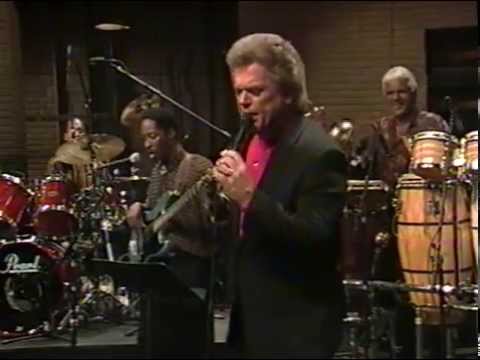
→ More from the 1970s File
View all 1970s hits →




Keep digging