The 1970s File Feature
Fifteen Years Ago
"Fifteen Years Ago" — Conway Twitty Country's Most Consistent Voice in 1970 By 1970, Conway Twitty had already lived several professional lives. He had been …
01 The Story
"Fifteen Years Ago" — Conway Twitty
Country's Most Consistent Voice in 1970
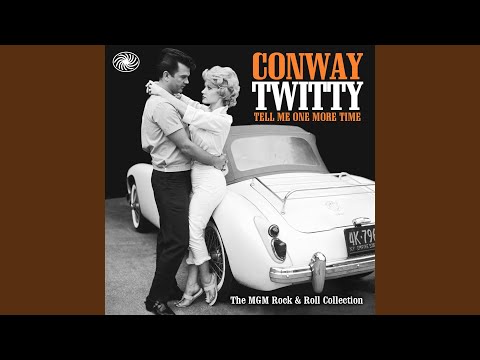
By 1970, Conway Twitty had already lived several professional lives. He had been a rockabilly sensation in the late 1950s with It's Only Make Believe, a song that reached number one on the Billboard Hot 100 in 1958 and made him briefly famous on both sides of the Atlantic. Through the 1960s, he attempted to sustain a pop career with mixed results, watching the landscape shift beneath him as British rock swept aside the sound that had made him famous. Then came his pivot to country music, a decision that proved to be among the most commercially astute reinventions in American popular music. By 1970, Twitty was a dominant force on the country charts, and the crossover potential of records like Fifteen Years Ago extended his reach back toward pop audiences.
The Transition to Country and Its Commercial Logic
Twitty's move to country music was not a retreat. It was a recognition that his voice, a low, honeyed baritone with a particular gift for romantic directness, fit the country format more naturally than it had ever fit the increasingly elaborate production styles of 1960s pop. Country listeners responded immediately. He had already scored a string of country chart toppers before Fifteen Years Ago appeared, and the record arrived as further evidence that his reinvention was no fluke. The Nashville Sound of that era, warm, string-sweetened, vocalist-centered, suited him perfectly, and he worked with producers who understood how to frame a voice like his without overshadowing it.
Recording and Chart Performance
Fifteen Years Ago was released in 1970, and it debuted on the Billboard Hot 100 on October 24 at number 97. The song climbed steadily through four weeks, reaching its peak position of 81 on November 14, 1970. The Hot 100 showing was modest, but it is worth noting that by this point Twitty's primary commercial home was the country chart, where his records routinely performed at a far higher level. The crossover appearance on the Hot 100 at all reflects the song's broad appeal, the kind of record that could move between formats without sounding out of place in either. Four weeks on the pop chart for an artist who had fully committed to country was a meaningful data point about the song's reach.
The Sound of the Record
Like most of Twitty's country output from this period, Fifteen Years Ago is built around his voice. The production is characteristically Nashville: clean acoustic guitar, warm electric bass, restrained steel guitar, and strings that enter without overwhelming. The arrangement gives Twitty room to work through the melody at his own pace, which he always used well. His phrasing was notably deliberate, a singer who understood that country music rewards patience in delivery, that the emotional content of a line often lands harder if you let the silence around it breathe. The result is a record that feels unhurried even when the subject matter is emotionally charged.
Legacy and the Twitty Catalog
Conway Twitty went on to become one of the most decorated artists in country music history, accumulating an extraordinary number of number one singles on the country chart through the 1970s and 1980s. His catalog from this period is extensive, and Fifteen Years Ago occupies a particular moment in that arc: the early phase of his country dominance, when he was still proving to skeptics that his rockabilly past was genuinely behind him and that his commitment to the format was real. He demonstrated that commitment in record after record through that decade, and his influence on the vocal style of country music, particularly in the way male vocalists approached romantic material, proved substantial. Artists who came after him in the 1970s and 1980s absorbed his directness and his willingness to sing from a position of emotional vulnerability, and that inheritance shaped the sound of the format for a generation.
Hear It for Yourself
Listening to Fifteen Years Ago today is a reminder of how much craft went into Conway Twitty's best work: a voice that carries, production that serves without smothering, and a song built to last beyond its moment.
"Fifteen Years Ago" — Conway Twitty's singular moment on the 1970s charts.
02 Song Meaning
"Fifteen Years Ago" — Themes and Resonance in Conway Twitty's Work
The Country Tradition of Retrospection
Country music has always been comfortable with looking backward. Where pop songs of the same era tended to celebrate the present or project desire onto the future, country lyricists returned repeatedly to the past, to the road not taken, the love not held onto, the life that could have been. Fifteen Years Ago fits squarely within that tradition. Its central emotional premise, a narrator confronting what was lost or abandoned a decade and a half earlier, gave Conway Twitty an opportunity to work in the register of regret that suited his voice most naturally. That combination of a retrospective lyric and a warm, unhurried vocal was exactly what country radio rewarded in 1970, and Twitty understood how to deliver it.
Regret as an Emotional Architecture
The specific framing of fifteen years creates a particular emotional texture. This is not fresh grief or recent heartbreak; it is the kind of sadness that has had time to settle and calcify, the kind that surfaces unexpectedly and catches you off guard precisely because you thought you had moved past it. The song captures the long tail of romantic loss, the way certain memories do not diminish with time but instead acquire a different quality, sharper in some respects, more bearable in others. Country songwriters of this era understood that specificity in emotional experience was more powerful than vagueness, and the fifteen-year timeframe gives the lyric a precision that a more generic treatment would lack.
Twitty's Vocal Approach and the Emotional Content
Part of what makes Twitty's performance on records like this one so effective is his restraint. He was a singer who rarely oversold a lyric. Where other vocalists of his era might have leaned into the emotional climaxes of a song, pressing for drama, Twitty tended to pull back slightly, trusting the lyric and the listener to complete the emotional circuit. That quality of understatement is harder to achieve than it appears, and it is one of the reasons his records held up well across decades of listening. The emotion is present, fully present, but it does not feel performed.
Why This Song Connected with Listeners
In 1970, American popular culture was in the middle of a significant generational negotiation. The counterculture had peaked; the idealism of the mid-1960s had given way to something more complicated and more tired. Country music in this moment spoke to listeners who felt left behind or exhausted by the cultural upheaval, and a song about long-term retrospective grief addressed an emotional reality that many people in that audience recognized. The fifteen years referenced in the title placed the narrative loss point in the mid-1950s, a period that many listeners associated with simpler choices and cleaner emotional stakes. That temporal resonance was probably not entirely conscious in the writing, but it contributed to the song's appeal.
Conway Twitty's Lasting Influence
Twitty remained an active and dominant commercial force in country music through the 1980s, but his early-1970s output occupies a particular place in the catalog, representing the consolidation of his new identity after the rockabilly years. Songs like Fifteen Years Ago helped establish the emotional template he would work within for the rest of his career: romantic, retrospective, delivered with a baritone confidence that made vulnerability sound like strength. The influence of that approach on subsequent country vocalists was significant and long-lasting.
→ More from Conway Twitty
View all Conway Twitty hits →
→ More from the 1970s File
View all 1970s hits →




Keep digging