The 1970s File Feature
Patches
Patches: Clarence Carter's Grammy-Winning Portrait of Poverty and Promise Clarence Carter was forty years old and already a veteran of Southern soul when "Pa…
01 The Story
Patches: Clarence Carter's Grammy-Winning Portrait of Poverty and Promise
Clarence Carter was forty years old and already a veteran of Southern soul when "Patches" brought him the kind of mainstream crossover success that his earlier work had only hinted at. Released in 1970 on Atlantic Records, the song became one of the most discussed and debated records of that year, generating controversy over its stark subject matter while simultaneously demonstrating that American record buyers were capable of connecting deeply with music that refused to offer easy comfort.
Carter was born in Montgomery, Alabama, in 1936, and had been partially blind since childhood, a fact that gave his performances a biographical authenticity that was difficult to manufacture. He had recorded for Fame Studios in Muscle Shoals, Alabama, establishing himself as a reliable album act and singles performer on the soul circuit before "Patches" elevated him to a different commercial tier entirely. The Muscle Shoals connection was important: the studio and its network of session musicians had developed a distinctive approach to Southern soul that influenced recordings far beyond Alabama, and Carter's best work was deeply embedded in that tradition.
"Patches" was written by General Johnson and Ronald Dunbar, who had crafted a deeply Southern narrative of poverty, filial duty, and resilience. The song takes the form of a deathbed address from a father to his son, a structure that allowed Carter to deliver what amounted to an extended dramatic monologue rather than a conventional pop song. The narrative described a family's grinding poverty with a specificity and emotional directness that country and soul music had both explored but that rarely reached the mainstream pop charts in such unmediated form.
Carter's vocal performance on the track was the element that turned a potentially maudlin story into something genuinely moving. His deep, grainy voice, shaped by decades of performing in the Black church and on the Southern soul circuit, carried the weight of the narrative without sentimentalizing it. He spoke as much as sang on the track, using the conversational register to heighten the sense that this was a real story about real people rather than a commercial entertainment product. The production, spare and deliberate, gave his voice maximum space.
The commercial response was extraordinary. "Patches" reached number four on the Billboard Hot 100, one of the strongest pop chart performances by a Southern soul recording in that period, and it also performed strongly on the R&B charts, confirming Carter's standing with his core audience while extending his reach dramatically. The song's crossover success was a testament to the universality of its themes: whatever their background, American listeners responded to the combination of stark honesty and underlying faith in the possibility of perseverance.
The following year, Carter won the Grammy Award for Best Rhythm & Blues Song for "Patches," one of the significant honors the Recording Academy could bestow on a soul recording. The Grammy win confirmed the critical establishment's recognition of what record buyers had already demonstrated: that this was one of the finest recordings of the year and one of the most significant of Carter's career. The win also gave the song extended attention and helped sustain its radio life beyond what most singles of the era could expect.
The cultural context of 1970 gave "Patches" additional resonance. The late 1960s and early 1970s were a period of intense social and political consciousness in American popular culture, and a song that addressed poverty, family, and the weight of expectation with such directness found a receptive moment. Soul music in particular was engaging with social realities in ways that had not been commercially mainstream in the genre's earlier decades, and "Patches" was part of that shift even as it rooted its narrative in the particular landscape of the rural South.
Carter recorded extensively throughout the 1970s, with several other singles achieving chart success, but "Patches" remained the defining achievement of his recording career, the record most people meant when they mentioned his name. Its Grammy win, its strong Hot 100 performance, and its emotional impact combined to give it a lasting presence in the catalogue of significant American soul recordings. Atlantic Records, which had been the home of some of the greatest soul music produced in America, could count "Patches" among the recordings that justified the label's storied reputation.
02 Song Meaning
Duty, Poverty, and Perseverance: The Moral World of Patches
"Patches" constructs a moral universe rooted in the Southern rural experience of poverty, in which family obligation functions as the primary ethical framework and the capacity for endurance is the highest virtue. The narrative structure, a dying father's instructions to his son, is a form borrowed from the oldest traditions of oral culture, the passing of essential knowledge from one generation to the next at the moment of greatest urgency. The use of this structure places the song in conversation with a deep tradition of American narrative, from frontier literature through Southern fiction to the blues.
The father's address to the son is notable for what it does not do. It does not rage against the poverty that has defined the family's life. It does not blame external forces or express bitterness toward the world that has kept the family in want. Instead it focuses on what the son can and must do, converting the facts of deprivation into a mandate for action. This orientation toward agency rather than victimhood gives the song its particular moral character and explains why it connected so powerfully with audiences across racial and regional lines.
The physical imagery of the song, the land that must be worked, the family that must be sustained, the weight of responsibility that falls on the son's shoulders, is rooted in the specific geography of Southern poverty. For Black listeners in 1970, this imagery carried historical resonance that extended from sharecropping and its legacies through the ongoing struggle for economic equality. The son's mandate to keep working the land despite its poverty was recognizable as a description of experiences that millions of families had lived through in the preceding century.
Clarence Carter's decision to deliver the narrative in a conversational register rather than a fully sung vocal was essential to the song's emotional impact. By speaking as much as singing, he created the impression of direct, unmediated communication between the dying father and the listener. The listener was positioned not as an observer of someone else's story but as the son being addressed, the recipient of the father's final wisdom. This identification between listener and narrative subject is one of the most powerful effects that storytelling songs can achieve.
The title word "patches" operates on multiple levels. Most literally it refers to the patches of land the family farms, the small pieces of ground that define their material existence. But patches also suggests the mended clothing of poverty, the resourcefulness of people who cannot afford to replace what wears out, and the larger metaphor of a life assembled from whatever materials are available. The word carries within it an entire economic history without making that history explicit.
The song's Grammy recognition as Best Rhythm and Blues Song of 1970 acknowledged something that pure commercial metrics could not fully capture: that "Patches" had achieved a level of cultural seriousness unusual for a genre that mainstream critics sometimes treated as entertainment rather than art. The Grammy win placed the song in conversation with the serious creative achievements of the era, recognizing that Carter and his collaborators had produced something that deserved to be taken on its own terms.
For Carter's artistic identity, "Patches" demonstrated that he was capable of work that transcended the conventions of the Southern soul single, that his voice and dramatic instincts could carry material of genuine weight and complexity. The recording proved that the emotional intensity of the Black church tradition, from which Carter drew his vocal approach, was capable of illuminating secular experiences of suffering and hope with equal power. This contribution to the tradition of Southern soul storytelling remains "Patches" central achievement within Carter's recorded legacy.
→ More from Clarence Carter
View all Clarence Carter hits →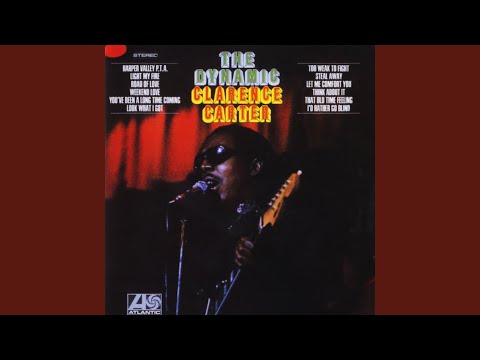

→ More from the 1970s File
View all 1970s hits →




Keep digging