The 1960s File Feature
Slip Away
Slip Away: Clarence Carter and the Sound of Atlantic Soul in 1968 Clarence Carter's "Slip Away" arrived in the summer of 1968 as one of the defining Southern…
01 The Story
Slip Away: Clarence Carter and the Sound of Atlantic Soul in 1968
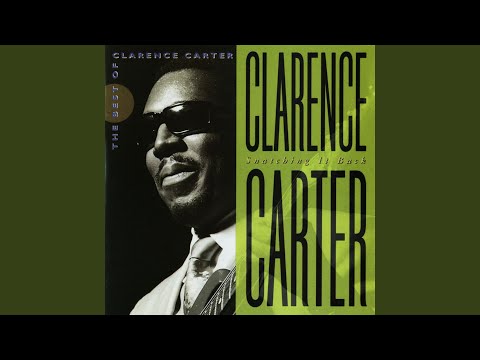
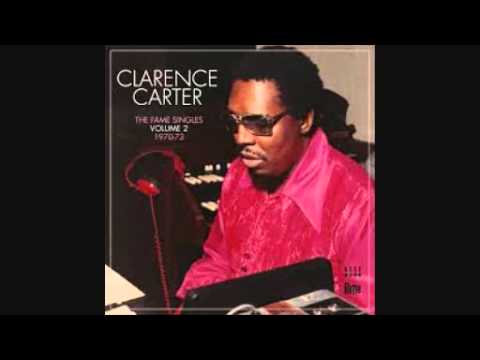
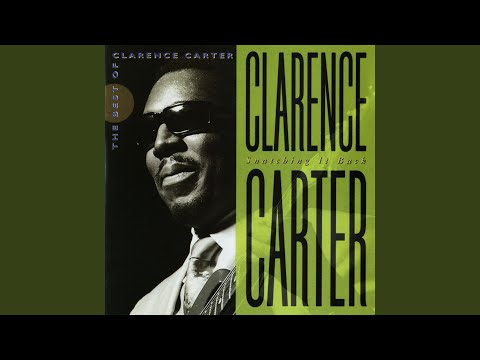
Clarence Carter's "Slip Away" arrived in the summer of 1968 as one of the defining Southern soul records of its era, a song that combined the raw emotional vocabulary of gospel with the sensual frankness of rhythm and blues in a way that felt both timeless and urgently contemporary. Carter, a blind guitarist and singer from Montgomery, Alabama, had been recording for Fame Studios in Muscle Shoals since the mid-1960s, and by 1968 he had developed a style that was unmistakably his own: husky, confessional, capable of pivoting between tenderness and wit within a single phrase.
"Slip Away" was recorded at Fame Studios in Muscle Shoals, Alabama, the legendary facility run by Rick Hall that had become the incubator of a distinctive Southern soul sound drawing on the region's gospel and country traditions alongside the commercial ambitions of Atlantic Records. The session musicians who played on the track were among the best in the world at what they did: the Muscle Shoals rhythm section, supplemented by horn players and backing vocalists who understood intuitively how to frame a vocal performance without overwhelming it. The production captured Carter at the height of his powers, his guitar tone clean and purposeful, his voice carrying the full weight of the song's emotional complexity.
Atlantic Records, which had signed Carter through its distribution arrangement with Fame, released "Slip Away" in the summer of 1968. The single was an immediate commercial success. It climbed to number 6 on the Billboard Hot 100, making it one of the biggest pop chart entries of Carter's career and establishing him as a national figure rather than a regional one. On the Billboard R&B Singles chart, the song performed even more strongly, reaching the top five and confirming that Carter had connected with the core soul audience that the Muscle Shoals sound was designed to reach.
The chart performance placed "Slip Away" alongside some of the most important soul records of 1968, a year that included major releases by Otis Redding (whose posthumous material was still charting), Aretha Franklin, James Brown, and Wilson Pickett, several of whom had also recorded at Fame or at the competing Muscle Shoals Sound Studio. That Carter could compete commercially with those artists, each of whom was a more established star, testified to both the quality of the record and the effectiveness of Atlantic's promotion machine in breaking Southern soul material into mainstream pop radio.
The context of 1968 amplified the song's resonance. The year was one of the most turbulent in American history, marked by the assassinations of Martin Luther King Jr. and Robert F. Kennedy, urban uprisings, the escalating war in Vietnam, and a political culture in crisis. Against that backdrop, a song about private longing and secret meeting took on an additional layer of meaning, offering listeners a space of personal feeling apart from the overwhelming public drama. Soul music in this period often served that function, providing emotional sustenance and community in circumstances that made both difficult to find.
Clarence Carter continued recording prolifically after "Slip Away," producing hits including "Too Weak to Fight" and the chart-topping "Patches" in 1970, which won him a Grammy Award for Best Rhythm and Blues Song in 1971. But "Slip Away" remained the song most associated with his name in the public imagination, the record that introduced him to the broadest audience and that showcased his abilities most completely. Its combination of musical sophistication, vocal honesty, and lyrical directness represented the Muscle Shoals approach at its finest.
The song has been covered and sampled across decades, and its influence on subsequent generations of soul, R&B, and even hip-hop producers has been substantial. The track's groove, its horn arrangements, and the particular quality of Carter's vocal performance have made it a reference point for musicians working in the Southern soul tradition. Radio stations that specialized in classic soul programming kept "Slip Away" in rotation for decades, ensuring that new listeners continued to discover it long after its initial chart moment had passed.
Fame Studios itself, and the Muscle Shoals sound more generally, gained renewed popular attention in the twenty-first century through documentaries and critical reassessments that placed Carter's work in its proper historical context. "Slip Away" featured prominently in these reassessments as evidence of what the Muscle Shoals approach could achieve: a sound rooted in place and tradition that nonetheless reached universal emotional truths. For Clarence Carter, the record was both a commercial triumph and an artistic statement, proof that authenticity and commercial success were not mutually exclusive in the soul music of 1968.
02 Song Meaning
Secret Desire and the Ethics of Longing in "Slip Away"
"Slip Away" is a song about illicit desire, the particular ache of wanting someone who belongs, in the social and perhaps marital sense, to another situation. Clarence Carter performs the song not as a seducer but as a man in the grip of a feeling he cannot entirely justify or resist, and that ambivalence gives the lyric its emotional depth. The narrator is not triumphant; he is pleading, asking for stolen time rather than claiming a right to it.
The emotional register of the song is one of urgent, unashamed vulnerability, which was itself a kind of statement in 1968 soul music. Male performers in the genre were expected to project confidence and authority, and Carter's willingness to let his narrator appear needy and exposed gave "Slip Away" a psychological complexity that set it apart from simpler songs of seduction or conquest. The longing in his voice is not performed; it sounds discovered in the moment of singing, which is the quality that made Muscle Shoals recordings feel so immediate and alive.
The title itself is instructive. "Slip away" is a phrase that suggests stealth and brevity, the snatch of time that a secret relationship permits. The narrator is not asking for a grand gesture or a permanent arrangement; he is asking only for a moment, a private meeting away from the demands of ordinary life. This modesty of aspiration paradoxically intensifies the emotional weight of the request, because it implies an entire architecture of constraint and obligation that lies just offscreen.
Within the broader tradition of Southern soul, "Slip Away" belongs to a lineage of songs that treat complicated romantic situations with honesty rather than moral simplification. The soul and gospel traditions from which Clarence Carter drew were both deeply concerned with the gap between human weakness and human aspiration, and "Slip Away" inhabits that gap with complete naturalness. Carter does not moralize about the situation he describes; he simply renders it with feeling, and lets listeners bring their own moral frameworks to what they hear.
The song also functioned as a showcase for Carter's guitar sensibility, which was rooted in the blues tradition but inflected by gospel and country in the characteristic Muscle Shoals manner. His instrumental contributions to the record reinforced the vocal performance rather than competing with it, demonstrating an artistic self-awareness unusual in a performer who might have been tempted to feature his technical abilities more prominently. The restraint was part of the meaning: the music, like the narrator, was holding something back, keeping something in reserve.
For Clarence Carter's artistic identity, "Slip Away" established the template of the honest, psychologically complex soul man that he would continue to inhabit throughout his career. His later hits, including "Patches," dealt with equally difficult emotional and social terrain, and in each case the emotional honesty of the performance rather than vocal or instrumental pyrotechnics was the source of the song's power. "Slip Away" set the standard for that approach and demonstrated that audiences were ready to receive it, as the song's remarkable chart performance confirmed. It remains one of the most emotionally complete records of its era.
→ More from Clarence Carter
View all Clarence Carter hits →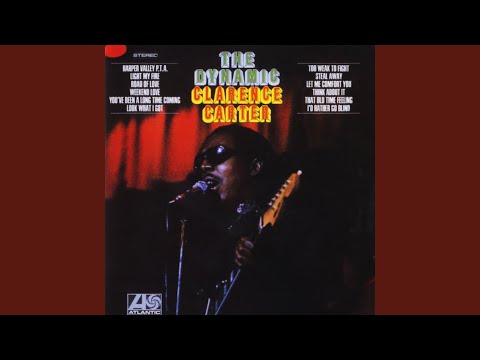

→ More from the 1960s File
View all 1960s hits →




Keep digging