The 1970s File Feature
Was Dog A Doughnut
Was Dog A Doughnut — Cat Stevens' Instrumental Detour The Road Not Taken Picture the late 1970s: Cat Stevens was one of the most celebrated singer-songwriter…
01 The Story
Was Dog A Doughnut — Cat Stevens' Instrumental Detour
The Road Not Taken
Picture the late 1970s: Cat Stevens was one of the most celebrated singer-songwriters on the planet, a man who had built an entire career on intimate folk confessionals and philosophical pop. His run of early 1970s albums had produced some of the decade's most enduring songs, works saturating AM radio and dorm room stereos across Britain and America. By 1977, Stevens stood at a crossroads, and Was Dog A Doughnut pointed in a direction almost no one expected from him. Fans who had followed him from Mona Bone Jakon through Catch Bull at Four were accustomed to a certain kind of intimate songcraft. What arrived instead was something stranger and more adventurous than anything in his back catalog.
An Unexpected Instrumental Turn
The track is a striking departure from the acoustic introspection that had defined Stevens' reputation. A synthesizer-driven, electronic groove built around a repetitive rhythmic motif, it drew from the nascent disco and electronic movements that were reshaping pop at the time. Where Stevens had long distinguished himself through vocal sincerity and lyrical depth, here the music spoke entirely without words. The title itself, a playful philosophical riddle, hinted at the absurdist sensibility the track carried. The song appeared on his album Izitso, released in 1977, a record that embraced synthesizers and studio experimentation more broadly than anything in his previous catalog. The overall direction of that album signaled an artist unwilling to repeat himself, even at the cost of alienating the audience he had so carefully cultivated.
The Sound of Izitso
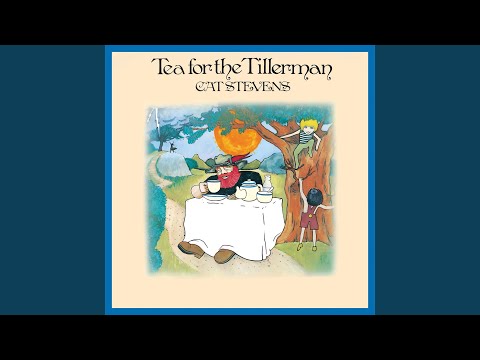
The Izitso album represented a sharp stylistic break with Stevens' folk period. Where records like Tea for the Tillerman were built around acoustic guitar and confessional lyricism, Izitso leaned into synthesizers, drum machines, and production techniques drawn from the dance music world. Stevens collaborated with producer Paul Samwell-Smith across much of his 1970s output, and the sonic shifts on Izitso reflected deliberate artistic choices rather than commercial pressure. The album received a mixed reception from critics who preferred the earlier work, but it demonstrated that Stevens was not content to be defined entirely by his most commercially successful period.
Chart Journey Across the Hot 100
Despite its unconventional nature, the track found an audience. It debuted on the Billboard Hot 100 on November 19, 1977, entering at number 92, and climbed steadily through the winter months. The ascent was methodical: 88, 84, 78, 76 in successive weeks, before the chart run concluded. The song reached its peak position of number 70 on January 14, 1978, spending nine weeks total on the chart. For an instrumental track from an artist primarily known for sung confessionals, that kind of pop chart presence was genuinely notable. It demonstrated that Stevens' name alone could carry unusual material into mainstream consciousness, and that the audience's curiosity about where he might go next was strong enough to drive chart-relevant behavior.
Legacy of an Outlier
Stevens converted to Islam in 1977 and took the name Yusuf Islam the following year, stepping away from secular music for nearly three decades. That context makes Was Dog A Doughnut a fascinating artifact: one of the last commercial releases from the Cat Stevens era, and one of its most unusual. The track stands as evidence of an artist actively searching for new forms in the final stretch of that chapter of his life. For listeners who know Stevens primarily through Wild World or Father and Son, this instrumental swerve is a genuine surprise, a reminder that creative restlessness drives even the most established figures toward unexpected places. It earned its chart position honestly, without the benefit of radio-friendly lyrics or the familiar folk intimacy. Put it on and let the synthesizers do what lyrics never could.
Synthesizers and the Seventies Mainstream
The late 1970s proved hospitable to electronic music in ways that earlier decades had not. Synthesizer technology had become affordable enough for mainstream studio use, and producers across pop, disco, and rock were incorporating it into recordings that aimed at the broadest possible audiences. Cat Stevens joining that conversation with an instrumental groove track was not as out of place as it might initially seem; the era was one of genuine stylistic openness, and the Hot 100 reflected that openness in the diversity of sounds reaching its upper reaches each week. Nine weeks on the chart was the market confirming that the experiment had worked.
"Was Dog A Doughnut" — Cat Stevens' singular moment on the 1970s charts.
02 Song Meaning
Was Dog A Doughnut — Reading the Riddle
A Question Without an Answer
The title of the track functions as its own small philosophical provocation. "Was Dog A Doughnut" poses an absurdist question that resists any straightforward interpretation, placing the listener in a space of playful uncertainty before the music even begins. This approach aligned with a broader late-1970s tendency among artists to experiment with conceptual gestures, treating the album as a space for ideas as much as songs. For an artist like Cat Stevens, who had built his reputation on songs that grappled with love, faith, and the human condition, an instrumental track with a riddle for a title was itself a kind of statement about the limits of language. The question cannot be answered, and in refusing to answer it, the title opens something up rather than closing it down.
The Meaning in the Music
Because Was Dog A Doughnut is an instrumental, its emotional content is carried entirely by arrangement and texture. The circular, repetitive groove suggests something cyclic and self-referential, perhaps mirroring the unanswerable loop of the title's question. The synthesizer patterns create a hypnotic, almost meditative quality that connects, however unexpectedly, to Stevens' long interest in spiritual inquiry. Meditation, repetition, and the dissolution of the ego into something larger were themes running through his thinking in the mid-to-late 1970s, and the track's structure can be heard as sonic expression of those preoccupations. The absence of a voice to guide the listener forces a different kind of attention than his lyrical work demanded.
Electronic Texture as Emotional Language
In 1977, synthesizers carried specific cultural resonances. They signaled futurity, artifice, the uncanny space between human feeling and machine precision. Stevens' willingness to inhabit that sonic world invited listeners to hear him outside the confessional folk persona they had come to expect. The track communicates something about openness to transformation, which fits neatly with what was happening in Stevens' life at the time. The move toward electronic sound and the move toward a new spiritual identity were happening simultaneously, and Was Dog A Doughnut exists at that intersection. The machine aesthetic was not a retreat from feeling; it was a different way of approaching it.
Why It Resonated
Audiences in 1977 were ready for the groove the track delivered. Disco's emphasis on rhythmic repetition and synthesized texture had primed listeners to respond to exactly this kind of production. The song worked as a dance-adjacent instrumental even as it carried the conceptual weight of its title, satisfying multiple listening modes at once. It could function as background music, as a dance track, or as a puzzle to turn over in the mind. That versatility, rare in any era, explains how an instrumental oddity from a singer-songwriter managed to spend nine weeks on the Hot 100. The question in the title still hangs in the air, unanswered and inviting, every time the track plays. Some riddles are more valuable for their asking than for any answer they might produce.
→ More from Cat Stevens
View all Cat Stevens hits →



→ More from the 1970s File
View all 1970s hits →




Keep digging