The 1970s File Feature
Oh Very Young
Oh Very Young: Cat Stevens and the Meditation on Mortality That Became a Quiet Hit "Oh Very Young" was released in 1974 as a single from Cat Stevens's album …
01 The Story
Oh Very Young: Cat Stevens and the Meditation on Mortality That Became a Quiet Hit
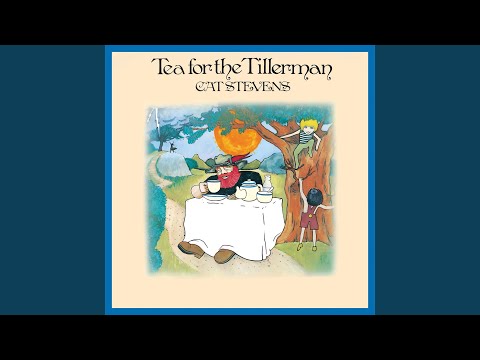
"Oh Very Young" was released in 1974 as a single from Cat Stevens's album Buddha and the Chocolate Box, arriving at a moment when the British singer-songwriter was at the height of his commercial powers and public profile. Stevens, born Steven Demetre Georgiou in London to a Greek Cypriot father and a Swedish mother, had by 1974 established himself as one of the most successful and critically respected singer-songwriters in the world, with a catalog of albums that included Tea for the Tillerman and Teaser and the Firecat, records that had sold millions of copies and generated multiple hit singles.
"Oh Very Young" was released by A&M Records, the label that had been central to Stevens's commercial breakthrough and that continued to handle his American releases throughout his peak period. The song was written by Stevens himself and produced with the characteristic warmth and acoustic intimacy that defined his production aesthetic. The arrangement features acoustic guitar prominently, alongside subtle orchestration that adds emotional depth without overwhelming the gentle quality of the song's emotional register.
The track represented a somewhat different thematic territory for Stevens than many of his most popular songs, which tended toward romantic subjects or the spiritual questioning that was becoming an increasingly prominent thread in his work. "Oh Very Young" is a meditation on the transience of human life, specifically addressed to a young person whose time in the world will be, from the perspective of mortality, inevitably brief. The gentleness of the delivery belies the gravity of the subject matter, creating a tonal complexity that was characteristic of Stevens at his best.
"Oh Very Young" reached number ten on the Billboard Hot 100 in the United States, giving Stevens another top-ten single and confirming his continued commercial vitality in the American market. In the United Kingdom, the song also performed well, adding to the already impressive chart record Stevens had accumulated over the preceding several years. The relatively strong commercial performance of a song with such contemplative and philosophically serious content reflected both the quality of Stevens's songwriting and the particular appetite of the early-1970s audience for singer-songwriter material that took ideas seriously.
The album Buddha and the Chocolate Box was released in March 1974 and reached high positions on album charts in both the United States and United Kingdom, demonstrating Stevens's continued relevance in an era that was beginning to shift commercially toward harder rock sounds and the emerging glam rock aesthetic. Stevens's acoustic folk-influenced sound occupied a different commercial space than these genres but maintained a devoted following that made each new release a commercially significant event.
Stevens had been dealing with serious health challenges in the years leading up to Buddha and the Chocolate Box, having contracted tuberculosis in 1969 and spent considerable time in hospital recovering. The experience of confronting his own mortality at a young age almost certainly influenced his developing philosophical orientation and may have contributed to the reflective quality of songs like "Oh Very Young," which addresses themes of temporal limitation with unusual directness for the pop format.
The album Buddha and the Chocolate Box reached number two on the Billboard 200 in the United States, Stevens's highest-charting album on that chart, and generated significant sales both domestically and internationally. The combination of "Oh Very Young" as a single success and the album's commercial performance made 1974 one of the more commercially productive years of his career, even as his personal and spiritual development was taking him in directions that would eventually lead him away from music altogether.
In 1977, Cat Stevens converted to Islam, adopted the name Yusuf Islam, and withdrew from the music industry, giving up his recording and performing career for nearly three decades. This withdrawal gave his entire catalog, including "Oh Very Young," a retrospective quality, the sense of a body of work frozen at a specific point in time. The song's themes of transience and the brevity of earthly existence took on an additional layer of meaning in this retrospective context, given that its creator chose, not long after its release, to step outside the world in which that music had been made.
02 Song Meaning
The Meaning of "Oh Very Young": Mortality, the Passage of Time, and the Gentle Urgency of Being Alive
"Oh Very Young" stands somewhat apart from the typical concerns of early-1970s singer-songwriter material in the directness with which it addresses mortality. While the folk revival and the singer-songwriter movement of the period produced an enormous amount of emotionally rich material about love, politics, and personal growth, the specific territory that Cat Stevens inhabits in "Oh Very Young," the address to a young person about the brevity of life and the importance of the time available, is rarer and more philosophically ambitious.
The song speaks to a figure who is at the beginning of the experience of being alive, whose energy and presence and vivid sense of the world are precisely the qualities most vulnerable to time's erasure. There is a tenderness in this address that prevents it from being morbid despite its subject matter. Stevens is not describing death with dread but with a kind of compassionate clarity, acknowledging the reality of temporal limitation while simultaneously affirming the value of what is available within that limitation.
The philosophical register of "Oh Very Young" connects it to Stevens's developing spiritual interests during this period. By the early 1970s, he was deeply engaged with questions of spiritual meaning and metaphysical identity, exploring a range of traditions and texts as he sought a framework for understanding his own experience of near-death during his tuberculosis illness and subsequent recovery. The song reflects this spiritual engagement without being doctrinally specific, operating in the space of human wisdom traditions generally rather than any single religious perspective.
The song's address to the young is also, implicitly, an address to the adult narrator himself, who is remembering or imagining the perspective of youth from the vantage point of someone already well into the process of becoming older. This double focus, addressing the young while processing the experience of aging, gives the song a layered quality that rewards repeated listening. The narrator's emotional relationship to the subject is not only instructive but personal, a working through of feelings about time and loss that the song stages as advice but that functions as much as self-examination.
The gentleness of the musical setting is essential to the song's emotional strategy. A harder or more dramatic arrangement would make the mortality theme feel threatening or dramatic, which would be aesthetically dishonest given the song's actual emotional content, which is closer to benediction than elegy. Stevens understood that the appropriate musical setting for a song about the value of life's brevity was not grandeur but intimacy, not orchestral sweep but the quiet authority of a well-placed acoustic guitar.
The retrospective significance of "Oh Very Young" in Stevens's catalog has been shaped by his subsequent conversion and withdrawal from music. In the context of an artist who gave up his career in the secular world as a religious act, a song about leaving things behind and the transience of earthly experience acquires additional biographical resonance. Listeners who encounter the song knowing its creator's subsequent history cannot help but hear it differently, as a document of a sensibility already in the process of becoming something other than what the music industry had known.
For the audience that encountered "Oh Very Young" in 1974 without access to that retrospective knowledge, the song offered something relatively rare in the pop singles format: a piece of genuine philosophical content wrapped in accessible melody and delivered with the emotional authenticity of an artist at the height of his powers. Its commercial success confirmed that the audience for serious ideas in popular music was substantial, and its enduring quality demonstrates that songs built on genuine insight age better than those built primarily on the transient fashions of their moment.
→ More from Cat Stevens
View all Cat Stevens hits →



→ More from the 1970s File
View all 1970s hits →




Keep digging