The 1970s File Feature
The Hurt
Cat Stevens and "The Hurt": The Foreigner Album's Quiet Chart Success Cat Stevens's "The Hurt " entered the Billboard Hot 100 on July 7, 1973, and charted fo…
01 The Story
Cat Stevens and "The Hurt": The Foreigner Album's Quiet Chart Success
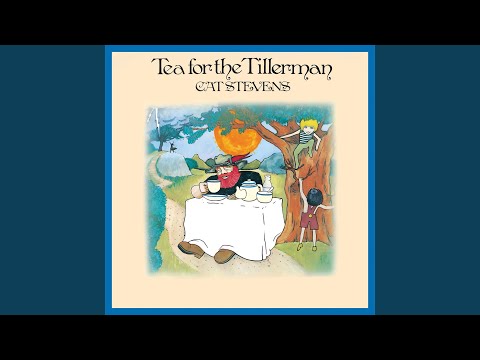
Cat Stevens's "The Hurt" entered the Billboard Hot 100 on July 7, 1973, and charted for ten weeks, climbing steadily from its debut position of number 86 to a peak of number 31 on August 25, 1973. The single was drawn from the album Foreigner, released in June 1973 on A&M Records, one of the most ambitious and in many ways most unusual recordings of Stevens's career, an album that departed significantly from the acoustic folk-pop formula that had produced his greatest commercial successes while engaging with questions of spiritual searching that would eventually lead him away from popular music eForeigner was produced by Stevens himself, with Paul Samwell-Smith, the same production partnership that had overseen his most celebrated albums. The record was notable for its incorporation of orchestral arrangements, its extended suite structures, and the explicitly autobiographical and spiritual content of its lyrics. These qualities set it apart from the more immediately accessible material of albums like Tea for the Tillerman (1970) and Teaser and the Firecat (1971), which had established Stevens as one of the most commercially successful singer-songwriters of the early 1970s. Some listeners and critics found Foreigner opaque and self-indulgent, while others recognized it as a genuine artistic statement of considerable a"The Hurt" functioned within the album as one of its more accessible moments, a track that connected to the melodic directness of Stevens's earlier work even as it engaged with the more searching lyrical territory that characterized the album as a whole. Its selection as a single reflected A&M's need to find commercially viable material within an album that did not obviously yield to such purposes. The song's ten-week chart run and peak at number 31 represented a solid performance, particularly given the demanding context of the album from which it came.t of the album from which it came.
By 1973, Cat Stevens occupied an unusual position in the commercial music landscape. His albums routinely sold in large numbers, and his status as a major artist was well established, yet his artistic direction was moving him away from the formulas that had generated that success. The incorporation of spiritual themes into his work had been a gradual development throughout his career, rooted in his 1968 illness and recovery, which had provoked a sustained period of personal reflection. By the time of Foreigner, this spiritual dimension had become central rather than peripheral to his artistic concerns.
The A&M Records context of Stevens's work was significant. The label, founded by Herb Alpert and Jerry Moss, had built a roster that included artists working across a wide range of styles, from pop instrumentals to rock to soul, and its approach to artist development gave its more established acts considerable latitude to explore ambitious projects. This latitude was crucial to Stevens's ability to make an album as unconventional as Foreigner without sacrificing the commercial infrastructure that sustained his career.
Stevens had emerged from the British pop scene of the late 1960s, and his trajectory from teen pop success through serious illness to artistic reinvention was one of the most compelling personal narratives in early 1970s popular music. The illness he suffered in 1968 had brought him close to death and had precipitated the sustained period of reflection and creative development that produced the series of albums culminating in Foreigner. "The Hurt" was therefore not simply a pop single but a product of a specific and deeply personal artistic journey.
The musical character of "The Hurt" reflected the sophistication of Stevens's songwriting at this period. His melodic gift had always been exceptional, and the song demonstrated his ability to construct memorable musical phrases that carried emotional content without the need for explicit lyrical statement. The orchestral context provided by the Foreigner album's production approach gave the single a sonic environment that distinguished it from more sparsely arranged folk-pop material, suggesting an artist with the ambition to operate at a larger scale.
Within two years of the release of Foreigner and "The Hurt," Cat Stevens would convert to Islam and withdraw from the music industry, a decision that brought his remarkable run of commercial and artistic achievement to an abrupt close. This subsequent development casts a retrospective significance over the Foreigner album's spiritual preoccupations, making it readable in hindsight as a document of a serious person in the final stages of a search that would lead to a fundamental life change. "The Hurt" charted during this period of searching, making it a record with an unusual position in the history of one of the most significant popular music careers of the early 1970s.
02 Song Meaning
The Meaning of "The Hurt": Pain, Growth, and the Spiritual Dimension of Suffering
In the context of Foreigner, Cat Stevens's most spiritually ambitious album, "The Hurt" functioned as an exploration of suffering as a necessary dimension of human growth and self-knowledge. The thematic territory was consistent with the broader preoccupations of the album, which engaged with questions of identity, transformation, and the search for meaning that had increasingly defined Cat Stevens's artistic and personal concerns in the early 1970s. The song brought these concerns to bear on the specific experience of emotional pain, treating hurt not as an aberration to be avoided but as a potentially transformative encounter with one's own depth.
Stevens had a particular biographical authority for engaging with this subject. His serious illness in 1968 had been a profound encounter with vulnerability and mortality, and the creative work he produced in its aftermath drew directly on that experience. The singer-songwriter tradition to which he belonged prized exactly this kind of personal engagement with difficult material, valuing the authenticity that comes from writing out of genuine experience rather than constructing emotional scenarios at a remove from real feeling.
The concept of hurt as a spiritual teacher was not unique to Stevens's work; it drew on deep traditions within both Western and Eastern religious thought, and by the early 1970s Stevens was actively engaging with multiple spiritual traditions as part of his personal inquiry. The spiritual resonance of suffering in these traditions was complex: pain could be understood as purification, as a stripping away of illusion that made clearer perception possible, or as a form of empathy that connected the sufferer to a broader human community. Stevens's song engaged with these dimensions without reducing them to simple formulas.
The musical setting of "The Hurt" within the broader orchestral context of Foreigner supported its thematic seriousness. The orchestration gave the emotional content a weight and spaciousness that simpler arrangements might not have achieved, suggesting that the experiences being described were of sufficient significance to merit this kind of musical attention. Stevens's voice on the recording carried the quiet intensity that characterized his most personal material, a quality of inward listening that communicated the experience of genuine reflection rather than performed emotion.
The song's position within Stevens's career arc gave it an additional layer of retrospective significance. It was recorded at a moment when the artist was approaching a fundamental life change, when the spiritual searching that informed the album's content was moving toward a resolution that would take him outside the world of popular music entirely. Listeners returning to the song with knowledge of what came after can hear in it a seriousness of purpose that transcends the conventions of the pop single, a document of a person engaged with questions that the pop format was barely adequate to contain.
The broader meaning of "The Hurt" also connected to the emotional vocabulary of the early 1970s singer-songwriter tradition, which had made a virtue of transparency about personal pain. Artists from James Taylor to Joni Mitchell to Jackson Browne had established a mode of songwriting in which the exploration of difficult emotional states was understood as a form of artistic integrity. Cat Stevens worked within this tradition while adding to it the specifically spiritual dimension that distinguished his most ambitious work, treating hurt not merely as an experience to be reported but as a phenomenon with philosophical and ultimately transcendent implications.
→ More from Cat Stevens
View all Cat Stevens hits →


→ More from the 1970s File
View all 1970s hits →




Keep digging