The 1970s File Feature
Ready
Cat Stevens's "Ready" and the Buddha and the Chocolate Box Era In the winter of 1974 and into early 1975, Cat Stevens placed "Ready" on the Billboard Hot 100…
01 The Story
Cat Stevens's "Ready" and the Buddha and the Chocolate Box Era
In the winter of 1974 and into early 1975, Cat Stevens placed "Ready" on the Billboard Hot 100, where it debuted at number 82 on December 7, 1974, and climbed over ten weeks to a peak of number 26 during the week of January 25, 1975. The song was drawn from the Buddha and the Chocolate Box album, released in March 1974, which had been one of the more commercially successful releases of that year and a continuation of the extraordinary run of albums Stevens had produced since his commercial breakthrough in the early 1970s.
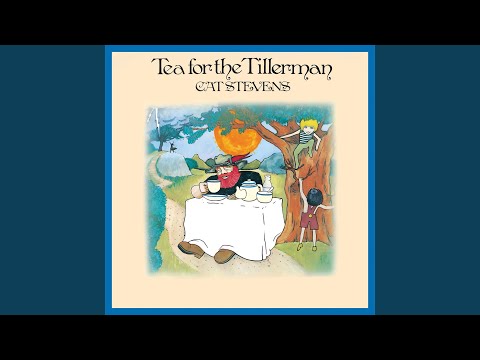
The period from roughly 1970 to 1975 represented the commercial and artistic peak of Cat Stevens's recording career. Albums including Tea for the Tillerman, Teaser and the Firecat, and Catch Bull at Four had established him as one of the most critically and commercially successful singer-songwriters of his generation, with a distinctive melodic sensibility and a philosophical depth that distinguished his work from the more straightforwardly romantic material of many contemporaries. Buddha and the Chocolate Box continued that trajectory, though it was received by some critics as representing a slight consolidation rather than an advance on the earlier work.
The album's title reflected Stevens's deepening engagement with spiritual philosophy and Eastern religious thought, a preoccupation that would ultimately lead to his conversion to Islam in 1977 and his subsequent withdrawal from the music industry under the name Yusuf Islam. "Ready" appeared on an album already suffused with this spiritual inquiry, and the song itself carried traces of the philosophical searching that characterized Stevens's writing throughout this period.
"Ready" was released as a single in the autumn of 1974, with its chart debut coming in December of that year. The song's chart trajectory showed consistent upward movement: from 82 at debut, to 71 in week two, 64 in week three, 54 in week four, 44 in week five, and continuing to advance through the following weeks toward its eventual peak of 26. Ten weeks on the chart was a solid performance, consistent with the sustained radio traction that characterized Cat Stevens's commercial work during this period.
The context of pop radio in late 1974 and early 1975 was shaped by a rich variety of sounds. Singer-songwriters remained a significant commercial force, with artists including James Taylor, Carole King, and Joni Mitchell maintaining strong commercial presences. Cat Stevens competed creditably in this environment, his melodic sophistication and philosophical content distinguishing him from both the more straightforwardly commercial pop acts and the more aggressively confessional singer-songwriters of the era.
The production approach on Buddha and the Chocolate Box was somewhat more elaborate than Stevens's earlier, more acoustically intimate recordings, with orchestral arrangements adding a layer of sonic richness to some tracks. "Ready" benefited from production choices that gave it a warmth and musical fullness appropriate to radio. Producer Paul Samwell-Smith, who had worked with Stevens through much of his commercial peak period, understood how to present the artist's melodic gifts in a format that served both artistic integrity and commercial viability.
Cat Stevens's commercial success in America was remarkable for a British artist whose appeal rested primarily on introspective, philosophically oriented singer-songwriter material. His American audience found in his work a combination of melodic pleasure and genuine intellectual and spiritual content that rewarded repeated listening. Albums sold consistently in large quantities, tours sold out, and singles like "Wild World," "Peace Train," and "Morning Has Broken" became genuine cultural touchstones of the early 1970s.
"Ready" did not achieve that level of cultural penetration, but its ten-week chart run and peak of 26 documented the continued commercial viability of Stevens's approach in the period immediately before his career would take an entirely different direction. Looking back from the vantage of subsequent decades, the Buddha and the Chocolate Box era records have a particular poignancy as the final chapter of a commercial and artistic run that would end abruptly with his religious conversion and withdrawal from popular music.
The peak of 26 for "Ready" placed it comfortably in the commercially meaningful range of the Hot 100, confirming that Cat Stevens's audience remained engaged and responsive through the winter of 1974 and 1975, and that the philosophical and melodic qualities he brought to his recordings continued to find a substantial American audience well into his most spiritually searching period.
02 Song Meaning
Spiritual Readiness and Romantic Openness in Cat Stevens's "Ready"
"Ready" by Cat Stevens operates at the intersection of romantic and spiritual preparation, a theme that runs through much of his work from the Buddha and the Chocolate Box period. The word "ready" in the context of Stevens's philosophical preoccupations carries more weight than simple emotional preparedness for love: it implies a state of internal alignment, a condition of spiritual openness in which the self is sufficiently clear and settled to receive what love or life might offer.
This dual register, romantic and spiritual simultaneously, was characteristic of Cat Stevens's songwriting at its most distinctive. He was consistently interested in love not merely as an emotional transaction between two people but as a manifestation of larger spiritual forces, a particular expression of the human capacity for connection that pointed toward something beyond the merely personal. In this interpretive framework, being "ready" for love is related to, even dependent upon, being ready spiritually: clear in one's values, settled in one's inner life, open to what arrives.
The Buddha and the Chocolate Box album from which the song came was itself named for the kind of philosophical synthesis Stevens was pursuing in the early 1970s: the conjunction of Eastern wisdom traditions (the Buddha) with the material pleasures of Western life (the chocolate box) as a way of acknowledging both the spiritual and the sensory dimensions of human existence. "Ready" sits within this framework as a song about achieving the inner condition that makes full presence, in love and in life, possible.
The romantic content of the song does not disappear into abstraction, however. Stevens was too skilled a melodist and too commercially conscious a songwriter to sacrifice accessible emotional content for philosophical complexity. The song retains a genuine warmth and an invitation that functions on the straightforward romantic level: a declaration of emotional availability, an openness to connection, a willingness to be vulnerable with another person. The philosophical depth underlies this but does not replace it.
In the broader context of early-1970s singer-songwriter culture, the idea of readiness carried specific resonances. The post-1960s counterculture had generated considerable interest in psychological and spiritual work, in the project of becoming more fully oneself as a prerequisite for authentic relationship. Cat Stevens's work had always engaged with these concerns more explicitly than most of his commercial contemporaries, and "Ready" fit within a body of work that asked listeners to consider their inner lives as relevant to their romantic ones.
The song's 1974 release placed it in the final stages of Stevens's most productive and celebrated period. Within three years he would leave popular music entirely following his conversion to Islam, and the records of the Buddha and the Chocolate Box era thus carry a retrospective quality of farewell, of an artist moving toward a threshold that would fundamentally alter his public identity and musical output. "Ready," in this context, reads almost as a statement of preparation for transformation, an unknowing self-description of someone genuinely becoming ready for a different kind of life.
The chart performance, peaking at number 26 over ten weeks on the Hot 100, confirmed that the song's emotional and philosophical content found a receptive audience. Cat Stevens had built a listener base that was specifically drawn to work of this kind, music that offered melodic pleasure and genuine philosophical content simultaneously. "Ready" delivered both, and its commercial performance reflected that sustained audience relationship even as the artist himself was moving toward a decision that would soon bring that relationship to an end.
→ More from Cat Stevens
View all Cat Stevens hits →


→ More from the 1970s File
View all 1970s hits →




Keep digging