The 1970s File Feature
Lucretia Mac Evil
Blood, Sweat Tears and the Jazz-Rock Blueprint: "Lucretia Mac Evil" (1970) By the time Blood, Sweat Tears released "Lucretia Mac Evil" in the autumn of 1970,…
01 The Story
Blood, Sweat & Tears and the Jazz-Rock Blueprint: "Lucretia Mac Evil" (1970)
By the time Blood, Sweat & Tears released "Lucretia Mac Evil" in the autumn of 1970, the band had already transformed American rock music once. Their self-titled second album, issued in 1969, had produced three top-five singles and won the Grammy Award for Album of the Year, outselling even the Beatles' Abbey Road in the United States for several weeks. But success of that magnitude carries its own gravitational weight, and the group entered the sessions for Blood, Sweat & Tears 3 knowing that the world was watching to see whether their fusion of jazz, classical, and rock was a genuine artistic movement or a commercial novelty that would fade with the novelty.
David Clayton-Thomas, the gravel-voiced Canadian singer who had fronted the group since 1968, remained the public face of the band's identity. Born David Henry Thomsett in Surrey, England, and raised in Canada, Clayton-Thomas brought a street-level toughness to the ensemble's otherwise sophisticated arrangements. His vocal style sat in deliberate contrast to the polished brass charts and intricate time signatures surrounding him, and that tension was precisely what gave the band its character. "Lucretia Mac Evil" leaned fully into that character, presenting Clayton-Thomas with a blues-inflected portrait of a manipulative woman drawn from the traditions of American roots music and updated with the ensemble's jazz-rock palette.
The song was written by Steve Katz, the band's rhythm guitarist and one of its founding members, who had previously played with the Blues Project before helping to form Blood, Sweat & Tears in 1967 alongside Al Kooper. Katz crafted a character study in the tradition of classic blues storytelling, rooting his subject in a world of card games, street corners, and spiritual manipulation. The name "Lucretia Mac Evil" itself drew on the long lineage of blues archetypes, evoking both the historical Lucretia Borgia and the carnival-barker world of American vernacular music. Katz's composition gave the band's formidable horn section room to swagger, and producer James William Guercio, who had steered the group's commercial peak, shaped the track into a driving single.
Recorded as part of the Blood, Sweat & Tears 3 sessions at Columbia Recording Studios in New York, the track benefited from the ensemble's remarkable musicianship. The brass arrangements, a hallmark of the group's sound, were delivered with the precision of studio veterans. The rhythm section locked into a groove that owed as much to soul and R&B as to jazz, while the horn punches gave the track a muscular quality that separated it from lighter pop fare of the era. The result was a piece of music that felt immediate and physical, a significant accomplishment for a band sometimes accused of academic detachment.
"Lucretia Mac Evil" debuted on the Billboard Hot 100 on October 3, 1970, entering at number 62. Its chart trajectory was steady if not spectacular: the single climbed to number 33 in its third and fourth weeks before reaching a peak of number 29 on November 7, 1970, where it spent two weeks. The track's seven-week chart run reflected a band that still commanded significant radio presence even as the cultural moment that had made Blood, Sweat & Tears so dominant began to shift.
The album Blood, Sweat & Tears 3 itself reached number one on the Billboard 200, confirming that the group retained an enormous audience. Yet critical reception had begun to cool, with some reviewers suggesting the band was consolidating rather than innovating. "Lucretia Mac Evil" was the album's most successful American single, and it demonstrated that the group could still generate compelling commercial music even as the broader rock landscape was fragmenting into the singer-songwriter movement and the heavier sounds that would define hard rock in the early 1970s.
The track also captured something essential about the band's cultural position. Blood, Sweat & Tears occupied an unusual space in American popular music at the turn of the decade: too sophisticated for straightforward rock radio, too electric for jazz purists, and too commercially successful to be dismissed as an underground phenomenon. Their horn-driven sound influenced a generation of bands, from Chicago, who were charting their own course through jazz-rock fusion at precisely the same moment, to the countless soul and funk ensembles who took note of how integrated brass arrangements could serve popular songwriting.
In retrospect, "Lucretia Mac Evil" represents a band at the height of its technical command, deploying considerable craft in service of an infectious groove. The character at the song's center, a figure at once dangerous and magnetic, gave Clayton-Thomas one of his most vivid vocal showcases, and Katz's composition showed that the songwriting within the ensemble could generate strong material without leaning on outside contributors. As a document of American jazz-rock in 1970, the track holds its place with confidence.
02 Song Meaning
The Character Study at the Core of "Lucretia Mac Evil"
"Lucretia Mac Evil" belongs to one of popular music's oldest traditions: the blues character portrait, in which a vivid antagonist serves as both a warning and a source of irresistible fascination. Steve Katz, who wrote the song for Blood, Sweat & Tears, reached back into the vernacular well of American roots music to construct a figure whose name alone signals her nature. Lucretia Borgia, the Renaissance noblewoman associated in popular mythology with poison and manipulation, lends her first name to a character who inhabits the street-level world of card games and spiritual sleight of hand. The combination creates an archetype that is simultaneously ancient and contemporary.
The song's central figure is a woman who deals in deception, using sexuality, cunning, and a kind of supernatural magnetism to dominate the men around her. David Clayton-Thomas renders her with evident relish, his voice combining admiration and alarm in a way that has characterized the blues treatment of such figures for generations. The tradition runs from Robert Johnson's crossroads mythology through countless urban blues recordings of the 1940s and 1950s, and Katz's composition updates it for a 1970 audience without sanitizing its essential edge.
What distinguishes the song from a simple misogynist caricature is the complexity of Clayton-Thomas's delivery. The narrator is clearly not immune to Lucretia's powers; his warning carries the undertone of someone who has personally lost something to her. This ambivalence is crucial to the blues tradition, in which the threatening figure is simultaneously condemned and celebrated. The music reinforces this duality: the horn section's swagger communicates excitement as much as danger, and the groove underneath invites physical response even as the lyrical content counsels caution.
The name itself functions as a piece of literary shorthand that would have resonated with listeners attuned to both classical allusion and American vernacular tradition. "Mac Evil" is a direct statement of nature, a surname that operates as a declaration. The combination of the formal Latinate "Lucretia" with the blunt Anglo-Saxon "Mac Evil" creates a collision of registers that mirrors the band's own musical fusion of jazz sophistication and rock directness.
Within the context of Blood, Sweat & Tears' broader catalog, the song represents a moment when the band's literary ambitions and their populist instincts aligned particularly well. Much of their repertoire dealt with psychological and emotional complexity through a relatively elevated musical language, but "Lucretia Mac Evil" grounded that complexity in a figure who required no interpretive scaffolding. She is understood immediately, felt before she is analyzed, which is precisely how the best blues characters operate.
The song also participates in a broader cultural conversation about power, gender, and the performance of identity that was very much alive in 1970. The women's liberation movement had made questions of female power and male response newly contested, and while "Lucretia Mac Evil" did not engage those questions programmatically, its subject matter carried different resonances in 1970 than similar material might have a decade earlier. Some listeners heard the song as a throwback; others heard it as a reflection of genuine anxieties circulating at a moment of social transition. The blues, as a form, has always accommodated that kind of interpretive flexibility, and Katz's composition was no exception.
As a piece of musical meaning-making, the track confirmed that jazz-rock fusion was fully capable of sustaining the emotional weight that blues had always carried, not merely as an intellectual exercise but as a visceral experience rooted in human drama.
→ More from Blood, Sweat & Tears
View all Blood, Sweat & Tears hits →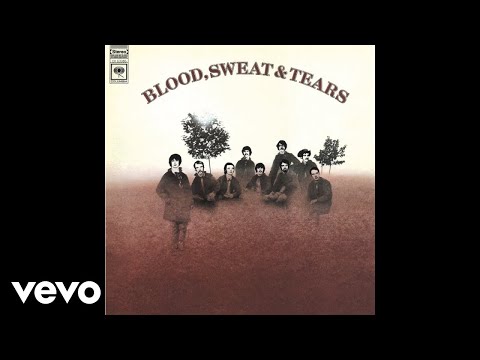


→ More from the 1970s File
View all 1970s hits →




Keep digging