The 1960s File Feature
You've Made Me So Very Happy
"You've Made Me So Very Happy" — Blood, Sweat and Tears Reach Number Two, 1969 The Art Rock Group That Conquered Pop Radio In early 1969, Blood, Sweat and Te…
01 The Story
"You've Made Me So Very Happy" — Blood, Sweat and Tears Reach Number Two, 1969
The Art Rock Group That Conquered Pop Radio
In early 1969, Blood, Sweat and Tears occupied an unusual position in American music: a jazz-rock fusion ensemble with a full horn section, genuine instrumental virtuosity, and serious artistic ambitions, yet somehow also one of the most commercially successful groups on the planet. Their second album, self-titled, would eventually win the Grammy Award for Album of the Year, beating out the Beatles' Abbey Road and Johnny Cash's At Folsom Prison, a result that still generates astonishment in retrospect. "You've Made Me So Very Happy" was the group's second single, and it announced to anyone still uncertain that this was not merely a critic's darling but a genuine mass-audience phenomenon.
The Song Before Blood, Sweat and Tears
The song was not written by Blood, Sweat and Tears. It had been composed and originally recorded by Brenda Holloway, who released it on Motown's Tamla label in 1967 with co-writing credit going to Berry Gordy Jr., Frank Wilson, and Patrice Holloway alongside Brenda herself. The original was a fine piece of Motown soul but did not become a major hit. When David Clayton-Thomas, the group's new lead vocalist, brought his full-throated rock delivery to the song, the transformation was dramatic. His version pushed the gospel fervor of the lyric toward something more openly ecstatic, and the band's expanded arrangement gave it a new architectural scale. What had been a contained soul ballad became something much larger and more urgent.
David Clayton-Thomas at the Microphone
The replacement of Al Kooper by David Clayton-Thomas as lead vocalist had been the pivotal move in Blood, Sweat and Tears' commercial breakthrough. Clayton-Thomas had a gravelly, powerful baritone with gospel roots and theatrical conviction, and his delivery of "You've Made Me So Very Happy" is a clinic in how to inhabit a lyric about emotional overwhelm. The song asks its singer to convey the feeling of being so overjoyed that language barely suffices, and Clayton-Thomas brings an intensity to that task that is genuinely compelling. The horns swell around him, the rhythm section drives beneath him, and the whole production builds with a sense of choreographed euphoria.
A Rocket to the Top of the Hot 100
The single debuted on the Billboard Hot 100 on March 1, 1969, entering at position 95. The ascent from there was swift and steep: 66, then 36, then 21, then 12. By April 12, 1969, the track had reached its peak at number 2, held off the top spot during a thirteen-week run that demonstrated extraordinary audience engagement. Thirteen weeks on the chart and a peak of number 2 placed "You've Made Me So Very Happy" among the major pop events of that commercially loaded spring. The competition at the summit of the chart in April 1969 was fierce, yet this sprawling, horn-driven, jazz-inflected piece of rock and soul nearly made it all the way.
A Defining Document of its Moment
The success of Blood, Sweat and Tears in 1969 belongs to a specific cultural window when the boundaries of rock music had been pushed wide enough to accommodate orchestration, jazz improvisation, and serious harmonic complexity alongside the basic requirements of pop radio accessibility. That window did not stay open indefinitely. "You've Made Me So Very Happy" catches the group at the exact moment when both possibilities were available simultaneously: the intellectual ambition and the mass audience. Put this on and let that horn section remind you what it sounds like when a great band fires on every cylinder at once.
"You've Made Me So Very Happy" — Blood, Sweat and Tears' singular moment on the 1960s charts.
02 Song Meaning
"You've Made Me So Very Happy" — Joy, Gratitude, and the Sound of Emotional Release
The Lyric's Simplicity as Strength
There is something genuinely brave about a song built around such an uncomplicated emotional statement. "You've Made Me So Very Happy" announces its thesis in the title and then spends the rest of its running time making the listener feel, rather than merely understand, the depth of that happiness. The lyrics describe the transformation that love has worked in the narrator's life: a move from loneliness and resignation into a state of gratitude so intense that the narrator cannot find adequate words. The emotional core of the song is gratitude itself, the feeling of being moved to profound appreciation by something received, and that emotion is one of the most universally recognizable in human experience.
Joy as a Subject for Rock Music
By 1969, rock and roll had largely developed its identity around themes of rebellion, alienation, and romantic longing. Pure, unambiguous joy was not the genre's natural territory. The achievement of Blood, Sweat and Tears with this recording is partly the audacity of treating joy as a subject worthy of the group's full artistic resources. The horn arrangements amplify the feeling rather than commenting ironically on it; the rhythm section drives toward ecstasy rather than holding back; David Clayton-Thomas delivers the lyric with evangelical conviction. Nothing in the production winks at the audience or suggests that this happiness is naïve or unearned. The song commits fully to its emotional premise.
Motown Roots and the Soul Tradition
Understanding the song's original Motown context helps illuminate what Blood, Sweat and Tears did with the material. Brenda Holloway's 1967 version was embedded in the Motown house style: tight, polished production, a specific emotional warmth that balanced vulnerability and uplift. The soul tradition from which the song came had always understood joy as something hard-won, felt most deeply by those who had experienced its absence. When Clayton-Thomas brought that lyric into the jazz-rock context, he carried that emotional weight with him. The exuberance in his delivery is not shallow; it has the specific character of relief, of someone who knows what it is to not feel this way.
The Sound of 1969 at Peak Confidence
The recording also functions as a document of a specific moment in rock music history when ambition and accessibility were not yet in conflict. The jazz-inflected horn writing that surrounds Clayton-Thomas's vocal would have been unimaginable in a top five pop single ten years earlier and would become increasingly rare in the years that followed as rock fragmented and pop simplified. In early 1969, a number-two single could include extended horn passages, complex harmonic movements, and a level of musical sophistication that assumed a serious listening audience. That confidence in the audience's willingness to meet the music halfway is part of what makes the recording feel so generous.
Why It Still Resonates
Songs about being made happy by love will always find an audience, because the experience they describe is perpetually renewable. What makes this particular recording transcend the merely pleasant is the scale and conviction of its emotional delivery. Blood, Sweat and Tears did not make a polite recording about a pleasant feeling; they made a large, expansive, fully committed statement about what it sounds like when gratitude and joy overflow the usual containers. Listeners in 1969 responded to that generosity of emotional scale, and it holds up just as well for listeners now.
→ More from Blood, Sweat & Tears
View all Blood, Sweat & Tears hits →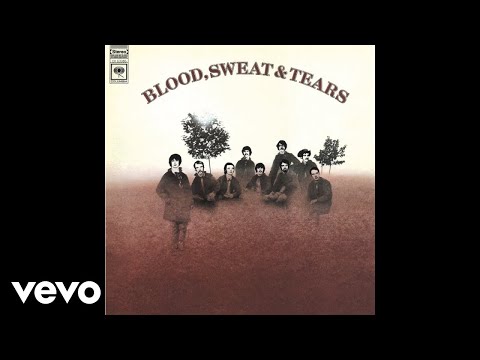


→ More from the 1960s File
View all 1960s hits →




Keep digging