The 1970s File Feature
Outa-Space
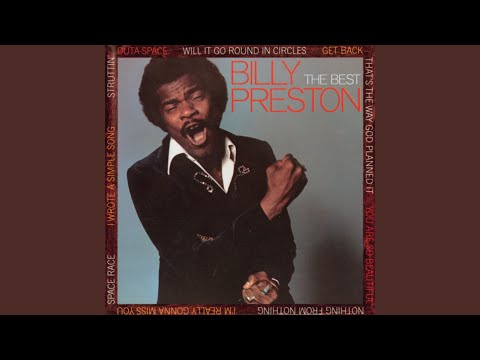
Outa-Space: Billy Preston's 1972 Top 2 Masterpiece Settle into April 1972 and you are in the thick of a fascinating moment for American funk and soul. The er…
01 The Story
Outa-Space: Billy Preston's 1972 Top 2 Masterpiece
Settle into April 1972 and you are in the thick of a fascinating moment for American funk and soul. The era of the synthesizer's commercial mainstreaming was just beginning; Stevie Wonder was working on the innovations that would define his classic period; and Billy Preston, the man who had played keyboards on some of the most important recordings of the previous decade, was releasing what would become one of the defining instrumental funk records of the 1970s. “Outa-Space” was a track that sounded like nothing else on the radio when it arrived, and it climbed all the way to number two.
Billy Preston's Extraordinary Career
Billy Preston's biography was already remarkable before “Outa-Space”. He had been a child prodigy who worked with gospel legends including Mahalia Jackson; he had toured with Little Richard as a teenager; he had befriended the Beatles in Hamburg and eventually played keyboards on their Let It Be sessions, becoming the only artist ever credited as a fifth Beatle on a release. He had co-written “You Are So Beautiful”, which Joe Cocker would take to number five in 1974. His technical keyboard skills were among the most celebrated in rock and soul, which is why his session work was in constant demand even as his solo career was still establishing itself.
The Clavinet and Its Funk Revolution
The central sonic element of “Outa-Space” was the clavinet, an instrument that had been around for years but whose commercial potential had not been fully realized until musicians like Preston and Stevie Wonder began exploiting it in funk contexts. The clavinet produced a percussive, wiry sound that was unlike any other keyboard instrument, and through a wah-wah pedal it became one of the defining sounds of early-1970s funk. Preston's clavinet playing on “Outa-Space” was a demonstration of what the instrument could do at the hands of a player who understood its full potential, and the record served as the primary introduction of the clavinet to mainstream American radio audiences.
Seventeen Weeks, Peak of Number Two
“Outa-Space” entered the Billboard Hot 100 on April 22, 1972, at number 90. The ascent over the following weeks was dramatic: 90, 65, 57, 40, 34, the record building momentum through the spring. It reached its peak of number 2 on July 8, 1972, spending 17 weeks total on the chart. A 17-week run and a number two peak was a genuine commercial triumph, and the record earned Preston a Grammy Award for Best Rhythm and Blues Song, a recognition that confirmed its significance within the genre as well as its commercial success.
The Instrumental in the Commercial Market
Reaching number two on the Hot 100 with an instrumental record in 1972 was a significant achievement. The commercial mainstream was dominated by vocal pop and rock; instrumental records were more typically found in the top 40 in earlier decades, when they had a more established commercial tradition. Preston's achievement demonstrated that a purely instrumental funk track with the right groove could still find a massive mainstream audience, even in an era when pop commercial conventions strongly favored songs with lyrics. The record's success opened commercial space for other instrumental funk tracks in the years that followed.
The Groove That Launched a Genre
The influence of “Outa-Space” on subsequent music has been documented through hundreds of samples and interpolations across four decades. Its clavinet groove became one of the most sampled elements in hip-hop and modern R&B, and its influence on the development of funk keyboard playing was substantial. Billy Preston created something that functioned as a genuine innovation, a record that pointed the way toward sounds that had not yet been fully explored. Press play and hear the groove that changed what keyboards were allowed to sound like.
The Grammy and What It Recognized
“Outa-Space” won the Grammy Award for Best Rhythm and Blues Song, a recognition that validated the track's significance within the genre rather than simply its commercial performance. Grammy wins for instrumental records were unusual in the R&B category, and the award reflected the degree to which the academy recognized that Preston had done something genuinely innovative with the clavinet in this recording. The technical achievement of making a single keyboard instrument carry an entire hit record, without the melodic anchor of a vocal line to guide the listener, required both the right instrument and the right player at the right production moment, and all three factors had converged in “Outa-Space” with results that the industry's own recognition apparatus acknowledged as significant.
“Outa-Space” - Billy Preston's singular moment on the 1970s charts.
02 Song Meaning
Beyond Language: The Meaning of Billy Preston's Instrumental Achievement
Instrumental records present an interesting challenge for anyone trying to discuss their meaning: in the absence of lyrics, the content of the communication is entirely musical, and the tools for discussing musical meaning are less developed and more contested than those for discussing lyrical meaning. “Outa-Space” invites the question of what, exactly, an instrumental funk record communicates, and what makes it meaningful beyond its purely sonic pleasures.
The Groove as Argument
The groove of “Outa-Space” makes an argument about music that is felt rather than understood intellectually: it argues that rhythm and texture, without melodic narrative or lyrical content, can generate a complete and satisfying musical experience. The clavinet line, the bass, the drums, the wah-wah effect: these elements create a pattern that is self-sufficient, that does not require words to feel complete. The success of the record with mainstream audiences demonstrated that this argument was correct, that listeners who had been trained primarily on vocal pop could respond to a purely instrumental groove with the same engaged pleasure they brought to songs with words.
Funk and the Philosophy of the Body
Funk music is the popular music tradition most explicitly and consciously concerned with the relationship between music and physical experience. Where other genres might privilege emotional or intellectual response, funk insists on the primacy of the body: the groove is designed to make you move, and the measure of its success is whether it achieves that physical response. “Outa-Space” operates within this philosophy with particular purity, since without lyrics to engage the mind, the entire experience of the record is physical and musical. It cannot be understood; it can only be felt.
The Clavinet's Sonic Personality
The clavinet through a wah-wah pedal has a sonic personality that is worth considering carefully: percussive but melodic, aggressive but rhythmically supple, immediately distinctive in a way that no other instrument quite matches. These qualities gave “Outa-Space” a sonic identity that was impossible to confuse with anything else on the radio in 1972, which was itself commercially significant. The instrument sounded like the future in 1972, and the record communicated that future-sound quality to listeners who were ready for something new without necessarily knowing what they were looking for.
Preston's Gospel Roots and Secular Expressiveness
Billy Preston's musical formation was primarily in gospel, and the gospel tradition's relationship to physical expressiveness in music informed his approach to secular work in ways that were not always visible but were consistently felt. Gospel music insists on the importance of the body's response to music, on the physical dimension of spiritual experience, on the way that rhythm and sound can produce states of feeling that transcend ordinary consciousness. Funk music applied this same insistence to secular contexts, and Preston brought to “Outa-Space” the full weight of his gospel training, channeled into an entirely different but spiritually related mode of bodily music-making.
The Legacy of the Sampled Groove
The subsequent history of “Outa-Space” as a sampled track is itself a testament to the track's meaning. When hip-hop producers return again and again to the same groove, sampling it into new contexts across decades, they are not merely borrowing a sound; they are affirming that the specific quality of what Preston created in 1972 has remained relevant and powerful enough to continue generating new meanings in new contexts. That sustained relevance across decades is the deepest measure of a groove's meaning: it means something to each generation that returns to it, which means it contains something genuinely inexhaustible.
→ More from Billy Preston
View all Billy Preston hits →



→ More from the 1970s File
View all 1970s hits →




Keep digging