The 1970s File Feature
Today's The Day
America and the Making of "Today's The Day" By the mid-1970s, America had already secured their place in the soft rock canon with a string of atmospheric hit…
01 The Story
America and the Making of "Today's The Day"
By the mid-1970s, America had already secured their place in the soft rock canon with a string of atmospheric hits that defined the early part of the decade. "A Horse With No Name," "Ventura Highway," and "Tin Man" had established the trio as masters of melodic, introspective rock, blending acoustic textures with lush orchestration in ways that felt simultaneously effortless and carefully constructed. When the band entered the recording studio to work on what would become the Hideaway album in 1976, they did so under the stewardship of a producer whose involvement elevated the project to something genuinely distinguished: George Martin, the legendary figure whose work with the Beatles had made him the most celebrated record producer in the world.
The collaboration between America and George Martin had begun with the 1974 album Holiday, which proved commercially and creatively successful enough to cement a productive ongoing partnership. By the time the duo of Gerry Beckley and Dewey Bunnell (Dan Peek had not yet departed the group) gathered with Martin at AIR Studios in London, there was an established shorthand between artist and producer that allowed for considerable ambition. "Today's The Day" emerged from these sessions as one of the album's most radio-ready moments, a sun-drenched piece of melodic pop that retained the band's signature warmth while benefiting from Martin's precise sense of arrangement.
The single was released in the spring of 1976 and entered the Billboard Hot 100 on May 15 of that year, debuting at number 81. Its chart trajectory was admirably steady, climbing week by week through the upper reaches of the chart with the kind of consistent momentum that reflected genuine audience engagement rather than promotional flash. By early July 1976, "Today's The Day" had reached its peak position of number 23, remaining on the chart for 12 weeks in total. It was not the group's highest-charting single, but it was a respectable showing for a deep cut from an album that itself performed solidly on the LP charts.
The Hideaway album, released in May 1976, represented a particular artistic moment for America as a unit navigating change. Dan Peek, the third founding member alongside Beckley and Bunnell, was drifting away from the group during this period, his deepening Christian faith pulling him toward a solo career that would eventually see him release gospel-oriented material. The album therefore carried a slightly different dynamic, with Beckley and Bunnell carrying more of the creative weight. George Martin's production ensured that whatever internal transitions were underway, the finished record sounded polished and assured.
Martin brought to the sessions not only his considerable technical expertise but also his gift for orchestral color. He had developed at AIR Studios in London a facility for layering acoustic and orchestral elements in ways that added grandeur without overwhelming the underlying songwriting. For "Today's The Day," this meant string arrangements and keyboard textures that complemented rather than competed with the core acoustic guitar work that had always been central to America's identity. The result was a record that sounded of its moment while also carrying the timeless quality that distinguishes the best soft rock productions of the decade.
The song's radio life was typical of mid-1970s AOR programming, finding a home on the FM stations that had become the dominant vehicle for album-oriented rock by that point in the decade. Program directors appreciated its clean production, its unambiguous melodic hook, and its absence of anything that might alienate the broad listening audience that soft rock had cultivated across the early 1970s. In an era when the boundary between pop and rock was particularly porous, America occupied that middle ground with more commercial consistency than almost any of their contemporaries.
Gerry Beckley, who wrote or co-wrote much of the band's material, brought to "Today's The Day" the same instinct for melodic economy that had powered their earlier hits. The song's construction favors resolution and reassurance, qualities that aligned naturally with the optimistic energies its title suggested. This was not music designed to challenge or unsettle; it was music designed to accompany the texture of daily life, which is precisely what made America's commercial proposition so durable throughout the decade.
The Hideaway era also coincided with America's transition toward a sound that leaned more heavily on studio craft and away from the stripped acoustic feel of their earliest work. Martin's influence was transformative in this regard, teaching the band to think about recorded sound as a compositional element in its own right. "Today's The Day" stands as evidence of that lesson absorbed and applied effectively, a record whose production feels spacious and intentional rather than simply competent.
Though Dan Peek would officially leave America in 1977 to pursue his solo career, the Hideaway album represented one of the last full-group statements from the original lineup. In retrospect, "Today's The Day" carries a certain poignancy as a document from that transitional moment, a snapshot of a band at its most commercially accomplished even as the original configuration was preparing to dissolve. America would continue as a duo, maintaining their recording career and their touring presence through subsequent decades, but the George Martin era albums occupy a specific and well-regarded chapter in their history.
02 Song Meaning
The Meaning of "Today's The Day" by America
"Today's The Day" belongs to a specific tradition in popular songwriting: the song of optimistic resolve, the kind of lyrical statement that locates meaning and possibility in the present moment rather than in memory or anticipation. America, under the production guidance of George Martin, shaped a piece of music whose emotional intent was transparently affirmative, rooting its appeal in the simple but enduring idea that a single day can carry the weight of new beginnings.
The song operates within the soft rock mode that America had mastered by the mid-1970s, a mode characterized by melodic reassurance and an absence of irony. Where other rock acts of the period were adopting more cynical or politically charged postures, America consistently chose warmth and directness. "Today's The Day" exemplifies this aesthetic philosophy, presenting its subject through a lens that is neither naive nor sentimental but genuinely earnest in its embrace of forward motion.
Thematically, the track fits into a broader pattern in America's catalog of celebrating the possibility of change and renewal without specifying the precise nature of that change. This deliberate openness is a sophisticated songwriting strategy. By declining to anchor the lyric to any particular circumstance, the song allows listeners to populate it with their own emotional content, whether that means the beginning of a relationship, the resolution of a private conflict, or simply the feeling that accompanies an uncommonly clear morning. Gerry Beckley's melodic instincts served this thematic ambiguity well, providing a musical container capacious enough to accommodate a wide range of personal interpretations.
The production choices George Martin made for the track reinforce its emotional message. The arrangement is bright without being frantic, assured without being triumphant. It does not reach for the grandiose. Instead, it sustains a measured sense of uplift that feels proportionate to the lyric's modest but genuine ambitions. Martin's orchestral touches add a sense of occasion without overwhelming the underlying intimacy of the composition, which is itself a meaningful interpretive choice: this is a song about a personal turning point, not a public one.
The title's directness is worth noting. "Today's The Day" makes its claim immediately and without qualification, functioning almost as a mantra or affirmation. In the context of 1976, a year when American popular culture was processing considerable collective uncertainty in the aftermath of Vietnam and Watergate, there was real cultural appetite for music that spoke simply to the human capacity for renewal. America's music consistently met that appetite, and "Today's The Day" is among the more explicit examples of their willingness to offer straightforward emotional comfort through popular song.
The song's place within the Hideaway album also gives it a contextual meaning that extends beyond its individual lyric. The album was recorded during a period of transition for the band, with founding member Dan Peek in the process of stepping away. Listened to within that context, a song about seizing the present and embracing what is possible today takes on additional resonance, suggesting not only the optimism available to any listener but also the specific resolve of artists navigating change within their own creative partnership.
Ultimately, "Today's The Day" derives its lasting meaning from the universality of its emotional appeal. It does not belong to a specific time or place in the way that more event-driven pop records do. Instead, it belongs to the permanent repertoire of songs that people reach for when they need a musical reminder that something new remains possible, that the present moment contains within it the energy of beginning again. That is a modest claim for a song to make, but America made it with enough grace and sincerity that it has endured.
→ More from America
View all America hits →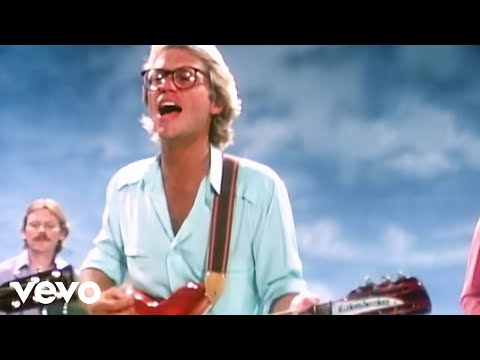


→ More from the 1970s File
View all 1970s hits →




Keep digging