The 1970s File Feature
Look What You Done For Me
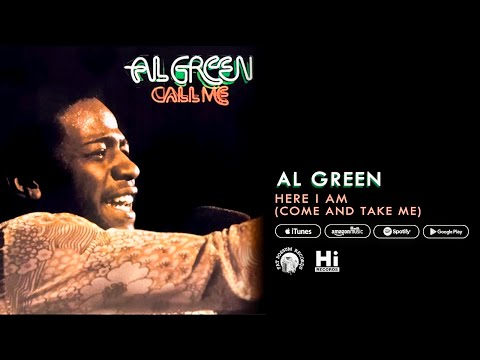
"Look What You Done For Me" — Al Green at His Commercial Peak The Memphis Moment Picture the American music landscape in early 1972. Soul music had been thro…
01 The Story
"Look What You Done For Me" — Al Green at His Commercial Peak
The Memphis Moment
Picture the American music landscape in early 1972. Soul music had been through its most tumultuous and creative decade, carrying the weight of the civil rights era and the cultural explosions of the late 1960s through its arrangements and lyrics. Motown had refined and polished the genre into something the suburbs could embrace; the harder currents of James Brown and Sly Stone had pushed outward from different directions. Into this full and contested landscape came Al Green and the Memphis soul he was building with producer Willie Mitchell at Hi Records, a sound unlike anything the radio had heard.
"Look What You Done For Me" arrived in the spring of 1972 as the follow-up to Green's massive crossover hit "Let's Stay Together," which had reached number one on the Hot 100 in February of that year. The question hanging over the new single was simple: could he possibly sustain that level of commercial performance? The answer the chart provided was a resounding confirmation of his stature.
The Recording and Production
The sound of this track carries the unmistakable fingerprints of Willie Mitchell's production philosophy at Hi Records. Mitchell had developed a deeply specific sonic signature working at Royal Studios in Memphis: warm horns layered with precision, rhythm sections that swung without forcing, and above all a treatment of the lead vocal that placed it in a rich but uncluttered space where every emotional nuance could be heard. The approach was the opposite of the dense Wall of Sound production that dominated much of 1960s pop, emphasizing clarity and feeling over spectacle.
Al Green's voice on the track occupies a range of emotional registers within a single performance, moving from tender appreciation to something close to ecstasy and back again without any seam showing. His phrasing is completely unhurried, which creates a kind of intimacy that pulls listeners close. The rhythm guitar work that drives the track, the Al Jackson Jr. drumming beneath it, and the subtle organ fills that surround the vocal all contribute to a production that sounds, decades later, as complete and self-sufficient as anything Memphis has ever produced.
The Chart Run
The single entered the Billboard Hot 100 on April 1, 1972, debuting at number 44. Its climb was rapid and assured: to 33 the following week, then 17, then 12, then 10, as the track built momentum across April and into May. "Look What You Done For Me" peaked at number 4 on May 27, 1972, spending a total of 12 weeks on the chart. The performance confirmed that "Let's Stay Together" had not been a fluke; Al Green was operating at a level of commercial and artistic dominance that few artists achieve and fewer sustain.
The single also performed strongly on the soul chart, where Green was an even more dominant force. His ability to cross over to the Hot 100 while maintaining his credibility and his core audience on the soul chart was a commercial achievement that spoke to the breadth of his appeal and the universality of what he and Willie Mitchell were creating in Memphis.
Al Green's Creative Partnership With Willie Mitchell
The early 1970s recordings Green made with Mitchell represent one of the great sustained creative partnerships in American popular music. From "Tired of Being Alone" through "Let's Stay Together" through this track and the albums that surrounded them, the two men created a body of work that defined a particular kind of Memphis soul, slower and more intimate than many of its contemporaries, built on feeling rather than flash.
Green's album I'm Still in Love with You, which spawned this single, demonstrated the pair's ability to sustain quality across an album rather than simply hitting on individual tracks. The LP sold strongly and received critical admiration alongside its commercial success, establishing Green as one of the decade's most significant artists rather than a singles machine.
Lasting Recognition
"Look What You Done For Me" holds its place in the Al Green catalog as evidence of an artist at the absolute height of his powers, making music that felt both rooted in a specific tradition and completely timeless. The track's four-week run inside the Hot 100 top 10 validated his position at the summit of 1970s soul. Put it on today and the magic is entirely intact, that voice floating above that groove, in no hurry to go anywhere because it's exactly where it belongs.
"Look What You Done For Me" — Al Green's singular moment on the 1970s charts.
02 Song Meaning
"Look What You Done For Me" — Meaning, Themes, and Soul Legacy
Gratitude as the Soul Tradition's Most Demanding Form
Love songs are abundant in popular music, but songs of pure gratitude for a relationship, stripped of longing, desire, or complication, occupy rarer territory. "Look What You Done For Me" belongs to this smaller category, a song in which the narrator simply acknowledges and celebrates what love has made possible for him. The emotional movement is not from pain toward healing or from desire toward fulfillment; it begins and remains in a state of grateful appreciation for what has already happened, for the transformation that has already taken place.
This is an emotionally mature position, and Al Green delivers it with the kind of seasoned assurance that makes even simple gratitude sound profound. The song doesn't need to travel anywhere because it arrives in its opening moments at a destination that most love songs spend their entire runtime trying to reach.
The Transformative Power of Connection
The lyrical content traces the ways in which a specific romantic connection has altered the narrator's experience of himself and the world. Love, in this reading, is not primarily an emotional experience but a transformative one. The person addressed in the song has functioned as an agent of genuine change, making the narrator better, more capable of feeling, more open to joy. This positions romantic love as something closer to a spiritual experience than a purely personal one, which fits naturally within the gospel-influenced tradition from which Green drew so much of his artistic sensibility.
Soul music has always maintained a close relationship with gospel, drawing on its emotional vocabulary and its sense that authentic feeling carries a kind of sacred weight. Green's background as a minister and his lifelong engagement with religious music inform his treatment of romantic love in ways that go beyond any specific lyrical content. He makes gratitude sound devotional because, in his artistic framework, the two are not easily separated.
Willie Mitchell's Memphis and the Sound of Appreciation
The production that Willie Mitchell built beneath Green's vocal on this track enacts the song's emotional content through purely musical means. The arrangement does not swell or build toward climax; it settles. The horns don't push; they support. The rhythm section creates a pocket of warmth and steadiness that mirrors the emotional stability of a narrator who has arrived somewhere safe and good and has no desire to move.
This relationship between arrangement and lyrical content is one of the marks of genuinely great production, where the music and the words operate together as a single expressive unit rather than as separate elements that happen to coexist. The Memphis sound that Mitchell developed at Hi Records was ideally suited to this kind of integration, its unhurried tempos and emphasis on texture giving vocalists room to inhabit a feeling fully rather than simply announce it.
Why the Song Endures
Songs of pure gratitude for love received are among the most universally accessible in the popular music canon because they ask nothing of the listener except recognition. Everyone who has felt genuinely grateful for another person's presence in their life has a point of entry into this song. The specific circumstances of the narrator's story are never specified with enough detail to exclude; the feeling being described is broadly human enough to belong to almost anyone who has loved and been changed by that love.
Al Green's version carries an additional charge because his vocal performance makes the gratitude feel genuinely earned rather than formulaic. This is a singer who sounds like he knows what he's talking about, who has lived in the feeling rather than simply reporting on it. That quality of lived authenticity is what has kept the song in the rotation of serious listeners of soul music for more than five decades.
→ More from Al Green
View all Al Green hits →



→ More from the 1970s File
View all 1970s hits →




Keep digging