The 1970s File Feature
Here I Am Come & Take Me
Here I Am Come Take Me — Al Green at the Height of His Memphis Magic The Memphis Sound at Its Peak Walk into the Hi Rhythm recording studio in Memphis in 197…
01 The Story
Here I Am Come & Take Me — Al Green at the Height of His Memphis Magic
The Memphis Sound at Its Peak
Walk into the Hi Rhythm recording studio in Memphis in 1973 and you would be standing in one of the most productive creative spaces in American music. The combination of Al Green's extraordinary voice, producer and arranger Willie Mitchell's unerring sonic instincts, and the Hi Rhythm Section, that deep, swampy, near-telepathic ensemble of studio musicians, was generating some of the most celebrated soul music of the decade. Between 1971 and 1974, Green and Mitchell produced a run of albums and singles that has very few peers in the history of the genre. "Here I Am (Come and Take Me)" arrived in the summer of 1973 as further evidence of what that collaboration was capable of.
The song was written by Al Green and Mabon Hodges, a songwriting credit that reflected the organic, collaborative nature of Green's Hi Records sessions. Mabon "Teenie" Hodges, the guitarist of the Hi Rhythm Section and a key creative partner during this period, contributed to several of Green's most celebrated compositions. Their working process was deeply rooted in the studio, building songs from musical instincts rather than formal compositional process, which is part of why the finished recordings have such an immediate, unhurried quality.
Chart Run: A Long, Patient Climb
The single debuted on the Billboard Hot 100 on July 7, 1973, entering at number 73. Its ascent over the following weeks was steady and eventually impressive. By September 8, 1973, "Here I Am (Come and Take Me)" had reached its peak position of number 10, spending 15 weeks on the chart in total. A top 10 placement was the commercial confirmation of what the critical reception had already established: Green and Mitchell were operating at a level that set them apart from nearly all of their contemporaries.
The 15-week chart run also reflected the particular qualities of the track as a radio recording. It rewarded repeated listening, revealing new textural details on each pass, and its emotional depth sustained the kind of continued attention that sustained chart presence requires. Radio programmers and audiences alike found reasons to return to it week after week.
The Sound That Willie Mitchell Built
To understand "Here I Am (Come and Take Me)" fully, one needs to understand what Willie Mitchell created at Hi Records during this period. Mitchell's production philosophy centered on space, feel, and restraint. Where many contemporary productions packed the sonic spectrum with instrumentation and effect, Mitchell's approach let the music breathe. The Hi Rhythm Section played with a looseness that was actually the product of profound discipline, the rhythmic feel slightly behind the beat in a way that created a sense of deep, unhurried groove.
The string arrangements Mitchell commissioned for Green's recordings in this period were equally distinctive: warm and present without being lush, supporting the vocal without crowding it, creating emotional depth without melodrama. Green's voice, one of the most supple and expressive in American music, needed room to move, and Mitchell built that room into every arrangement. The result was a series of recordings that sound simultaneously polished and intimate, produced and yet personal.
Green's Vocal Performance and Career Context
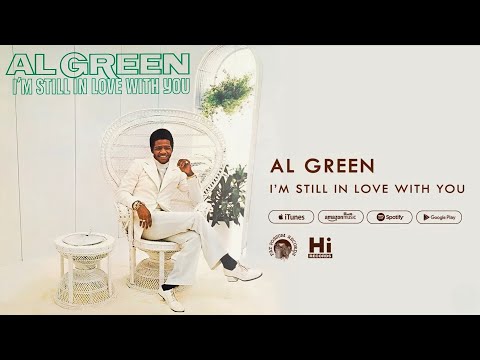
By 1973, Al Green was at the summit of his commercial and artistic power. Let's Stay Together had been a number 1 single in early 1972; I'm Still in Love with You had reached number 3 later that year. The albums of the same period were receiving the kind of critical attention that would eventually see several of them listed among the greatest soul recordings ever made. "Here I Am (Come and Take Me)" arrived in the context of that sustained excellence, and Green's vocal performance on the track demonstrated why the acclaim was warranted.
Green's voice in this period had a distinctive quality of vulnerability balanced against absolute technical control. He could move from a whispered intimacy to a full-voiced declaration without any sense of effort, and the emotional content he conveyed through timbre and phrasing alone was remarkable. The lyric of "Here I Am (Come and Take Me)" gives him ample room to deploy these qualities, and he does so with the assurance of an artist completely at ease with his material.
The Spiritual Undercurrent
Al Green's recordings of the early 1970s carry a spiritual quality that subsequent events in his life made retrospectively more legible. His conversion to Christianity and ordination as a pastor in 1976 redirected his artistic energy toward gospel music, but the devotional intensity of his secular love songs from this period was already present. The invitation at the heart of "Here I Am (Come and Take Me)" reads simultaneously as romantic openness and as something more transcendent, a quality that Green's voice always conveyed even when the lyrical content was straightforwardly romantic.
The track endures as one of the defining documents of early 1970s Memphis soul. If you have not heard it recently, press play and give the Hi Rhythm Section a moment to settle in. The feeling arrives before the first verse ends.
"Here I Am Come & Take Me" — Al Green's singular moment on the 1970s charts.
02 Song Meaning
Here I Am Come & Take Me — Vulnerability, Invitation, and the Sacred in the Secular
The Vulnerability of Complete Openness
The emotional gesture at the center of "Here I Am (Come and Take Me)" is one of the most exposed positions available to a person in a romantic context: total, unconditional availability. The narrator offers nothing less than complete access to the self, without conditions or reservations. That posture of radical openness is both the song's subject and, through Al Green's vocal delivery, its primary expressive quality. Green does not perform vulnerability; he inhabits it, and the difference between those two things is audible throughout the recording.
The invitation implied in the title is active rather than passive. The narrator is not waiting to be chosen; the narrator is making a declaration, presenting the self for consideration with full awareness of what that exposure entails. This combination of vulnerability and agency is rare in romantic songwriting and contributes significantly to the track's emotional power.
The Double Register: Romantic and Devotional
Much of the critical attention that Al Green's early-1970s recordings have received over the decades focuses on the way his love songs seem to operate simultaneously on romantic and spiritual frequencies. The language of devotional music and the language of romantic love have always been entangled in the American soul tradition, drawing on the same vocabulary of longing, surrender, and transcendence. Green's voice makes this overlap explicit in a way that few performers can match.
Heard through the lens of his later conversion and pastoral ministry, a track like "Here I Am (Come and Take Me)" takes on additional resonance. The offer being made in the lyric, complete availability, total surrender of self-protection, applies to the divine encounter as readily as to the romantic one. Green himself has spoken in later years about the spiritual dimension he felt was always present in his secular recordings, even when neither he nor his listeners had fully articulated it. The music made the argument before the theology caught up.
Memphis and the Aesthetics of Emotional Truth
The Hi Records approach to production, developed by Willie Mitchell over years of work at his Royal Studios facility in Memphis, was based on a fundamental aesthetic principle: the most powerful music is the music that sounds most true. The Memphis soul tradition, from which Green's work emerged, valued authenticity of feeling above technical perfection, emotional directness above sophisticated arrangement, and the sound of real musicians playing together in a room above any production artifice that might substitute for human interaction.
This philosophy shaped the meaning of "Here I Am (Come and Take Me)" as much as the lyric did. When a track sounds true, when the production communicates that something real is happening between the musicians and between the musician and the listener, the emotional content of the words becomes credible in a way that more manufactured productions cannot achieve. Listeners trusted Green's declarations of openness because the music itself sounded open, undefended, and present.
Legacy in Soul Music's Emotional Vocabulary
The emotional territory that Green and his collaborators mapped during this period remained influential on subsequent generations of soul and R&B artists. The combination of technical mastery and emotional transparency that characterizes Green's Hi Records output became one of the models against which later soul recordings were measured, whether favorably or unfavorably.
Tracks like "Here I Am (Come and Take Me)" contributed to that legacy by demonstrating what was possible when a vocalist of Green's caliber worked with a producer of Mitchell's sophistication on material that genuinely suited both of them. The result was music that captured something essential about romantic and spiritual longing, and that essential quality is what has kept these recordings vital across more than five decades of subsequent pop history.
"Here I Am Come & Take Me" — Al Green's singular moment on the 1970s charts.
→ More from Al Green
View all Al Green hits →



→ More from the 1970s File
View all 1970s hits →




Keep digging