The 1960s File Feature
Hanky Panky
Hanky Panky — Tommy James and The Shondells and Rock and Roll's Most Unlikely Number 1 A Regional Record That Conquered the Nation The story of "Hanky Panky"…
01 The Story
Hanky Panky — Tommy James and The Shondells and Rock and Roll's Most Unlikely Number 1
A Regional Record That Conquered the Nation
The story of "Hanky Panky" reaching number 1 on the Billboard Hot 100 is one of those episodes that reminds observers of pop music how contingent and unpredictable commercial success can be. The song had been recorded years before it charted nationally. Written by Jeff Barry and Ellie Greenwich, two of the Brill Building era's most productive songwriting partners, "Hanky Panky" had originally been recorded by Barry and Greenwich themselves under the name The Raindrops in 1963. It got some regional attention and then disappeared from national circulation.
Tommy James, a young musician from Niles, Michigan, had been performing the song live with his band for years before it became a hit. A regional pressing in Pittsburgh in 1966 began generating requests that spread through radio stations in the area, and the momentum that built from there caught the attention of Roulette Records, which signed James and released the track nationally. The single debuted on the Billboard Hot 100 on June 4, 1966, at position 75, then climbed rapidly: 48, 25, 15, 6, and then all the way to number 1 by July 16, 1966. The 12-week chart run was emphatic evidence that the regional enthusiasm had translated nationally without any loss of momentum.
The Sound of Garage Rock at Its Most Exuberant
What "Hanky Panky" offers as a piece of recorded music is a masterclass in stripped-down, energetic garage rock. The production is raw by design, with a fuzzed guitar tone and a rhythm section that drives forward without ceremony. The simplicity of the arrangement is a feature, not a limitation. The song communicates maximum energy with minimum sophistication, and that directness was exactly what young audiences in 1966 responded to.
The lyric is uncomplicated: an assertion of attraction and an invitation to dance, dressed up in the kind of slang that adolescents of the era recognized immediately and that parents found sufficiently ambiguous not to warrant concern. The title phrase itself, borrowed from older American slang, had been circulating in popular speech long enough to be both familiar and slightly transgressive, which was precisely the tonal balance that rock and roll singles of the mid-1960s were aiming for.
Tommy James at the Start of His Career
For Tommy James himself, "Hanky Panky" was both a beginning and a lesson. He was nineteen years old when the song reached number 1, a teenager who had been performing it in local venues for years before the machinery of the music industry caught up with what he had already understood: the song worked. The sudden national success was disorienting as well as exciting. James has spoken in subsequent years about the chaos that followed the chart ascent, as Roulette Records and the broader music industry tried to capitalize on a hit that had arrived somewhat ahead of any infrastructure for managing it.
Roulette Records founder Morris Levy was a significant and controversial figure in the music industry, and James's relationship with the label over the years that followed was complicated. But in the summer of 1966, those complications lay in the future. For those weeks of "Hanky Panky's" chart run, Tommy James and The Shondells were simply the biggest act on American radio, and the simplest song imaginable was the evidence.
The 1966 Chart Landscape
The Billboard Hot 100 in the summer of 1966 was as competitive and varied as it has ever been. The Beatles were still at their peak commercial and creative power. The Beach Boys released Pet Sounds that spring. The Rolling Stones were producing some of their most celebrated singles. Bob Dylan was in the middle of his electric period. Into this environment of extraordinary artistic ambition, "Hanky Panky" arrived as pure, uncomplicated rock and roll pleasure and went to number 1 anyway. The fact says something important about what audiences want from pop music at any given moment: not always the most sophisticated thing available, but sometimes just the most energetic.
Tommy James and The Shondells went on to produce a series of major hits through the late 1960s and early 1970s, including "Crimson and Clover" in 1968 and "Crystal Blue Persuasion" in 1969. But "Hanky Panky" remained their commercial debut and, for many listeners, the track that defined the exuberant, uncomplicated essence of what they were.
The Legacy of the Unlikely Chart-Topper
The story of "Hanky Panky" reaching number 1 has retained its charm across the decades because it runs counter to the usual narrative of calculated commercial success. Nobody planned for this record to conquer America. It built from the ground up, through actual audiences responding to something they wanted to hear, and the chart reflected that organic momentum faithfully. The ascent from regional underground record to national number 1 represents the pop chart's occasional capacity to capture genuine grassroots enthusiasm rather than manufactured buzz.
Press play and feel the fuzz guitar arrive. Six decades on, it still sounds like something a teenager put on in a basement and turned up all the way.
"Hanky Panky" — Tommy James And The Shondells' singular moment on the 1960s charts.
02 Song Meaning
Hanky Panky — Teenage Energy, Double Meaning, and the Grammar of Rock and Roll Fun
The Dance Floor as the Whole Point
Some songs carry the weight of social commentary, emotional excavation, or artistic ambition. "Hanky Panky" carries none of these things, and that absence is itself a kind of statement. The song's meaning is entirely located in its energy: the energy of a band playing hard, of a young voice projecting maximum enthusiasm, of an audience responding to something uncomplicated and immediate. In 1966, that combination was enough to reach number 1 on the most competitive pop chart in the world, and the historical record of that achievement is worth taking seriously even if the song itself does not invite serious analysis.
Jeff Barry and Ellie Greenwich wrote "Hanky Panky" as a deliberate exercise in early rock and roll simplicity. The Brill Building songwriting tradition from which they emerged was capable of great sophistication, as their work on "Da Doo Ron Ron," "Be My Baby," and "Chapel of Love" demonstrates. This track was something different: a conscious reduction to the most elemental forms of rock excitement, a song that worked because it wanted nothing more than to make a room full of teenagers start moving.
Slang, Suggestion, and Generational Code
The title phrase "hanky panky" carries a history of its own. The expression had been in American English for decades before the song was written, generally connoting vaguely transgressive or mischievous behavior without specifying its nature. This deliberate vagueness made it perfect for mid-1960s teen pop: old enough to be recognized, ambiguous enough to evade censure, suggestive enough to carry a frisson of mild transgression that adolescent audiences found appealing.
Rock and roll had been using this kind of coded language since its earliest days. The double meaning, legible to those who wanted to read it and invisible to those who did not, was part of the genre's relationship with its young audience, a private communication that excluded parents and guardians while including peers. "Hanky Panky" participated in this tradition without pretending to innovate it.
The Meaning of Grassroots Commercial Success
The cultural meaning of "Hanky Panky's" chart trajectory is perhaps more interesting than the song's lyrical content. A regional record built word-of-mouth momentum entirely through live performance and local radio play before any national promotional infrastructure was in place. The chart reflected real audience behavior rather than constructed consensus, and the result was a number 1 record that major label machinery had not manufactured.
This kind of organic chart success was not unprecedented in the mid-1960s, but it was becoming rarer as the music industry professionalized and centralized its promotional activities. "Hanky Panky" arrived at a transitional moment, when regional scenes could still produce national charts hits through sheer momentum. The song's meaning is partly the meaning of that moment: evidence that pop music audiences were capable of organizing their own enthusiasm without waiting for professional guidance.
Simplicity as Artistic Choice
In the summer of 1966, with the Beatles experimenting in the studio and Dylan exploring the boundary between rock and poetry, "Hanky Panky" held its own by going in the opposite direction. The track's aesthetic meaning, to the extent that it has one, is the argument for simplicity itself: that a two-minute burst of fuzz guitar and teenage enthusiasm is a legitimate and valuable cultural artifact, that the pleasure it generates is real and deserves its moment on the chart alongside more ambitious work.
Decades of rock and pop history have repeatedly confirmed this argument. The most sophisticated era in pop history always coexists with songs that simply want to make people happy on the most direct terms possible. "Hanky Panky" is one of the cleaner examples of this principle: pure function, no ornamentation, complete success.
"Hanky Panky" — Tommy James And The Shondells' singular moment on the 1960s charts.
→ More from Tommy James And The Shondells
View all Tommy James And The Shondells hits →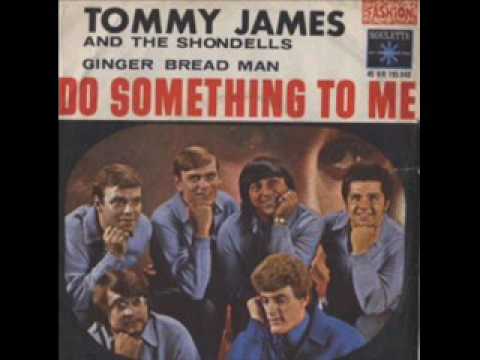


→ More from the 1960s File
View all 1960s hits →




Keep digging