The 1960s File Feature
Crimson And Clover
Crimson and Clover: Tommy James and the Shondells Reach Number One In the final weeks of 1968 and the opening months of 1969, "Crimson and Clover" by Tommy J…
01 The Story
Crimson and Clover: Tommy James and the Shondells Reach Number One
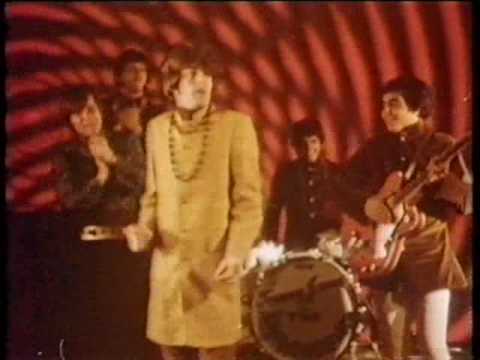
In the final weeks of 1968 and the opening months of 1969, "Crimson and Clover" by Tommy James and the Shondells achieved something that none of their previous recordings had quite managed despite consistent commercial success: it reached number one on the Billboard Hot 100. The achievement was the product of a recording that represented a genuine artistic departure for the group, a psychedelic experiment that drew on the sonic innovations of 1967 and 1968 while retaining the commercial instincts that had given the group their earlier chart entries. It was one of the more successful marriages of psychedelic experimentation and mainstream pop ambition in the entire era of classic American psychedelia.
Tommy James had built the Shondells into one of the most consistently charting acts on the Roulette Records roster through the mid-1960s, with a string of singles that demonstrated strong melodic instinct and effective pop production. But by 1968, the pop landscape had changed dramatically in the wake of the Summer of Love, and artists who wanted to remain commercially relevant had to reckon with the psychedelic sound that had become dominant. James was both creatively and commercially motivated to explore this territory, and the result was "Crimson and Clover."
The song was written by Tommy James and Shondells drummer Peter Lucia, and its creation reflected the experimental spirit of the moment. The recording was made at considerable artistic latitude compared to previous Shondells productions, with James taking greater control of the production process and allowing the studio itself to become an instrument. The most distinctive production element was the deliberate manipulation of James's vocal track, the wavering, tremolo effect that gave his voice an otherworldly, dreamlike quality unlike anything in their previous catalogue. This effect was achieved through electronic manipulation of the recording, a technique that had been explored by other psychedelic artists but was applied here with particular commercial effectiveness.
Released on Roulette Records in late 1968, "Crimson and Clover" entered the Billboard Hot 100 and climbed steadily through the chart before reaching its peak position of number one early in 1969. The record spent weeks on the Hot 100 and dominated the top position long enough to confirm that it was not a fluke but a genuine commercial phenomenon. The song connected with audiences who had been primed by two years of psychedelic experimentation to find its sonic innovations appealing rather than alienating.
The recording's production was a significant departure from the group's earlier Roulette singles. Where those records had employed the tight, commercially focused production values of mid-1960s pop, "Crimson and Clover" allowed space for sonic exploration: the building repetition of the chord progression, the gradual intensification of the arrangement, the studio effects applied to the vocals, and the general atmosphere of hypnotic, slightly disoriented pleasure that distinguished the best psychedelic recordings from their more straightforwardly commercial contemporaries.
The guitar work on the record was central to its sonic identity. The repeated chord figure that underpinned the song's structure had a mesmeric quality that served the psychedelic aesthetic while providing the rhythmic and harmonic grounding that a commercial pop song required. This balance between the experimental and the accessible was the record's defining production achievement, and it explained why the song succeeded commercially in a way that more committed psychedelic experiments from the same period sometimes failed to do.
Roulette Records, the label that released the record, had an ambiguous reputation in the music industry of the late 1960s, associated with practices that were not always considered entirely above board. Nevertheless, the label provided the distribution and promotion that brought "Crimson and Clover" to the national market, and the record's success was a commercial vindication of the creative direction James had pursued.
The cultural moment that "Crimson and Clover" inhabited was one of considerable complexity. By early 1969, the optimism of 1967's Summer of Love had given way to a more troubled cultural atmosphere, but the psychedelic sonic aesthetic had been thoroughly absorbed into mainstream pop production, creating commercial space for a record that was psychedelically inflected without being politically or counterculturally challenging. The song occupied that commercial space with considerable skill, offering the pleasures of the psychedelic sound in a package that was melodically and emotionally accessible to a broad pop audience.
The record's achievement as a number one single marked a high point in Tommy James's career and in the Shondells' commercial trajectory, demonstrating that their artistic evolution into psychedelic territory had been commercially as well as creatively productive. It remains one of the best-known recordings from the group's catalogue and one of the more effective examples of late-psychedelic-era commercial pop from the American mainstream.
02 Song Meaning
Desire, Reverie, and Psychedelic Innocence: The Meaning of "Crimson and Clover"
"Crimson and Clover" operates in the emotional register of dream and desire, occupying a space between waking consciousness and something looser and more free-floating. The song describes an experience of romantic attraction that is presented not in the sharp, specific terms of narrative pop but in the soft, slightly blurred terms of reverie, as if the feeling itself were too large and overwhelming to be captured in precise language. The color imagery of the title, crimson and clover, is evocative without being explanatory, gesturing toward something felt rather than something understood.
The choice of these two particular words as the song's title and central image was a significant artistic decision. Crimson suggests passion, intensity, the color of blood and fire and deep emotion. Clover suggests the natural world, gentleness, luck, the innocent pleasures of childhood and pastoral ease. Together, they create an image that is both intensely romantic and somehow innocent, a combination that captures the specific emotional quality of the song's psychedelic romanticism. The feeling described is powerful but not dark, overwhelming but not threatening.
The sonic manipulation of Tommy James's vocal was central to the song's meaning. The tremolo effect applied to his voice created an auditory sensation of instability, of something vibrating at the threshold of what normal perception could process. This effect was not merely a production trick; it was a precise sonic representation of the emotional state the song described, the slightly vertiginous quality of strong romantic feeling, the sense that the usual reliable coordinates of experience have become uncertain. Psychedelic music had been exploring these kinds of correspondences between sonic texture and subjective experience since 1966, and "Crimson and Clover" deployed them with commercial precision.
The repetitive structure of the song's musical foundation contributed to its dreamlike quality. The chord progression that ran through the track had a circular, self-returning quality that resisted the sense of forward drive and resolution that conventional pop structure provided. This circularity was appropriate to the emotional content: the state of romantic preoccupation described in the song was itself circular, a condition of returning repeatedly to the same feeling rather than moving through it toward resolution. The music enacted the emotional state it described.
The song's relationship to innocence was complicated and characteristic of its late-1960s psychedelic context. The most committed psychedelic art of 1967 and 1968 had often aspired to a condition of recovered innocence, a pre-rational directness of experience that adult socialization was understood to have obscured. "Crimson and Clover" participated in this aspiration without fully theorizing it, offering the emotional experience of recovered innocence in the form of romantic feeling rather than philosophical proposition. The result was commercially viable psychedelia, an achievement that required considerable craft.
For Tommy James's artistic identity, the song represented a genuine expansion of his creative ambitions. His earlier work with the Shondells had been competent and commercially effective, but "Crimson and Clover" demonstrated that he was capable of something more: a recording that used the studio as a creative tool and that aspired to produce an emotional experience rather than merely deliver a commercial product. The commercial validation of that aspiration, its achievement of number one status, confirmed that the expansion had been in the right direction.
The song's meaning has accumulated additional resonance from the subsequent decades of use in film, television, and advertising, where its dreamy, romantic quality has been deployed in contexts ranging from nostalgic period pieces to contemporary soundtracking. Each new context adds a layer to the song's meaning, but the core of that meaning, the sound of a particular kind of romantic wonder, expressed through the sonic textures of late-1960s American psychedelia, remains stable and immediately accessible to listeners encountering it for the first time or the hundredth. That stability of emotional address is part of what makes the record a genuine classic rather than merely a period artifact.
→ More from Tommy James And The Shondells
View all Tommy James And The Shondells hits →



→ More from the 1960s File
View all 1960s hits →




Keep digging