The 1960s File Feature
Eli's Coming
Eli's Coming — Three Dog Night (1969) Note: This entry covers Three Dog Night's recording of "Eli's Coming," released in 1969 on Dunhill Records. The song wa…
01 The Story
Eli's Coming — Three Dog Night (1969)
Note: This entry covers Three Dog Night's recording of "Eli's Coming," released in 1969 on Dunhill Records. The song was written by Laura Nyro, one of the most distinctive and influential songwriters of the late 1960s, and Three Dog Night's version represented one of the most commercially successful adaptations of her work, significantly broadening the audience for her compositions at a crucial point in her career.
"Eli's Coming" was written by Laura Nyro and first appeared on her 1968 album Eli and the Thirteenth Confession, released on Columbia Records. Nyro was by this point establishing herself as one of the most original voices in American music, a songwriter whose work defied easy genre classification, incorporating soul, gospel, pop, rock, and jazz influences into a highly personal style. Her original recordings were celebrated by critics and fellow musicians but had not yet achieved major commercial success, and it was through the cover versions recorded by more commercially oriented acts that her compositions reached mass audiences.
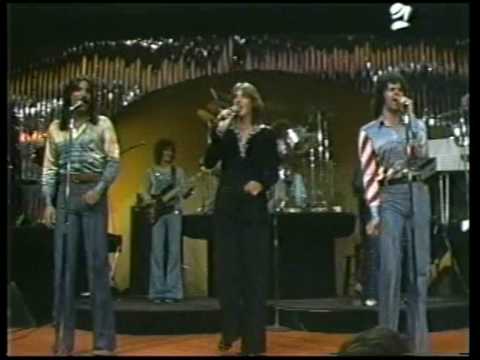
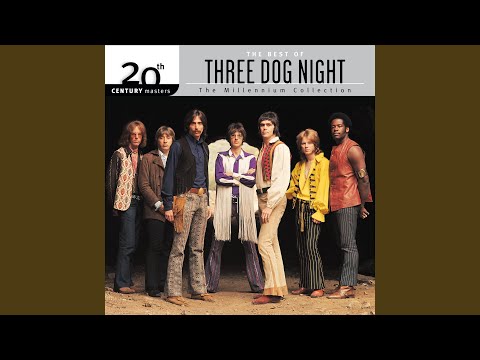
Three Dog Night was a Los Angeles-based rock band with an unusual structure: three lead vocalists, Danny Hutton, Cory Wells, and Chuck Negron, who shared the spotlight on different tracks. The band had formed in 1967 and signed with Dunhill Records, where they developed a strategy of identifying outstanding songs from a wide range of sources and performing them with the kind of powerful, soulful rock intensity that their triple-vocalist lineup made possible. They did not write their own material but were extraordinarily skilled at selection and interpretation, an approach that was genuinely unusual in an era when singer-songwriter authenticity was increasingly valued.
"Eli's Coming" was released as a single by Three Dog Night in 1969 on Dunhill Records and reached the top ten on the Billboard Hot 100, peaking in the top twelve. That chart performance was remarkable for a song that, in its original form, had been a relatively complex piece of psychedelic soul that occupied an unusual space in the commercial landscape. Three Dog Night's arrangement transformed the song into something more directly rock-oriented while retaining its mysterious, urgently warned quality.
The band's production team at Dunhill brought the kind of commercial pop-rock polish that was the label's specialty, crafting an arrangement that was energetic and radio-ready without losing the essential character of Nyro's composition. The three-part vocal harmonies that Three Dog Night deployed on the track gave it a richness that distinguished it from the bluesier rock contemporaries on the chart, and the rhythm section drove the song with a tightly controlled urgency that matched the warning quality of the lyrical content. The production succeeded in translating Nyro's sophisticated original into the language of rock radio without condescending to either the source material or the audience.
Laura Nyro's original version of the song had been widely admired within the music industry. She had performed at the Monterey Pop Festival in 1967 in a reception that was notoriously mixed, but her reputation among fellow songwriters and musicians was formidable. Artists including Barbra Streisand, Blood Sweat and Tears, the Fifth Dimension, and Three Dog Night recorded her songs during the period from 1968 to 1970, making her one of the most covered songwriters of the era. Three Dog Night's "Eli's Coming" was one of the most commercially successful of these adaptations.
The success of Three Dog Night's version helped expand awareness of Nyro's catalogue significantly. Listeners who encountered the Three Dog Night recording frequently traced it back to its source, discovering Nyro's original Eli and the Thirteenth Confession album and the remarkable body of work it contained. Dunhill Records was one of the more commercially successful rock labels of the late 1960s, home to the Mamas and the Papas among other significant acts, and the label's promotional infrastructure helped drive "Eli's Coming" into major commercial success.
Three Dog Night continued to chart successfully through the early 1970s, and "Eli's Coming" remained one of the signature pieces in their live performances, a track that demonstrated their ability to take someone else's singular creative vision and honor it through energetic, committed performance. The song's enduring presence in their catalogue and in classic rock radio programming has kept it in circulation for decades, with each new generation of listeners frequently discovering Nyro's original in its wake.
02 Song Meaning
What "Eli's Coming" Is About
"Eli's Coming" is built around a figure, Eli, who functions in the song as a force of romantic or personal danger, someone whose approach is cause for alarm rather than welcome. The song is structured as a warning, with the narrator urgently alerting a woman to protect herself from the coming of this figure. The emotional tone is one of heightened urgency, communicating the seriousness of the threat through the intensity of the warning rather than through detailed description of what Eli represents or what he might do.
Laura Nyro's songwriting often dealt with the complexities of romantic and interpersonal dynamics in oblique, emotionally charged terms that resisted straightforward narrative interpretation. "Eli's Coming" exemplifies this tendency. The figure of Eli is not explained or contextualized in the way that a conventional narrative song might introduce a character. He simply exists as a presence, a threat, a name called out in alarm, and the listener's understanding of who or what he represents is left to inference from the urgency of the warning and the vulnerability of the person being warned.
One compelling interpretation reads Eli as a symbol of irresistible romantic destructiveness, the kind of person whose arrival signals romantic entanglement that the object of the warning knows to be dangerous but may be unable to resist. In this reading, the warning is not simply practical advice but a recognition of a psychological pattern in which certain people are drawn toward figures who are not good for them, and the narrator, seeing the approach of such a figure, issues an alarm that may not ultimately be heeded. This interpretation gave the song a particular resonance with listeners who recognized the emotional dynamic being described from their own experience.
Three Dog Night's performance of the song brought its own interpretation to this material. The rock arrangement and the powerful multi-voice delivery gave the warning an almost communal quality, as if the alarm were being sounded not just by one person but by a group of voices in agreement about the danger. This quality of collective alarm was distinctive to the Three Dog Night version and gave it a different emotional character from Nyro's more introverted original, which communicated the same urgency through more intimate means. Neither interpretation was more correct than the other, but they were genuinely different emotional experiences of the same compositional material.
The song also carried a specifically female-authored perspective that was significant in the late 1960s context. Nyro wrote about women's emotional experiences, including vulnerability, desire, and the complicated dynamics of romantic relationships, with an honesty and complexity that was relatively unusual in popular songwriting of the period. The woman being warned in "Eli's Coming" was not a passive figure but someone whose autonomy and safety were genuinely at stake, and the urgency of the warning reflected a respect for that autonomy rather than a condescending assumption of female helplessness.
Within Three Dog Night's catalogue, "Eli's Coming" occupied an important position as one of the tracks that demonstrated the band's ability to honor the artistic vision of a songwriter while making the material genuinely their own. They did not simply cover Nyro's song in a workmanlike fashion but brought a specific interpretive energy to it that made their version a distinct artistic object rather than a pale reproduction. The song thus exists in the popular music record as two quite different but equally valid artistic experiences of the same compositional idea, a testament both to Nyro's genius as a songwriter and to Three Dog Night's gifts as interpreters of other people's creative visions.
→ More from Three Dog Night
View all Three Dog Night hits →
→ More from the 1960s File
View all 1960s hits →




Keep digging