The 1960s File Feature
Wild Thing
"Wild Thing" — The Troggs' Primal Charge Up the 1966 Charts The Summer Radio Was on Fire Cast your mind back to the summer of 1966. The airwaves were thick w…
01 The Story
"Wild Thing" — The Troggs' Primal Charge Up the 1966 Charts
The Summer Radio Was on Fire
Cast your mind back to the summer of 1966. The airwaves were thick with the competing sounds of the British Invasion's more polished acts, Motown's choreographed perfection, and surf pop slowly losing its footing. Into that crowded, sun-baked landscape crashed a record that sounded like it had been recorded in a garden shed by people who genuinely did not care about any of it. "Wild Thing" by The Troggs arrived as an almost accidental provocation, a two-and-a-half-minute slab of barely controlled noise that radio had no category for and listeners could not stop playing.
The Troggs were four young men from Andover, Hampshire, not exactly a cradle of rock sophistication. Reg Presley on lead vocals, Chris Britton on guitar, Pete Staples on bass, and Ronnie Bond on drums had been operating under the name Ten Foot Five before a management restructuring and a name change set them on course for this unlikely moment of pop glory. Their sound was rawer, blunter, and more deliberately primitive than almost anything charting in Britain at the time. That roughness turned out to be their greatest commercial asset.
A Song Written by Someone Else, Made Permanent by Them
The song was written by Chip Taylor, a New York songwriter who had penned it for a group called The Wild Ones, whose version appeared in 1965 and went largely unnoticed. Taylor's composition was built around a chord sequence so simple it borders on the elemental, a three-chord framework that leaves almost no room for melodic complexity but enormous room for attitude. When The Troggs got hold of it, they did not try to dress it up. Reg Presley's vocal delivery was spoken as much as sung, the guitar tone was deliberately coarse, and the production, handled for release on Fontana Records in the UK and Atlantic in the US, kept everything exactly as rough as it sounded in the room.
One particular element lodged itself permanently in listeners' memories: the ocarina solo in the middle of the track. An instrument more associated with folk music and children's toys than rock and roll, it was an absurd choice that somehow made complete sense, lending the record an eccentric charm that set it apart from the polished guitar breaks of competing singles. That brief melodic interruption became one of the most recognizable moments in 1960s pop.
A Rocket Ascent Through the Charts
"Wild Thing" debuted on the Billboard Hot 100 on June 25, 1966, entering at position 75. The climb was steep and swift. Within three weeks the record had vaulted to number 6, and by the week of July 30, 1966, it had reached the summit. The track spent 11 weeks total on the Hot 100, peaking at number 1 on the Billboard Hot 100. Simultaneously it topped the UK Singles Chart, making The Troggs genuine transatlantic stars, however briefly their commercial peak would last.
The song's success in America was particularly striking given that British acts were flooding the US market and competing ferociously for radio time and chart real estate. "Wild Thing" cut through not by being more sophisticated than its rivals but by being conspicuously less so. American teenagers recognized something in that raw voltage that more refined records could not deliver.
Jimi Hendrix and the Song's Second Life
The record's cultural afterlife was cemented within weeks of its chart run. Jimi Hendrix performed "Wild Thing" at the 1967 Monterey Pop Festival, closing his set by setting his guitar on fire while playing the song. That moment became one of the most iconic images in rock history, and it permanently altered the song's biography. What had been a cheerful pop smash was suddenly also the backdrop to one of rock's great theatrical gestures. The association gave the track a mythological weight its creators had never originally invested in it.
The song went on to be covered hundreds of times across subsequent decades, appearing in films, television commercials, sporting arenas, and Saturday Night Live parodies. Each revival confirmed its status not as a period curiosity but as something closer to a permanent fixture of English-language pop culture.
Reg Presley and the Troggs' Place in History
The Troggs continued recording and charting through the late 1960s, most notably with Love Is All Around, which would achieve its greatest commercial success decades later when Wet Wet Wet covered it for the Four Weddings and a Funeral soundtrack. Reg Presley, who died in 2013, remained the group's public face and primary songwriter for much of their career, earning royalties from Wet Wet Wet's version that reportedly funded some of his more eccentric pursuits in later life.
What "Wild Thing" ultimately demonstrated was a truth that pop music has had to relearn in every subsequent decade: sometimes the record that sounds like it was made by people with nothing to lose is the one that makes everyone feel something real. Turn it up and let the ocarina do its absurd, magnificent work.
"Wild Thing" — The Troggs' singular moment on the 1960s charts.
02 Song Meaning
"Wild Thing" — Desire, Simplicity, and the Art of the Primitive
What the Lyrics Actually Say
Strip away the cultural mythology and the Hendrix bonfire and the decades of covers, and you are left with a song whose lyrical content is almost disarmingly uncomplicated. The narrator declares, repeatedly and without apology, that someone moves him. That person makes his heart sing. That is essentially the emotional payload. The genius of Chip Taylor's writing was understanding that the simplest possible statement of desire, delivered without ornament or irony, can be more affecting than elaborate romanticism. The song does not build toward a revelation. It just insists on its central feeling again and again, betting that repetition will generate its own momentum.
Controlled Chaos as Aesthetic Choice
What "Wild Thing" communicates sonically is at least as important as anything in the lyrics. The jagged guitar, the almost spoken vocal, the eccentrically placed ocarina break — all of it projects a deliberate refusal to be polished. In 1966, pop production was moving toward greater sophistication: orchestral arrangements, studio experimentation, multi-tracked harmonies. The Troggs went in the opposite direction, and that counter-move carried its own meaning. The record told listeners that feeling something did not require technical expertise. The emotional core was louder than the production.
The Wild Thing as a Cultural Archetype
The "wild thing" of the title exists in a long tradition of pop music's fascination with transgressive romantic energy. The phrase itself carries connotations of uncontrolled emotion, of attraction that bypasses reason, of something not quite safe or domesticated. In the mid-1960s context, those connotations landed with particular force. Teen culture was in the early stages of asserting independence from adult norms, and a song that celebrated wildness without qualification was speaking a language that pop radio's more circumspect offerings often did not.
The sexual undertone was unmistakable without ever becoming explicit. Radio programmers could play it; parents could object to it; teenagers could feel that they understood something their parents did not. That triangulation of audiences was not accidental. It was the structural formula of the best rock and roll.
Why It Resonated Across Fifty Years
The song's persistence in cultural memory owes something to its malleability. Because the lyrics are so sparse and the musical template so simple, the song has accommodated radically different interpretations without losing coherence. Hendrix's version at Monterey was chaotic and incendiary. Cartoon parodies use it for comic effect. Sporting event soundtracks deploy it for crowd energy. Each context finds something real in the material because the material is basic enough to absorb almost any projection.
There is also something to be said about the Troggs' specific delivery. Presley's vocal is not technically accomplished in any conventional sense. The slight clumsiness, the hesitations, the way the line lands slightly off-center, all of that humanizes the record in a way that a more polished reading would have erased. Listeners hear effort and sincerity rather than expertise, and that perception produces trust. When the song insists on its feeling, you believe it.
The Lesson for Pop Music
What "Wild Thing" taught the pop world, and keeps teaching it, is that emotional directness is its own form of craft. The song sounds artless because its art is concealed inside its apparent artlessness. Building a record that feels this immediate without feeling cheap is actually harder than it looks, as the hundreds of bands who have tried to replicate the formula can attest. The ones who got it right understood that you cannot manufacture that kind of rawness. You have to mean it.
→ More from The Troggs
View all The Troggs hits →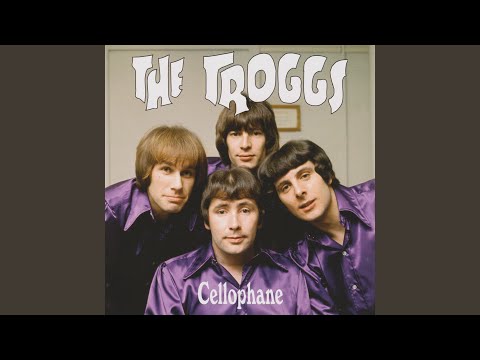
→ More from the 1960s File
View all 1960s hits →




Keep digging