The 1960s File Feature
Love Is All Around
Love Is All Around — The Troggs (1968) Note: This entry covers The Troggs' original 1968 recording of "Love Is All Around," not the Wet Wet Wet cover version…
01 The Story
Love Is All Around — The Troggs (1968)
Note: This entry covers The Troggs' original 1968 recording of "Love Is All Around," not the Wet Wet Wet cover version that became a major hit in 1994.
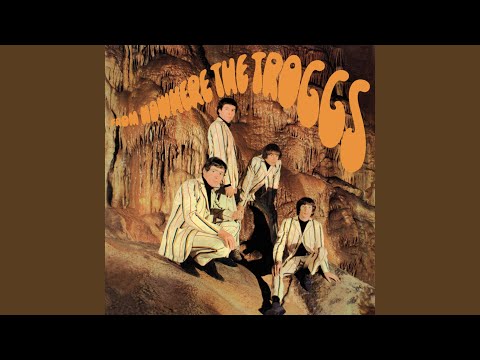
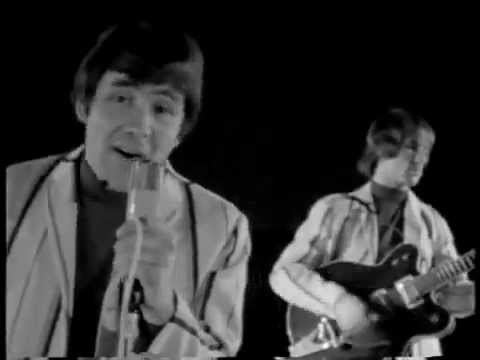
"Love Is All Around" was written by Reg Presley, the lead singer of The Troggs, and released in 1967 in the United Kingdom on Page One Records, crossing over to American audiences and charting on the Billboard Hot 100 in 1968 on the Fontana label, where it climbed to a peak position within the top seven. The song represented a significant stylistic departure for a group best known for the raw, primitive energy of "Wild Thing," their breakthrough hit of 1966, demonstrating that Presley was capable of considerable melodic sophistication and emotional range when he chose to deploy them.
The Troggs had formed in Andover, Hampshire, and their initial sound was deliberately rough and stripped down, part of the garage rock and early British beat explosion that had followed in the wake of the more polished sounds coming out of London and Liverpool. "Wild Thing," one of the most famous examples of deliberate sonic primitivism in the history of rock music, had been an unexpected global phenomenon, reaching number one on the Billboard Hot 100 in 1966 and establishing The Troggs as one of the defining acts of the garage rock aesthetic. The sheer audacity of its simplicity, its almost willful refusal to smooth away the roughness that more sophisticated producers would have corrected, made it iconic.
Following the success of "Wild Thing" and the subsequent hit "With a Girl Like You," The Troggs were positioned as specialists in a particular kind of barely controlled rock energy, a reputation that made "Love Is All Around" all the more surprising when it arrived. Where the group's signature sound had been characterized by force and urgency, the new song was gentle, melodically rich, and emotionally warm. Presley demonstrated that his songwriting instincts ran considerably deeper than the garage rock category suggested, and the commercial success of the record justified that ambition.
The production of "Love Is All Around" reflects the more sophisticated studio approach that characterized the British pop of its era. The arrangement is built around acoustic guitar and a flowing melodic structure that emphasizes the emotional directness of the lyric. The recording has a warmth and organic quality that sits interestingly against the rawer textures that had defined the group's earlier work, suggesting that Presley and the band were deliberately expanding their palette in response to the changing musical landscape of 1967 and 1968, a period when British rock was undergoing significant creative evolution.
The song reached the top seven of the Billboard Hot 100 in the United States, a remarkable achievement that demonstrated The Troggs' ability to transcend the genre category that had initially defined them. In the United Kingdom, it performed even more strongly, becoming one of the group's most successful chart entries and establishing "Love Is All Around" as a genuine standard rather than simply another entry in the Troggs catalog. The song's durability would ultimately be confirmed most dramatically by its later cover history, though the original recording deserves recognition as the definitive artistic statement of the material.
Reg Presley's authorship of the song placed him in an interesting position within the British Invasion songwriting landscape. While most discussions of that era's major songwriters focus on Lennon and McCartney, Jagger and Richards, Ray Davies, and Pete Townshend, Presley's ability to shift between the elemental rawness of "Wild Thing" and the melodic sophistication of "Love Is All Around" suggests a creative versatility that is frequently underestimated. The song's chord structure and melodic movement reflect genuine compositional skill, building emotional weight through repetition and dynamic variation in ways that feel instinctive rather than calculated.
The American market's receptiveness to the song in 1968 is notable given the particular moment in pop history. The counterculture explosion of the Summer of Love had by then produced a range of new sounds and aesthetic ambitions, and the charts of 1968 reflected a remarkable diversity of styles competing for attention. The Troggs' ability to place a song this melodically straightforward into the top reaches of the Hot 100 during such an artistically turbulent period speaks to the fundamental resilience of well-crafted pop songwriting across genre boundaries and cultural shifts.
The song's subsequent history, including Wet Wet Wet's 1994 recording that spent an extraordinary fifteen weeks at number one in the United Kingdom and appeared on the soundtrack of "Four Weddings and a Funeral," extended Presley's royalty income significantly and introduced the composition to an entirely new generation of listeners. That later success, however substantial, does not diminish the achievement of the original, which established "Love Is All Around" as a song of genuine and enduring quality long before it became a vehicle for later commercial success. The Troggs' version remains the artistic source, and Presley's songwriting achievement deserves to be evaluated on its own terms as one of the more striking compositional achievements of the British Invasion era.
02 Song Meaning
What "Love Is All Around" Is About
Note: This entry covers The Troggs' original 1968 recording, not the Wet Wet Wet version.
"Love Is All Around" is a song of radical emotional openness, a declaration that the condition of being in love transforms not just the internal emotional state of the individual but the entire perceived quality of the external world. The narrator describes a state of heightened sensory and emotional awareness that suffuses everything with warmth and possibility, a subjective transformation so complete that the usual boundaries between inner feeling and outer reality seem to dissolve. Love, in the song's framework, is not merely a relationship between two people but an atmosphere, a quality that permeates the world and can be perceived in the behavior of others and the texture of everyday experience.
Reg Presley wrote the song from a position of emotional abundance rather than longing or lack, which distinguishes it from a significant portion of pop music's romantic output. Where many love songs are driven by desire frustrated by distance, rejection, or uncertainty, "Love Is All Around" describes a state of romantic fulfillment so complete that it overflows the self and seems to color the entire environment. This is an optimistic, generous emotional premise, one that invites the listener to share in the narrator's joy rather than simply witness a specific romantic drama.
The song belongs to a tradition of pantheistic love declarations that runs through popular music from the earliest folk traditions through the flower-power idealism of the late 1960s. In the specific cultural context of 1967 and 1968, when it was written and released, this message resonated with the broader countercultural emphasis on love as a transformative social force. The Summer of Love had made such declarations culturally current, and "Love Is All Around" participated in that cultural moment while transcending it through the genuine melodic beauty and emotional sincerity of Presley's composition.
The song's enduring quality rests on the directness and simplicity of its emotional statement. There is no complexity of narrative, no dramatic arc of conflict and resolution, no psychological nuance that requires careful unpacking. What the song offers instead is the direct and unmediated experience of a particular emotional state, rendered with enough melodic and lyrical precision that the listener can inhabit it alongside the narrator. This quality of emotional immediacy is what made the song resonate across decades and across different cultural contexts, culminating in its extraordinary later commercial life through the Wet Wet Wet recording.
For The Troggs specifically, the song represented a significant statement about the range of their artistic vision. A group associated primarily with raw, aggressive rock energy had produced one of the era's most tender and melodically sophisticated love songs, and the commercial success of the record confirmed that Reg Presley's songwriting gifts were genuine and substantial. The ability to write something as elemental as "Wild Thing" and something as warm and melodically rich as "Love Is All Around" within a few years of each other marks Presley as a more considerable figure in the history of British pop songwriting than he is typically credited as being. The song stands as his most durable artistic legacy, a composition of sufficient emotional power to sustain multiple significant recordings across decades and continue finding new audiences more than half a century after its creation.
→ More from The Troggs
View all The Troggs hits →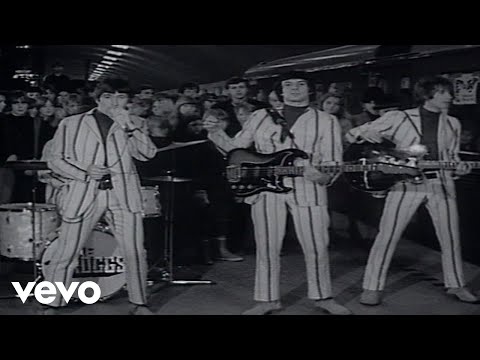
→ More from the 1960s File
View all 1960s hits →




Keep digging