The 1960s File Feature
Silence Is Golden
Silence Is Golden: The Tremeloes' Unexpected Masterpiece Silence Is Golden represents one of the more surprising commercial and artistic achievements of the …
01 The Story
Silence Is Golden: The Tremeloes' Unexpected Masterpiece
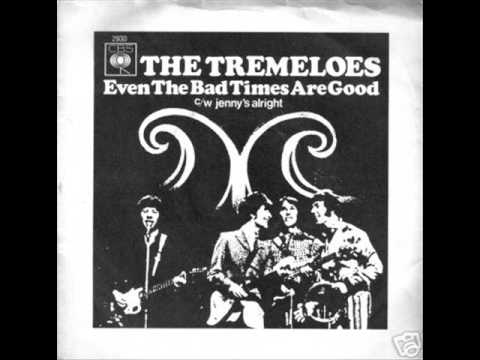
Silence Is Golden represents one of the more surprising commercial and artistic achievements of the British Invasion's second wave. When the Tremeloes released it as a single in April 1967 on CBS Records in the United Kingdom, the group was primarily known as a competent beat group with a reliable commercial instinct rather than as a band with serious artistic ambitions. The song proved that these characterizations had underestimated both the group and the power of the Four Seasons original they were covering.
The song was written by Bob Gaudio and Bob Crewe, the primary creative partnership behind Frankie Valli and the Four Seasons, and had originally appeared as the B-side of the 1964 Four Seasons single Rag Doll, which reached number one on the Hot 100. In the United States, Silence Is Golden received only modest attention in its original incarnation, appearing on the B-side in a period when B-sides were rarely promoted as commercial entities. The Tremeloes discovered the song and recognized something in it that its original label had not prioritized, a melodic sophistication and an emotional directness that, given the right production treatment, could carry a record to the top of the charts.
Producer Mike Smith, who had been working with the Tremeloes since their early recordings, oversaw the session that produced the British hit version. The arrangement made significant use of close-harmony vocals, which was a natural fit for the Tremeloes' vocal configuration. The group's lineup at this point included Alan Blakley, Rick West, Dave Munden, and Len "Chip" Hawkes, the latter having replaced original member Brian Poole when Poole departed for a solo career in 1966. The four-part harmony arrangement gave the recording a lush, almost orchestral quality despite the relative simplicity of the instrumentation beneath it.
The production made deliberate choices in favor of space and restraint. Where many British pop productions of the period filled every available sonic space with overdubs and orchestral sweetening, Silence Is Golden was built around the vocal blend, with the instrumental arrangement serving primarily as a frame. This approach suited the lyric, which is ostensibly about the wisdom of silence and the virtue of not acting on what one knows, and the vocal-forward mix amplified the song's meditative quality.
In the United Kingdom, Silence Is Golden reached number one on the charts, becoming the Tremeloes' only chart-topping single and the peak commercial achievement of their career. The song spent three weeks at the top position and remained in the top twenty for an extended period, generating substantial airplay and retail sales. In the United States, the song performed respectably if not spectacularly on the Hot 100, reaching a position that demonstrated its cross-Atlantic appeal without quite replicating the British success. The Tremeloes' American commercial footprint had always been somewhat smaller than their UK presence, and this held true for Silence Is Golden as well.
The timing of the release placed it in an interesting cultural moment. By April 1967, the British Invasion as a media phenomenon was beginning to evolve, with the more experimental work of the Beatles, the Rolling Stones, and the emerging psychedelic scene beginning to shift what was expected of British pop records. Silence Is Golden was in many ways a throwback to an earlier, more polished and formally conservative approach to the pop single. That it reached number one in this changing environment suggests that the British public's appetite for well-crafted traditional pop had not been exhausted by the more adventurous recordings beginning to emerge from the same period.
The song has remained in regular rotation on classic pop and oldies radio formats across the United Kingdom, where it is consistently recognized as one of the defining recordings of its era. It appears on virtually every compilation dedicated to British pop of the 1960s and has been cited by subsequent generations of harmony-focused pop acts as an influence on their approach to vocal arrangement. The Beach Boys' influence on British pop harmony is well documented, and Silence Is Golden represents a British act absorbing and redeploying those American innovations in a specifically British context.
The Tremeloes continued recording and performing for many years after the peak of their commercial success, maintaining a presence on the nostalgia and revival circuit. However, their legacy in serious critical discussions of 1960s British pop has remained somewhat undervalued relative to bands with more conventional rock credibility. Silence Is Golden is the single exception, a recording that commands respect even from critics inclined to dismiss the broader Tremeloes catalog as professionally competent but artistically lightweight. It is the recording that establishes definitively that the band was capable of more than the assessments of their detractors acknowledged.
02 Song Meaning
What the Song Knows and Chooses Not to Say: The Meaning of Silence Is Golden
Silence Is Golden presents a moral situation that is more complicated than its smooth surface suggests. The narrator of the song is a witness to infidelity. He has observed a friend's romantic partner in circumstances that make her unfaithfulness apparent, and the song is essentially a meditation on what he chooses to do with this knowledge. His conclusion, to say nothing, to keep the silence that the title praises, is presented as wisdom, as the application of an ancient proverb to a contemporary romantic situation. But the song is not entirely comfortable with this conclusion, and that discomfort is what gives it lasting interest.
Bob Gaudio and Bob Crewe's lyric operates on the tension between the ostensible wisdom of the proverb the title invokes and the moral passivity it recommends. The narrator is not silent out of respect for privacy or out of a principled belief in non-interference. He is silent because he has decided that the probable consequences of speaking are worse than the consequences of staying quiet. This is a recognizable human calculation, familiar to anyone who has occupied a similar position of uncomfortable knowledge. The song's achievement is to take that calculation seriously without endorsing it uncritically.
The Tremeloes' vocal arrangement adds a layer of complexity to this reading. Close-harmony singing implies a kind of communal endorsement of whatever sentiment is being expressed. When four voices agree on something, there is a social pressure toward accepting that something as valid. The arrangement thus amplifies the sense that the narrator's position is not merely personal but somehow broadly sanctioned, that this is what reasonable people do with uncomfortable knowledge. This makes the song's moral ambiguity more rather than less interesting.
In the context of 1967 British pop, the lyric's subject matter was relatively sophisticated. The mainstream pop charts of the period were full of straightforward romantic declarations and uncomplicated emotional situations. A song that positions its narrator as a witness to betrayal, contemplating the ethics of disclosure, is operating in more demanding territory. The fact that Gaudio and Crewe had placed this lyric on the B-side of a commercial American single in 1964 suggests that they themselves may have underestimated its potential, seeing it as a vehicle for melodic craft rather than as a statement of any particular artistic ambition.
The song's title proverb has a long history across multiple cultures and languages, typically deployed to argue for the diplomatic virtues of restraint. In the context of the song, however, silence is also complicity, a point the lyric acknowledges without resolving. The narrator is not proud of his silence in any triumphant sense. He speaks of it as the wiser course of action rather than the morally superior one, a distinction the song is careful to maintain. This nuance is what separates a genuinely interesting lyric from a merely pleasant one.
For listeners encountering the song through the Tremeloes' version rather than the Four Seasons original, the vocal blend tends to dominate the experience at first hearing, with the lyric's complexity emerging on subsequent engagement. This is a common pattern with songs that operate simultaneously on an immediately appealing surface and a more demanding interior. The melody and harmony give listeners permission to return, and the returning rewards them with meanings that were not fully available on first contact.
The song's continued presence on classic radio formats across the United Kingdom reflects the degree to which it has entered the cultural memory as a touchstone of a particular moment. It is one of the recordings that most consistently appears when British listeners of a certain age are asked to identify the defining sounds of 1967 pop, placed alongside recordings by far more critically lionized acts. This popular endurance is its own form of critical validation, independent of the assessments of formal criticism.
→ More from The Tremeloes
View all The Tremeloes hits →
→ More from the 1960s File
View all 1960s hits →




Keep digging