The 1960s File Feature
Even The Bad Times Are Good
The Bright Optimism of Even The Bad Times Are Good by The Tremeloes By late 1967, The Tremeloes had already outlasted the very group that once eclipsed them,…
01 The Story
The Bright Optimism of "Even The Bad Times Are Good" by The Tremeloes
By late 1967, The Tremeloes had already outlasted the very group that once eclipsed them, having lost frontman Brian Poole as a founding member years earlier and rebuilt themselves entirely into one of Britain's most reliably tuneful pop-rock outfits. "Even The Bad Times Are Good" arrived as one of the clearest expressions yet of the buoyant, harmony-rich sound that had become their unmistakable signature.
A Band That Refused to Fade
The Tremeloes had famously auditioned alongside the Beatles for Decca Records back in 1962, and Decca's ultimate decision to sign the Tremeloes instead became one of the most notorious misjudgments in all of pop history, endlessly retold in retrospectives. Rather than let that shadow define them permanently, the band spent the mid-1960s steadily building their own distinct identity, and by 1967 they had scored multiple hits built around tight vocal harmonies and irresistibly cheerful melodies, this single chief among them by any measure.
A Melody Built on Contradiction
The song's central conceit, that even difficult moments in love carry some redeeming warmth worth holding onto, gave the band a lyrical hook every bit as memorable as its melody. Bright, jangling guitars and layered harmonies underpinned a tune engineered for maximum sing-along appeal, fitting comfortably alongside the sunshine-pop and British Invasion-adjacent sounds dominating UK and European radio throughout that particular year.
A Strong Run on the American Chart
The single found real, tangible traction on the Billboard Hot 100, climbing steadily over several consecutive weeks. It debuted on September 30, 1967 at number 81 and rose consistently, reaching a peak position of number 36 during the chart week of November 4, 1967. The song logged seven weeks on the chart altogether, a solid American showing for a British band whose commercial fortunes had always run noticeably stronger at home than across the Atlantic.
A Songwriting Team Behind the Scenes
The song came from professional songwriters working outside the band itself, a common arrangement for British pop acts of the period who often relied on established Tin Pan Alley-style writing teams even while performing under their own name and image. That arrangement let the Tremeloes focus their considerable energy on arrangement and harmony rather than composition.
A High Point in a Long Career
Within the Tremeloes' broader catalog, this single stands as one of their most enduring and best-remembered songs, a clear reminder that the band Decca chose over the Beatles carved out a genuinely successful run of their own, entirely on their own terms and by their own merits. Their sustained run of hits through the late 1960s proved that early industry misstep spectacularly wrong in the best possible way imaginable.
A Band Rebuilt from Scratch
Losing a founding frontman would have ended most groups outright, but the Tremeloes treated Poole's 1966 departure as an opportunity to redistribute vocal duties among the remaining members, a restructuring that ultimately made the band's sound more collaborative and more distinctive than it had been under a single dominant lead singer.
Harmony as the Band's True Signature
More than any single lyric or hook, it was the Tremeloes' close, layered vocal harmonies that defined their sound across this entire era, a technique borrowed partly from American vocal groups and refined into something distinctly their own. Those harmonies gave even a fairly simple lyrical premise like this one a richness that elevated it well above a typical throwaway pop single of the period.
A Dose of Pure 1967 Optimism
Revisited today, the song still radiates an infectious, sunny confidence that feels distinctly of its moment, a pop band determined to find the silver lining even in a genre often preoccupied with heartbreak and loss. Press play and let that harmony-drenched chorus do exactly what it was originally built to do.
"Even The Bad Times Are Good" — The Tremeloes' singular moment on the 1960s charts.
02 Song Meaning
What "Even The Bad Times Are Good" by The Tremeloes Is Really About
The title says nearly everything on its own: this is a song built entirely around the idea that love, even at its most difficult, still carries some essential worth, that the hard moments in a relationship are proof of its depth rather than evidence against it.
Reframing Hardship as Devotion
Rather than dwelling on conflict or disappointment, the lyric insists that struggling through rough patches together with someone is itself a form of intimacy, a sign the relationship matters enough to weather real discomfort. The Tremeloes' layered harmonies reinforce that reframing directly, turning what could have been a melancholy sentiment into something genuinely bright and communal in feel.
Optimism as a Genre Choice
Where much of pop music mines heartbreak for its primary emotional power, this song deliberately swims against that current, choosing resilience and gratitude over lament at every turn. That choice reflected a broader strain of late-1960s British pop that favored melodic warmth and harmonic sweetness even while American and British rock more broadly was growing considerably more introspective and psychedelic around it.
A Deliberately Uncomplicated Worldview
There is nothing ironic or arch about the song's central claim, and that sincerity was itself a small act of defiance against a pop landscape increasingly enamored with studio experimentation and lyrical ambiguity. The Tremeloes chose clarity instead, and audiences rewarded that choice handsomely at the time.
A Post-Beatles Pop Landscape
Released in 1967, a year defined by Sgt. Pepper's Lonely Hearts Club Band and rock's rapidly growing ambitions, the song represents a simpler, more traditionally structured pop counterpoint to that experimentation, proof that straightforward, harmony-driven songcraft still held real commercial and emotional power even as the wider genre grew ever more elaborate and studio-bound.
The Comfort of a Simple Reassurance
Part of the song's real appeal lies in its sheer directness. It does not complicate its message with clever wordplay or ambiguity; it simply insists, repeatedly and warmly, that love is genuinely worth the difficulty involved. For listeners navigating their own relationship struggles at the time, that plain reassurance offered real, tangible comfort.
A Message Built for Group Singing
The song's structure practically invites communal singing, verses and choruses built for multiple voices layering on top of one another rather than a single lead carrying the emotional weight alone. That structural choice reinforces the lyric's own message about shared endurance, love as something carried together rather than shouldered by one person alone.
Why the Sentiment Still Holds
Decades on, the song's central claim remains just as reassuring as ever, a reminder that commitment is not measured only by its easy, effortless moments. That earnest optimism, wrapped in a melody built for singing along at full volume, is exactly why the song has outlasted its own comparatively modest chart peak.
→ More from The Tremeloes
View all The Tremeloes hits →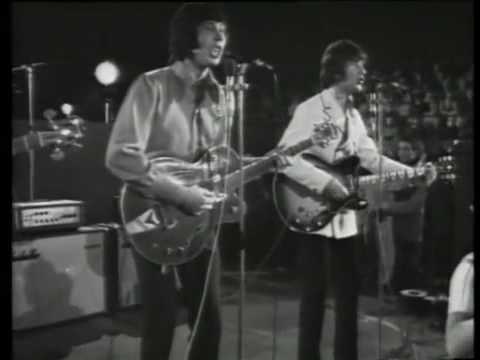

→ More from the 1960s File
View all 1960s hits →




Keep digging