The 1960s File Feature
Since I Lost My Baby
Since I Lost My Baby — The Temptations Motown's Finest Group at Its Most Vulnerable The summer of 1965 belonged to Motown. The label's artists were stacked a…
01 The Story
Since I Lost My Baby — The Temptations
Motown's Finest Group at Its Most Vulnerable
The summer of 1965 belonged to Motown. The label's artists were stacked across the Billboard Hot 100 in numbers that felt improbable for any single company, and at the center of that dominance stood The Temptations, a group whose vocal chemistry and stage presence set them apart even within that gifted roster. "Since I Lost My Baby" arrived in the middle of this triumph and revealed a quieter, more aching side of the group, one that contrasted sharply with the uptempo showstoppers that had also defined their sound.
"Since I Lost My Baby" was written by Smokey Robinson and Warren "Pete" Moore, two of Motown's most reliable creative forces. Robinson in particular had an extraordinary intuition for what the male voice could express when stripped of bravado and asked to simply describe heartache. His songwriting for The Temptations across this period produced some of the most emotionally direct ballads in the soul catalog, and this song belongs firmly in that tradition.
David Ruffin and the Weight of Loss
The recording features David Ruffin's voice as the dominant lead, and it is hard to imagine the song being as affecting with any other vocalist. Ruffin had a quality of barely contained intensity that made even simple declarative phrases sound like they were costing him something. On a ballad about losing a romantic partner, that intensity translated into something genuinely devastating: a man not performing sadness but actually inhabiting it.
The other Temptations, Eddie Kendricks, Paul Williams, Melvin Franklin, and Otis Williams, provided harmonic support that gave Ruffin's lead its frame. The ensemble work on this recording is precise and empathetic, creating a sound that surrounds the lead vocal without ever competing with it. That balance was central to Motown's house production philosophy, and producer Smokey Robinson applied it with characteristic skill.
The Chart Run of Summer 1965
The single debuted on the Billboard Hot 100 on July 24, 1965, entering at number 68. Its rise was steady and purposeful, mirroring the song's own emotional architecture, which builds from quiet resignation to something approaching anguish before settling back into acceptance. By August 14 the record was at 29, and it continued climbing, reaching its peak of number 17 on August 28, 1965, over the course of a 10-week chart run.
The top-20 placement cemented the song's status as a mainstream pop success, not merely a rhythm and blues phenomenon. Motown's ability to cross its artists from the R&B chart into the mainstream Hot 100 top twenty was a commercial achievement that the label had systematized through sophisticated production, distribution, and promotion, and "Since I Lost My Baby" was a clear beneficiary of that system working at full efficiency.
Context Within a Remarkable Run
The Temptations in 1965 were operating at a creative intensity that made each new release feel significant. "My Girl," their first number-one pop hit, had appeared earlier that year, establishing the group as crossover stars of the first order. "Since I Lost My Baby" demonstrated that their appeal was not dependent on a single formula. They could bring the same emotional authority to a slow, grieving ballad that they brought to an ebullient celebration of romantic happiness.
Smokey Robinson's production kept the arrangement spare by Motown standards, allowing Ruffin's voice room to breathe and the lyric's imagery room to land. The song described loss through concrete, sensory details rather than abstract emotional declarations, a technique that Robinson understood made listeners feel rather than merely register what they were hearing.
A Quiet Giant in the Temptations Catalog
In a discography that includes some of the most celebrated recordings in soul and pop history, "Since I Lost My Baby" holds a modest but secure place. It is the kind of song that does not overshadow the group's better-known work but enriches the picture of what The Temptations were capable of. The performance makes clear that their greatness was not a function of spectacle alone but of genuine vocal craft applied to genuinely felt material.
For anyone who wants to understand the full range of what Motown produced in its imperial phase, this recording is essential listening, a reminder that the label's genius lay as much in emotional precision as in commercial strategy.
Press play and give yourself over to one of soul music's great voices at his most unguarded.
"Since I Lost My Baby" — The Temptations' singular moment on the 1960s charts.
02 Song Meaning
Since I Lost My Baby — Themes and Legacy
Grief Rendered Specific, Grief Made Universal
There is a particular kind of sadness that comes not from anger or bitterness but from simple, stunned absence: the dawning awareness that someone who shaped the texture of daily life is no longer there. "Since I Lost My Baby" is about that specific emotional state. Smokey Robinson and Pete Moore built the lyric around concrete sensory observations, the details of a world that keeps moving while the person at its center remains still, frozen in the experience of loss.
The song describes landscapes and daily routines that have been permanently altered by romantic separation. The world goes on, people walk by, seasons change, but none of it registers properly because the emotional anchor has been pulled away. That framing gives the song a quality of gentle dissociation that feels psychologically accurate in a way that more melodramatic approaches to heartbreak do not.
David Ruffin's Emotional Intelligence
The meaning of the song was enormously amplified by the specific qualities David Ruffin brought to it as a vocalist. Ruffin did not project strength conquering pain; he projected vulnerability encountering pain honestly and directly. His voice communicated a man who was not performing grief for an audience but actually working through it in real time, and that quality of authenticity gave the recording a directness that listeners in 1965 responded to powerfully.
This approach to emotional expression in soul music was relatively unusual for the period. The dominant male vocal tradition in pop and R&B often favored either stoic strength or theatrical despair. Ruffin found a middle register that felt more true to how loss actually operates: quietly, persistently, without resolution.
The Social Landscape of Mid-1960s Romance
In 1965, love songs occupied a complex cultural space. The upheavals of the civil rights movement, the escalating conflict in Vietnam, and the accelerating pace of social change created a background against which personal emotion took on particular weight. Music that addressed the fundamental human experience of connection and loss provided a space where listeners of all backgrounds could find common ground.
Motown's genius was in making that common emotional ground commercially accessible, producing recordings that crossed racial and regional divides by speaking directly to feelings everyone shared. "Since I Lost My Baby" achieved its Hot 100 peak of number 17 precisely because it located something true about human experience and expressed it without condescension or artifice.
The Song's Place in the Soul Tradition
Within the larger tradition of soul music, "Since I Lost My Baby" belongs to a lineage of what might be called contemplative grief songs, recordings that resist the urge to dramatize suffering and instead render it in its quieter, more sustained form. Sam Cooke worked in this register. Ray Charles understood it. Smokey Robinson, both as a songwriter and as a producer, consistently sought it out.
The song's chart run of 10 weeks on the Hot 100 in the summer of 1965 was part of an extraordinary period of Temptations productivity, and within that period it served as evidence of the group's emotional range. Their ability to move from the joyful warmth of "My Girl" to the grieving ache of "Since I Lost My Baby" within a single calendar year showed that The Temptations were not formula artists but fully realized musical voices capable of inhabiting the full emotional spectrum of human experience.
→ More from The Temptations
View all The Temptations hits →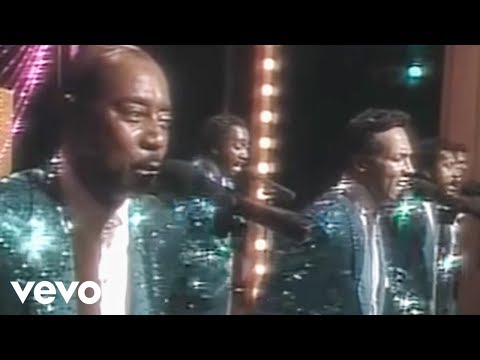



→ More from the 1960s File
View all 1960s hits →




Keep digging